
'Good news for Noida, Greater Noida': PM Modi announces Aqua Line Metro extension
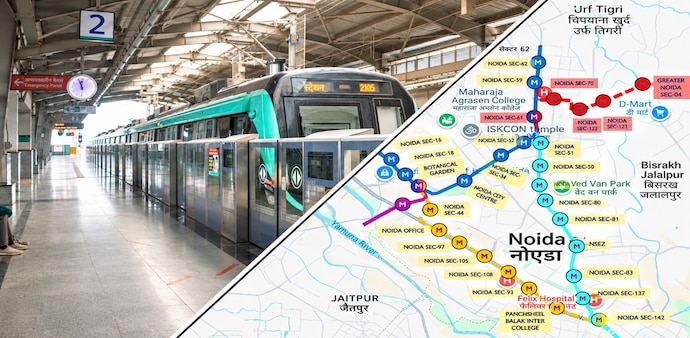
The Union Cabinet, chaired by Modi, approved the extension of the Aqua Line corridor from Noida Sector 51 to Greater Noida Sector 4 under the Noida Metro Rail Project
- Nov 11, 2026,
- Updated Nov 11, 2026 7:10 PM IST
Prime Minister Narendra Modi on Wednesday announced a major Metro connectivity boost for Noida and Greater Noida. He said the expansion of the Aqua Line would help residents enjoy shorter commutes, reduced traffic congestion, and easier access to workplaces, schools, and hospitals.
"As Noida and Greater Noida grow, why should daily commutes become longer?" Modi asked in a post on X. "Here is some good news for the people of Noida and Greater Noida! The Cabinet has approved an extension of the Aqua Line Metro."
Listing the benefits, the Prime Minister highlighted "Easier access to offices, schools, hospitals and commercial hubs", along with "Less congestion" and "Shorter commutes".
"A major boost to connectivity and Ease of Living indeed," he added.
The Union Cabinet, chaired by Modi, approved the extension of the Aqua Line corridor from Noida Sector 51 to Greater Noida Sector 4 under the Noida Metro Rail Project.
The Rs 2,390 crore project will cover 8.449 km and include five elevated stations. Once operational, the combined active Metro network across Noida and Greater Noida will reach 71.878 km.
Direct connectivity to Delhi Metro's Blue Line
The extension will provide an interchange with the Delhi Metro's Blue Line at Noida Sector 61, improving access to the wider Delhi-NCR Metro network.
The government said the new corridor would strengthen public transport connectivity in Noida and Greater Noida, particularly in areas where commuters currently depend heavily on road transport.
The route is expected to improve access to commercial centres such as Gaur City Mall, H&S Mall, Blue Sapphire Mall, IKEA in Sector 51 and Anthurium Mall in Sector 73.
Several corporate and IT hubs will also benefit, including Tech Mahindra and TCL Tech offices in Sector 60, the Oil Industry Development Board in Sector 73, and Golden I commercial space in Greater Noida Sector 4.
The extension will also improve connectivity to Delhi Public School in Sector 122 and healthcare facilities such as Kailash Hospital, Rama Hospital and Cloud9 Hospital.
Residents of Cleo County in Sector 122 and Gaur City 1 and 2 in Greater Noida Sector 4 are among those expected to benefit from the expansion.
Less congestion, better access to workplaces
The government said the Metro extension would provide an alternative to private vehicles, helping reduce traffic congestion and travel times across the two cities.
Improved Metro connectivity is also expected to make it easier for commuters to access Delhi's airport, railway stations and bus terminals through connecting transport networks.
The Centre said better public transport links could support businesses around the new stations, attract investment and improve access to employment opportunities.
The government also expects the project to reduce carbon emissions by encouraging a shift from petrol- and diesel-powered vehicles to Metro services.
The extension is expected to be completed within four years.