
'Govt is doing AQI Data Fraud': AAP's Saurabh Bhardwaj alleges Delhi's pollution data is being shown lower
Bhardwaj questioned the way air pollution was being monitored in Delhi and alleged that the government's official figures did not reflect the actual situation on the ground.
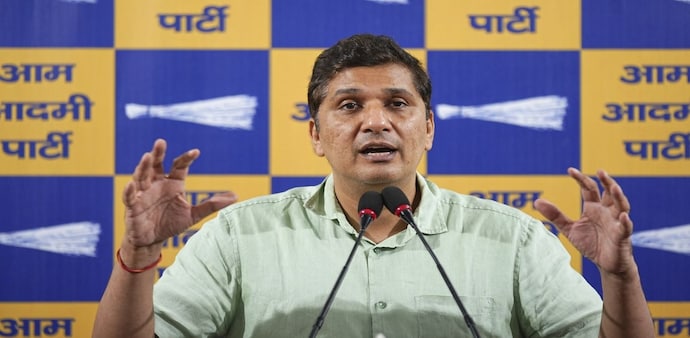
- Nov 9, 2026,
- Updated Nov 9, 2026 11:20 AM IST
AAP leader Saurabh Bhardwaj on Monday accused the BJP-led Delhi government of fudging pollution data, claiming that the AQI crossed 3,000 in parts of the national capital on Diwali night. Bhardwaj cited readings from independent air quality monitoring platforms, while official CPCB data showed Delhi's average AQI at 376 on November 8.
In videos shared on X, Bhardwaj showed AQI readings that were far higher than the figures reported by the Central Pollution Control Board (CPCB) and alleged that the government was misleading residents about the city's pollution levels
“AQI 3000 paar. Full credit to these brothers who raised pollution beyond 3000,” Bhardwaj wrote on X.
What Bhardwaj alleged
Bhardwaj questioned the way air pollution was being monitored in Delhi and alleged that the government's official figures did not reflect the actual situation on the ground.
He claimed that around 20 new AQI monitoring stations had been installed in distant and relatively green parts of Delhi. He also alleged that water was being sprayed around existing monitoring stations in more polluted areas, which he claimed helped bring down the recorded pollution levels.
“Govt is doing AQI Data Fraud,” Bhardwaj wrote on X.
He warned that showing pollution levels below the actual levels could have serious consequences for public health.
“When Pollution data is shown less than actual data, it can lead to very serious situations - heart attacks, asthma attacks, respiratory failure , and even worse,” he wrote.
What CPCB data shows
The AQI readings cited by Bhardwaj came from independent monitoring platforms and do not correspond to the official CPCB data.
According to CPCB figures, Delhi's average AQI on Diwali, November 8, stood at 376, placing the city in the “very poor” category.
The official figures nevertheless showed severe pollution at several locations.
Of Delhi's 59 air quality monitoring stations, 19 were in the “severe” category at 7 pm on Sunday, while 33 were in the “very poor” category and seven were in the “poor” category.
Jahangirpuri recorded the highest reading at 460.
Must Read: As GRAP III kicks in, Delhi-NCR schools directed to shift classes 1-5 to hybrid mode
Independent data showed higher pollution
Another independent monitoring platform also recorded pollution levels far above the official CPCB figure.
According to AQI.in data, Delhi's AQI peaked at 1,331 at 1.31 am on November 9.
This was a real-time reading from an independent monitoring platform and is distinct from the official CPCB figures.
The AQI 3,000-plus readings cited by Bhardwaj have not been independently verified by India Today.
The contrasting readings have sparked a debate over how Delhi's air pollution is being measured and reported, with official CPCB data and independent platforms showing a significant difference in pollution levels.