
GRAP-III curbs imposed across Delhi-NCR as AQI threatens to turn severe. Check what is banned
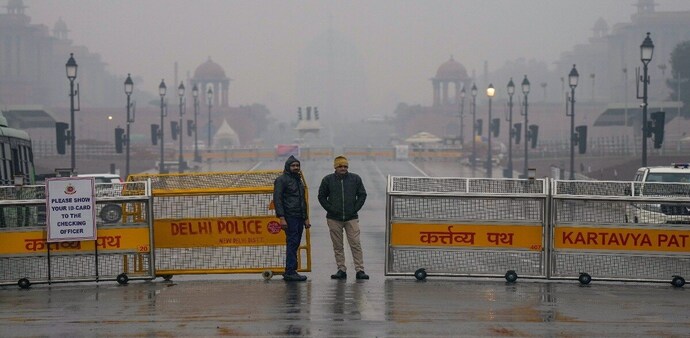
According to data from the Central Pollution Control Board (CPCB), air quality across Delhi-NCR remained in the ‘very poor’ category on January 16, with several monitoring stations reporting AQI readings above 300. d
- Jan 16, 2026,
- Updated Jan 16, 2026 8:30 PM IST
The Commission for Air Quality Management (CAQM) has invoked Stage-III (“Severe” category) of the Graded Response Action Plan (GRAP) across Delhi and the National Capital Region (NCR) following a steady deterioration in air quality and forecasts pointing to further worsening conditions.
In an order issued on January 16, 2026, the CAQM said Delhi’s Air Quality Index (AQI) showed a rising trend and was recorded at 354, with projections by the India Meteorological Department (IMD) and the Indian Institute of Tropical Meteorology (IITM) indicating that pollution levels could soon slip into the severe category due to unfavourable weather conditions, low wind speeds and poor dispersion.
Considering the prevailing air quality scenario, the Sub-Committee on GRAP decided to implement all actions under Stage-III, in addition to the measures already in force under Stage-I and Stage-II, with immediate effect across the entire Delhi-NCR.
What is restricted under GRAP-III
Stage-III of GRAP, which comes into force when AQI levels are in the 401-450 (Severe) range, mandates a series of emergency curbs aimed at reducing emissions and limiting public exposure to pollution.
Construction & dust control
- All non-essential construction and demolition activities are prohibited, including earthwork, excavation, piling, trenching, welding, painting and operations at Ready-Mix Concrete plants.
- Restrictions are imposed on the movement of construction materials such as sand, gravel and cement.
Vehicle & transport restrictions
- BS-III petrol and BS-IV diesel four-wheelers are barred from operating in Delhi and adjoining NCR districts.
- Entry of BS-IV diesel-operated light commercial vehicles (LCVs) registered outside Delhi is prohibited, except for those carrying essential commodities or providing essential services.
- Diesel generator (DG) sets are banned except for emergency and essential services.
- Entry of BS-III and below diesel commercial vehicles, including LCVs, MGVs and HGVs registered outside Delhi, continues to remain prohibited even if they are carrying essential goods.
Industrial activity
- Operations of stone crushers, hot-mix plants and polluting industrial units not running on cleaner fuels are required to shut down.
Schools & public advisory
- Schools are advised to consider hybrid or online classes, particularly for younger students.
- Citizens are urged to minimise outdoor activities, use public transport and adhere strictly to the GRAP citizen charter.
The CAQM emphasised that GRAP is an emergency response mechanism and will override other relaxations wherever applicable to prevent further deterioration in air quality.
AQI slumps to 'very poor' category
According to data from the Central Pollution Control Board (CPCB), air quality across Delhi-NCR remained in the ‘very poor’ category on January 16, with several monitoring stations reporting AQI readings above 300. Weather conditions, including dense fog and low wind speeds, have further aggravated pollution levels by limiting the dispersion of pollutants.
Under CPCB norms, AQI values between 301 and 400 fall under the very poor category, while readings between 401 and 500 are classified as severe, posing serious health risks to the general population.
The CAQM said all concerned agencies across Delhi-NCR have been directed to strictly implement, monitor and intensify measures under Stage-I, II and III of GRAP. The Sub-Committee will continue to closely track air quality trends and review the situation periodically to decide on further action based on pollution levels and meteorological forecasts.
The Commission for Air Quality Management (CAQM) has invoked Stage-III (“Severe” category) of the Graded Response Action Plan (GRAP) across Delhi and the National Capital Region (NCR) following a steady deterioration in air quality and forecasts pointing to further worsening conditions.
In an order issued on January 16, 2026, the CAQM said Delhi’s Air Quality Index (AQI) showed a rising trend and was recorded at 354, with projections by the India Meteorological Department (IMD) and the Indian Institute of Tropical Meteorology (IITM) indicating that pollution levels could soon slip into the severe category due to unfavourable weather conditions, low wind speeds and poor dispersion.
Considering the prevailing air quality scenario, the Sub-Committee on GRAP decided to implement all actions under Stage-III, in addition to the measures already in force under Stage-I and Stage-II, with immediate effect across the entire Delhi-NCR.
What is restricted under GRAP-III
Stage-III of GRAP, which comes into force when AQI levels are in the 401-450 (Severe) range, mandates a series of emergency curbs aimed at reducing emissions and limiting public exposure to pollution.
Construction & dust control
- All non-essential construction and demolition activities are prohibited, including earthwork, excavation, piling, trenching, welding, painting and operations at Ready-Mix Concrete plants.
- Restrictions are imposed on the movement of construction materials such as sand, gravel and cement.
Vehicle & transport restrictions
- BS-III petrol and BS-IV diesel four-wheelers are barred from operating in Delhi and adjoining NCR districts.
- Entry of BS-IV diesel-operated light commercial vehicles (LCVs) registered outside Delhi is prohibited, except for those carrying essential commodities or providing essential services.
- Diesel generator (DG) sets are banned except for emergency and essential services.
- Entry of BS-III and below diesel commercial vehicles, including LCVs, MGVs and HGVs registered outside Delhi, continues to remain prohibited even if they are carrying essential goods.
Industrial activity
- Operations of stone crushers, hot-mix plants and polluting industrial units not running on cleaner fuels are required to shut down.
Schools & public advisory
- Schools are advised to consider hybrid or online classes, particularly for younger students.
- Citizens are urged to minimise outdoor activities, use public transport and adhere strictly to the GRAP citizen charter.
The CAQM emphasised that GRAP is an emergency response mechanism and will override other relaxations wherever applicable to prevent further deterioration in air quality.
AQI slumps to 'very poor' category
According to data from the Central Pollution Control Board (CPCB), air quality across Delhi-NCR remained in the ‘very poor’ category on January 16, with several monitoring stations reporting AQI readings above 300. Weather conditions, including dense fog and low wind speeds, have further aggravated pollution levels by limiting the dispersion of pollutants.
Under CPCB norms, AQI values between 301 and 400 fall under the very poor category, while readings between 401 and 500 are classified as severe, posing serious health risks to the general population.
The CAQM said all concerned agencies across Delhi-NCR have been directed to strictly implement, monitor and intensify measures under Stage-I, II and III of GRAP. The Sub-Committee will continue to closely track air quality trends and review the situation periodically to decide on further action based on pollution levels and meteorological forecasts.