
Heavy rain across a dozen states, yet India's monsoon suffers a 21% deficit: How the rain math works
The season's recovery hinges on sustained above-average rainfall through August and September amid El Niño challenges
- Jul 22, 2026,
- Updated Jul 22, 2026 1:08 PM IST
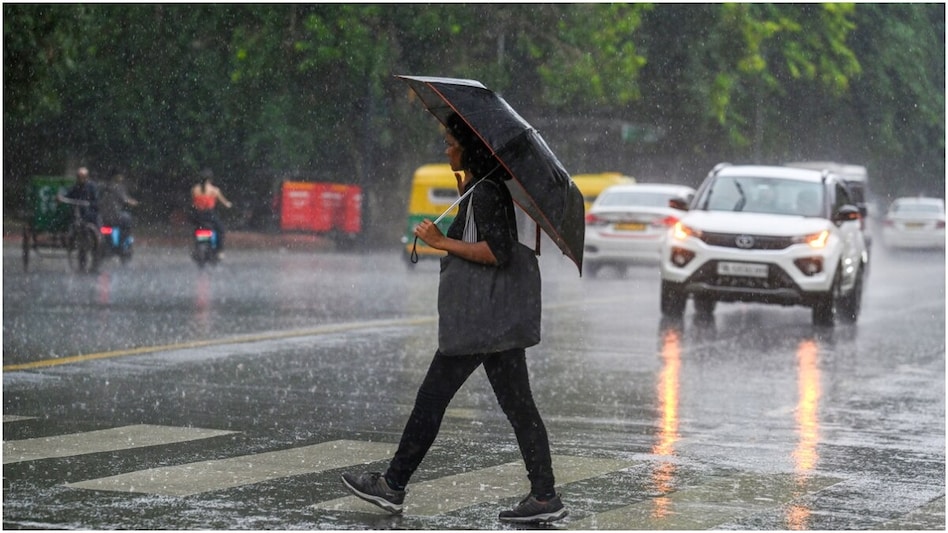
Satellite images this week showed clouds covering large parts of India, while the India Meteorological Department (IMD) reported very heavy rainfall across several subdivisions. Yet, despite the widespread showers, the country’s monsoon rainfall remains 21% below the expected level for this stage of the season.
Both developments are happening at the same time, and the reason lies in how monsoon deficits are calculated.
What does a 21% monsoon deficit mean?
The IMD categorises rainfall shortfalls based on the gap between actual rainfall and the Long Period Average (LPA), which represents the normal rainfall received during the June-September monsoon season over several decades.
A deficit between 20% and 59% is classified as “deficient”. With India currently 21% below the expected level, the monsoon has moved into that category.
India’s LPA for the four-month monsoon season is 868.6 mm. At the current stage of the season, rainfall is around 76 mm below the expected mark.
How much rain is needed to close the gap?
The monsoon season can be compared to a target that needs to be achieved by September. While India still has around 500 mm of normal rainfall expected before the season ends, it would require significantly above-normal rainfall every week for the remaining period to completely erase the existing deficit.
However, the deficit percentage can reduce even without unusually heavy rainfall.
Why the gap can narrow without exceptional rain
The percentage deficit is calculated against the expected rainfall for the entire season. As the monsoon progresses, the normal rainfall benchmark continues to increase.
If the rest of the season receives normal rainfall, India could still end September at around 792 mm, about 91% of the LPA. That would bring down the deficit from the current 21% to around 9%, without any extraordinary rainfall spell.
The deficit has already shown how quickly it can change. It was close to 40% at the end of June before improving to around 14% by July 9. It later widened again as July, one of the wettest months of the monsoon season, saw rainfall remain below normal.
Why August could decide the recovery
Monsoon rainfall does not spread evenly through the season. Large parts of India receive significant rainfall through low-pressure systems that develop over the Bay of Bengal and move across the country.
These systems can deliver heavy rainfall across multiple states within a few days and have the potential to significantly alter the national rainfall average.
August is considered a crucial month because such systems are more frequent during this period, giving the monsoon its best chance to recover lost ground.
El Niño adds uncertainty
The broader weather pattern this year is also influenced by El Niño, a warming of parts of the Pacific Ocean that can affect global circulation patterns and influence India’s monsoon.
The IMD has factored these conditions into its forecast and projected 2026 monsoon rainfall at around 90% of the LPA, placing it in the below-normal category.
However, the national rainfall number does not capture the entire picture. Nearly half of India’s cultivated area depends on rainfall rather than irrigation. A heavy downpour in one region may not benefit drought-affected agricultural areas elsewhere.
Satellite images this week showed clouds covering large parts of India, while the India Meteorological Department (IMD) reported very heavy rainfall across several subdivisions. Yet, despite the widespread showers, the country’s monsoon rainfall remains 21% below the expected level for this stage of the season.
Both developments are happening at the same time, and the reason lies in how monsoon deficits are calculated.
What does a 21% monsoon deficit mean?
The IMD categorises rainfall shortfalls based on the gap between actual rainfall and the Long Period Average (LPA), which represents the normal rainfall received during the June-September monsoon season over several decades.
A deficit between 20% and 59% is classified as “deficient”. With India currently 21% below the expected level, the monsoon has moved into that category.
India’s LPA for the four-month monsoon season is 868.6 mm. At the current stage of the season, rainfall is around 76 mm below the expected mark.
How much rain is needed to close the gap?
The monsoon season can be compared to a target that needs to be achieved by September. While India still has around 500 mm of normal rainfall expected before the season ends, it would require significantly above-normal rainfall every week for the remaining period to completely erase the existing deficit.
However, the deficit percentage can reduce even without unusually heavy rainfall.
Why the gap can narrow without exceptional rain
The percentage deficit is calculated against the expected rainfall for the entire season. As the monsoon progresses, the normal rainfall benchmark continues to increase.
If the rest of the season receives normal rainfall, India could still end September at around 792 mm, about 91% of the LPA. That would bring down the deficit from the current 21% to around 9%, without any extraordinary rainfall spell.
The deficit has already shown how quickly it can change. It was close to 40% at the end of June before improving to around 14% by July 9. It later widened again as July, one of the wettest months of the monsoon season, saw rainfall remain below normal.
Why August could decide the recovery
Monsoon rainfall does not spread evenly through the season. Large parts of India receive significant rainfall through low-pressure systems that develop over the Bay of Bengal and move across the country.
These systems can deliver heavy rainfall across multiple states within a few days and have the potential to significantly alter the national rainfall average.
August is considered a crucial month because such systems are more frequent during this period, giving the monsoon its best chance to recover lost ground.
El Niño adds uncertainty
The broader weather pattern this year is also influenced by El Niño, a warming of parts of the Pacific Ocean that can affect global circulation patterns and influence India’s monsoon.
The IMD has factored these conditions into its forecast and projected 2026 monsoon rainfall at around 90% of the LPA, placing it in the below-normal category.
However, the national rainfall number does not capture the entire picture. Nearly half of India’s cultivated area depends on rainfall rather than irrigation. A heavy downpour in one region may not benefit drought-affected agricultural areas elsewhere.