
Here's why SkyHop Aviation is exploring electric seaplane operations
India’s first dedicated seaplane operator targets fleet of up to 40 aircraft by FY2030; plans to induct up to 10 electric/hybrid seaplanes.
- Aug 17, 2026,
- Updated Aug 17, 2026 2:27 PM IST
SkyHop Aviation Pvt. Ltd., India’s first dedicated seaplane operator, is exploring deployment of electric seaplanes in India and the wider South Asian region, as part of its regional air connectivity roadmap.
The Gurugram-headquartered company has signed a Memorandum of Understanding (MoU) with Noemi Aerospace, a Norwegian aircraft manufacturer developing a new generation of amphibious aircraft, for electric seaplanes.
As part of its long-term fleet development strategy, SkyHop is targeting a fleet of up to 40 aircraft by FY2030. Subject to operational suitability and regulatory approvals, the company expects electric and/or hybrid seaplanes to form around 20-25% of this fleet.
The plan is to induct up to 10 Noemi aircraft by FY2030 through purchase, lease or a combination of both, subject to commercial evaluation and the execution of definitive agreements.
The company may also consider an option for up to five additional Noemi aircraft beyond FY2030, subject to the successful induction and satisfactory performance of the aircraft.
The collaboration will also explore opportunities for the manufacturing and assembly of electric and hybrid seaplanes in India.
Avani Singh, Founder & CEO, SkyHop Aviation, says the immediate priority is to build a safe, reliable and scalable seaplane network across India.
“But as we build that network, we also have an opportunity to think ahead about what the next generation of the fleet should look like. Electric and hybrid aircraft could become an important part of that transition, particularly for short regional routes, and our partnership with Noemi allows us to begin evaluating that opportunity today,” she said.
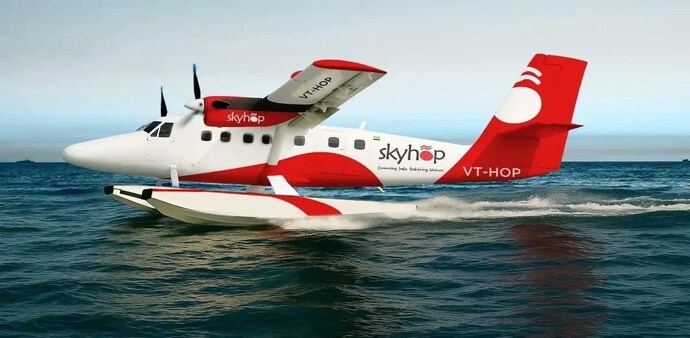
SkyHop’s first phase of operations will focus on connecting the islands of Lakshadweep with the mainland, with operations planned to use a 19-seater twin-otter seaplane. The company is also evaluating other regions across India where seaplane connectivity can address gaps in conventional air infrastructure and significantly reduce travel times.
SkyHop Aviation Pvt. Ltd., India’s first dedicated seaplane operator, is exploring deployment of electric seaplanes in India and the wider South Asian region, as part of its regional air connectivity roadmap.
The Gurugram-headquartered company has signed a Memorandum of Understanding (MoU) with Noemi Aerospace, a Norwegian aircraft manufacturer developing a new generation of amphibious aircraft, for electric seaplanes.
As part of its long-term fleet development strategy, SkyHop is targeting a fleet of up to 40 aircraft by FY2030. Subject to operational suitability and regulatory approvals, the company expects electric and/or hybrid seaplanes to form around 20-25% of this fleet.
The plan is to induct up to 10 Noemi aircraft by FY2030 through purchase, lease or a combination of both, subject to commercial evaluation and the execution of definitive agreements.
The company may also consider an option for up to five additional Noemi aircraft beyond FY2030, subject to the successful induction and satisfactory performance of the aircraft.
The collaboration will also explore opportunities for the manufacturing and assembly of electric and hybrid seaplanes in India.
Avani Singh, Founder & CEO, SkyHop Aviation, says the immediate priority is to build a safe, reliable and scalable seaplane network across India.
“But as we build that network, we also have an opportunity to think ahead about what the next generation of the fleet should look like. Electric and hybrid aircraft could become an important part of that transition, particularly for short regional routes, and our partnership with Noemi allows us to begin evaluating that opportunity today,” she said.
SkyHop’s first phase of operations will focus on connecting the islands of Lakshadweep with the mainland, with operations planned to use a 19-seater twin-otter seaplane. The company is also evaluating other regions across India where seaplane connectivity can address gaps in conventional air infrastructure and significantly reduce travel times.