
How to self-enumerate for Census 2027: Step-by-step guide
The Self-Enumeration exercise has already begun in eight States and Union Territories: Andaman and Nicobar Islands, Goa, Karnataka, Lakshadweep, Mizoram, Odisha, Sikkim, and parts of Delhi
- Apr 2, 2026,
- Updated Apr 2, 2026 9:02 PM IST
The Centre has launched Phase I of Census 2027, marking the beginning of the world's largest census exercise. Starting April 1, the House-listing and Housing Census (HLO) has commenced across India, introducing the Self-Enumeration process for the first time.
This is India's inaugural attempt at digital data capture, allowing individuals to self-enumerate online before enumerators visit their homes.
What is Self-Enumeration?
The Self-Enumeration process is a secure, web-based facility that allows respondents to enter their census data online, in 16 regional languages. For the first time, respondents have the flexibility to fill in their details at their convenience before the enumerator's door-to-door visit.
Step-by-Step Guide to Self-Enumeration
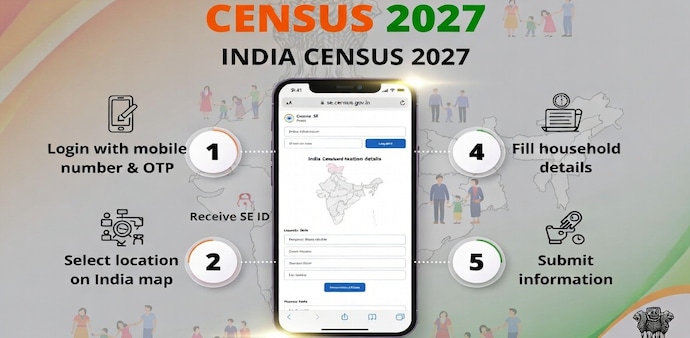
- Access the portal at https://se.census.gov.in
- The process may take approximately 15-20 minutes, and after successful submission, a unique SelfEnumeration ID (SE ID) will be generated.
- Using a laptop or desktop is recommended for better visibility when marking your house on the digital map.
- Enter the name of the Head of Household. A tooltip is provided beside this field to help you understand who should be considered the Head of the Household. (This name cannot be changed once registered.)
- Enter the mobile number of any member of the household. Only one mobile number should be used per household, and the same cannot be used for any other household.
- You may also provide an Email Id to receive your Self-Enumeration ID (SE ID) through email.
- Language Preference: Select your preferred language. (Selected language cannot be changed afterwards.)
- Enter the One-Time Password (OTP) sent to your registered mobile number to verify and continue.
- Location Entry: Select your District and enter your PIN (Optional), and then enter the name of your Village/Town, Locality, or nearby landmark. Click "Search".
- A map will appear with a red marker. Drag this marker exactly on the residence to identify the exact location of the residential building.
- Click "Save & Next". A confirmation message will appear to validate the location information.
- Data Entry: Fill in the Housing Listing and Housing Census questionnaire.
- The questionnaire is identical to the one used by enumerators. Certain details, such as Building Number, Census House Number, Use of Census House, and Household Number, are recorded separately by the Enumerator during her/his field visit.
- You can save the information as a draft to finalise and submit before the last date.
- Click "Final Submit" once you are satisfied. No further changes or edits can be made after this action, except by the Enumerator.
- The last date of submission will be displayed as a marquee on all pages. If not finally submitted before the State/UTs closing date, the Self-Enumeration will not be considered complete.
- Upon successful submission, a unique 11-digit SE ID (prefixed with "H") is generated and displayed. The SE ID is also sent via SMS and Email (if provided). It is recommended to take a screenshot and note it down.
- Retrieving SE ID: Provision to retrieve SE ID at a later date from the portal through the registered mobile number is available.
- When a Census Enumerator visits your home, share your SE ID with her/him.
- If the SE ID matches any of the SE IDs present on the Enumerator’s mobile, your SE data is confirmed, accepted and submitted.
- In case the SE ID do not match, the Enumerator will collect your household data afresh.
First Phase Rollout in eight States and UTs
The Self-Enumeration exercise has already begun in eight States and Union Territories: Andaman and Nicobar Islands, Goa, Karnataka, Lakshadweep, Mizoram, Odisha, Sikkim, and the New Delhi Municipal Council (NDMC) area, along with Delhi Cantonment Board. On the very first day, approximately 55,000 households from these areas availed the Self-Enumeration facility.
Houselisting and Housing Census (HLO)
The Housing Listing and Housing Census phase will run from April 16 to May 15, 2026. During the Housing Listing and Housing Census phase, comprehensive information on the condition of housing, household amenities, and assets possessed will be collected. A total of 33 questions are part of Phase I, focusing on critical indicators necessary for evidence-based planning, policy formulation, and welfare interventions.
Field Operations Timeline
The field operations for Houselisting and Housing Census will occur across the country between April 1 and September 30, 2026. Each State and Union Territory will undertake a 30-day continuous field operation within this six-month window, ensuring comprehensive data collection across the country.
For the first time, an additional 15-day window for Self-Enumeration is being provided immediately before the door-to-door survey. This facility allows people to enter their details digitally from their homes before the enumerator’s visit.
The Centre has launched Phase I of Census 2027, marking the beginning of the world's largest census exercise. Starting April 1, the House-listing and Housing Census (HLO) has commenced across India, introducing the Self-Enumeration process for the first time.
This is India's inaugural attempt at digital data capture, allowing individuals to self-enumerate online before enumerators visit their homes.
What is Self-Enumeration?
The Self-Enumeration process is a secure, web-based facility that allows respondents to enter their census data online, in 16 regional languages. For the first time, respondents have the flexibility to fill in their details at their convenience before the enumerator's door-to-door visit.
Step-by-Step Guide to Self-Enumeration
- Access the portal at https://se.census.gov.in
- The process may take approximately 15-20 minutes, and after successful submission, a unique SelfEnumeration ID (SE ID) will be generated.
- Using a laptop or desktop is recommended for better visibility when marking your house on the digital map.
- Enter the name of the Head of Household. A tooltip is provided beside this field to help you understand who should be considered the Head of the Household. (This name cannot be changed once registered.)
- Enter the mobile number of any member of the household. Only one mobile number should be used per household, and the same cannot be used for any other household.
- You may also provide an Email Id to receive your Self-Enumeration ID (SE ID) through email.
- Language Preference: Select your preferred language. (Selected language cannot be changed afterwards.)
- Enter the One-Time Password (OTP) sent to your registered mobile number to verify and continue.
- Location Entry: Select your District and enter your PIN (Optional), and then enter the name of your Village/Town, Locality, or nearby landmark. Click "Search".
- A map will appear with a red marker. Drag this marker exactly on the residence to identify the exact location of the residential building.
- Click "Save & Next". A confirmation message will appear to validate the location information.
- Data Entry: Fill in the Housing Listing and Housing Census questionnaire.
- The questionnaire is identical to the one used by enumerators. Certain details, such as Building Number, Census House Number, Use of Census House, and Household Number, are recorded separately by the Enumerator during her/his field visit.
- You can save the information as a draft to finalise and submit before the last date.
- Click "Final Submit" once you are satisfied. No further changes or edits can be made after this action, except by the Enumerator.
- The last date of submission will be displayed as a marquee on all pages. If not finally submitted before the State/UTs closing date, the Self-Enumeration will not be considered complete.
- Upon successful submission, a unique 11-digit SE ID (prefixed with "H") is generated and displayed. The SE ID is also sent via SMS and Email (if provided). It is recommended to take a screenshot and note it down.
- Retrieving SE ID: Provision to retrieve SE ID at a later date from the portal through the registered mobile number is available.
- When a Census Enumerator visits your home, share your SE ID with her/him.
- If the SE ID matches any of the SE IDs present on the Enumerator’s mobile, your SE data is confirmed, accepted and submitted.
- In case the SE ID do not match, the Enumerator will collect your household data afresh.
First Phase Rollout in eight States and UTs
The Self-Enumeration exercise has already begun in eight States and Union Territories: Andaman and Nicobar Islands, Goa, Karnataka, Lakshadweep, Mizoram, Odisha, Sikkim, and the New Delhi Municipal Council (NDMC) area, along with Delhi Cantonment Board. On the very first day, approximately 55,000 households from these areas availed the Self-Enumeration facility.
Houselisting and Housing Census (HLO)
The Housing Listing and Housing Census phase will run from April 16 to May 15, 2026. During the Housing Listing and Housing Census phase, comprehensive information on the condition of housing, household amenities, and assets possessed will be collected. A total of 33 questions are part of Phase I, focusing on critical indicators necessary for evidence-based planning, policy formulation, and welfare interventions.
Field Operations Timeline
The field operations for Houselisting and Housing Census will occur across the country between April 1 and September 30, 2026. Each State and Union Territory will undertake a 30-day continuous field operation within this six-month window, ensuring comprehensive data collection across the country.
For the first time, an additional 15-day window for Self-Enumeration is being provided immediately before the door-to-door survey. This facility allows people to enter their details digitally from their homes before the enumerator’s visit.