
'If my primary concern is not appreciated, it impacts ties': EAM Jaishankar on US-India relations
'If one of my primary concerns is not fully appreciated by my partner, then clearly there is an impact of that on the relationship,' says EAM Jaishankar
- Sep 29, 2026,
- Updated Sep 29, 2026 3:06 PM IST
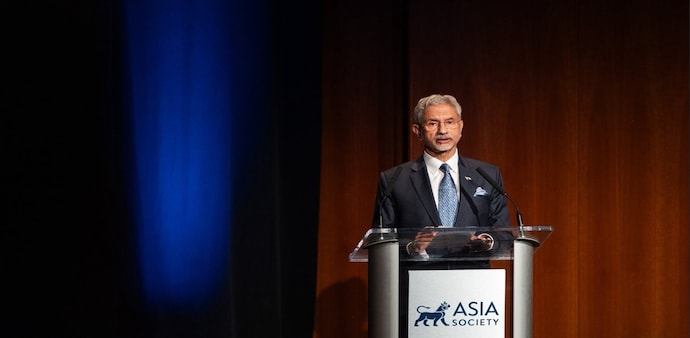
External Affairs Minister S Jaishankar said terrorism remains a key concern for India in its relationship with the US, and that there was not enough understanding or empathy in Washington over the issue.
"Terrorism matters deeply to us. We feel that as a country, perhaps there are very few countries which have been subjected to the kind of terrorism that we have from a neighbor as part of a deliberate conscious policy over many many decades," Jaishankar said in a conversation with former American diplomat and Asia Society Policy Institute distinguished fellow Daniel Russel.
"If something which matters so deeply to us, there isn’t enough understanding or appreciation of empathy of that, I think that creates a problem too," he said.
Jaishankar said India expected its partners to understand its primary security concerns. "If one of my primary concerns is not fully appreciated by my partner, then clearly there is an impact of that on the relationship," he said.
His remarks come as India-US ties face strains over trade, tariffs, Russian energy purchases, and Washington's renewed engagement with Pakistan. The two sides are still negotiating a trade agreement, while the US has also been considering new tariff measures linked to countries buying Russian energy.
Must Watch: Iran’s 730-Km Chabahar Rail Link: India’s New Route To Central Asia Without Pakistan
Trade negotiations remain a hurdle
Jaishankar also pointed to the prolonged trade negotiations as another source of friction.
He said India and the US had reached "more or less an understanding" on the trade agreement, but changes in Washington’s tariff policy had complicated the timing of its conclusion.
The US had moved away from reciprocal tariffs after they were struck down, Jaishankar said, with a new basis for tariffs now being considered under Section 301. That process is still underway.
"So the issue for us is at what point do you close out an agreement which is very very far advanced," he said.
Jaishankar said the complexity of the negotiations had been underestimated because of the differences between the two economies.
"India is a society of small producers, small agriculture producers, small factories," he said, adding that the per-capita gap between the two countries and the nature of their production systems made the negotiations more complicated.
"The expectation that it could rapidly move forward was tested against a ground reality which was much more complex," he said.
In Case You Missed It: 'A terrorist country is asking me...': EAM Jaishankar hits back at Pakistani reporter at UN briefing
The EAM said the difficulties in the India-US relationship should also be viewed against a broader global backdrop. "Much of the world has had a more difficult relationship with the US. That may not be a consolation, but that's a reality," he said.
But he added that larger countries often had specific issues that shaped their relationships with Washington.
For India, terrorism was one of those issues.
Jaishankar said the prolonged trade negotiations had created "bumps" in the relationship over the past year. Closing the agreement, he said, would therefore be one step that could help put ties on a better track.
"We would certainly hope for and expect the relationship to move on an upward trajectory, but I have to be real about the issues that we confront," he said. "And to the extent we are able to move ahead on some of these issues I think we'll have a better relationship."
India's concerns over Pakistan
Under Donald Trump, ties have improved between the US and Pakistan. In June 2025, Trump hosted Pakistan Army chief Asim Munir for lunch at the White House. Munir and Pakistan Prime Minister Shehbaz Sharif later met Trump again at the White House during the UN General Assembly session in September 2025.
Trump has also repeatedly claimed that he helped stop the India-Pakistan conflict after India's Operation Sindoor in May 2025.
India launched Operation Sindoor after the April 22, 2025, terror attack in Pahalgam, Jammu and Kashmir.
Trump has publicly praised Munir on several occasions, calling him a "Great General."
External Affairs Minister S Jaishankar said terrorism remains a key concern for India in its relationship with the US, and that there was not enough understanding or empathy in Washington over the issue.
"Terrorism matters deeply to us. We feel that as a country, perhaps there are very few countries which have been subjected to the kind of terrorism that we have from a neighbor as part of a deliberate conscious policy over many many decades," Jaishankar said in a conversation with former American diplomat and Asia Society Policy Institute distinguished fellow Daniel Russel.
"If something which matters so deeply to us, there isn’t enough understanding or appreciation of empathy of that, I think that creates a problem too," he said.
Jaishankar said India expected its partners to understand its primary security concerns. "If one of my primary concerns is not fully appreciated by my partner, then clearly there is an impact of that on the relationship," he said.
His remarks come as India-US ties face strains over trade, tariffs, Russian energy purchases, and Washington's renewed engagement with Pakistan. The two sides are still negotiating a trade agreement, while the US has also been considering new tariff measures linked to countries buying Russian energy.
Must Watch: Iran’s 730-Km Chabahar Rail Link: India’s New Route To Central Asia Without Pakistan
Trade negotiations remain a hurdle
Jaishankar also pointed to the prolonged trade negotiations as another source of friction.
He said India and the US had reached "more or less an understanding" on the trade agreement, but changes in Washington’s tariff policy had complicated the timing of its conclusion.
The US had moved away from reciprocal tariffs after they were struck down, Jaishankar said, with a new basis for tariffs now being considered under Section 301. That process is still underway.
"So the issue for us is at what point do you close out an agreement which is very very far advanced," he said.
Jaishankar said the complexity of the negotiations had been underestimated because of the differences between the two economies.
"India is a society of small producers, small agriculture producers, small factories," he said, adding that the per-capita gap between the two countries and the nature of their production systems made the negotiations more complicated.
"The expectation that it could rapidly move forward was tested against a ground reality which was much more complex," he said.
In Case You Missed It: 'A terrorist country is asking me...': EAM Jaishankar hits back at Pakistani reporter at UN briefing
The EAM said the difficulties in the India-US relationship should also be viewed against a broader global backdrop. "Much of the world has had a more difficult relationship with the US. That may not be a consolation, but that's a reality," he said.
But he added that larger countries often had specific issues that shaped their relationships with Washington.
For India, terrorism was one of those issues.
Jaishankar said the prolonged trade negotiations had created "bumps" in the relationship over the past year. Closing the agreement, he said, would therefore be one step that could help put ties on a better track.
"We would certainly hope for and expect the relationship to move on an upward trajectory, but I have to be real about the issues that we confront," he said. "And to the extent we are able to move ahead on some of these issues I think we'll have a better relationship."
India's concerns over Pakistan
Under Donald Trump, ties have improved between the US and Pakistan. In June 2025, Trump hosted Pakistan Army chief Asim Munir for lunch at the White House. Munir and Pakistan Prime Minister Shehbaz Sharif later met Trump again at the White House during the UN General Assembly session in September 2025.
Trump has also repeatedly claimed that he helped stop the India-Pakistan conflict after India's Operation Sindoor in May 2025.
India launched Operation Sindoor after the April 22, 2025, terror attack in Pahalgam, Jammu and Kashmir.
Trump has publicly praised Munir on several occasions, calling him a "Great General."