
India-EFTA FTA: Frozen salmon fillets gain ground in India's seafood market
The growth comes as India implements its trade agreement with the European Free Trade Association (EFTA), comprising Norway, Switzerland, Iceland and Liechtenstein
- Oct 12, 2026,
- Updated Oct 12, 2026 5:18 PM IST
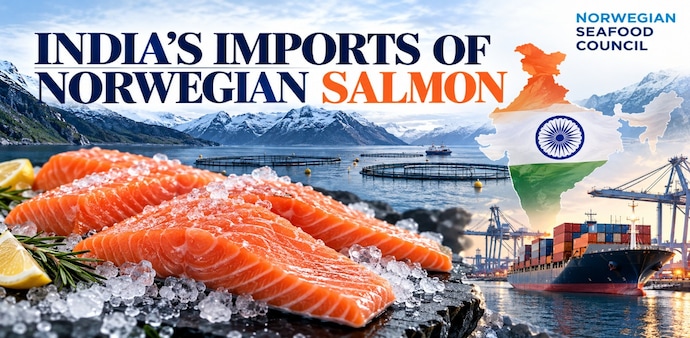
India’s imports of Norwegian salmon are increasingly shifting towards frozen fillets, with shipments rising more than fourfold in volume in January-August 2026, according to data shared by the Norwegian Seafood Council with Business Today.
Salmon exports to India rose to 355 tonnes, valued at around $2.7 million, during the eight months, from 146 tonnes worth approximately $1.1 million a year earlier. Frozen fillets accounted for around $1 million of exports, followed by fresh whole salmon at approximately $870,000.
Average export prices for frozen fillets fell to NOK 117.5 per kg (around $12.1 per kg) from NOK 150.6 per kg (around $15.5 per kg) in the year-earlier period, even as volumes increased more than fourfold. In contrast, average export prices for fresh whole salmon rose 7% year-on-year to NOK 76.8 per kg (around $7.9 per kg).
The growth comes as India implements its trade agreement with the European Free Trade Association (EFTA), comprising Norway, Switzerland, Iceland and Liechtenstein. However, the export data does not establish whether tariff concessions have contributed to the increase.
Signed on March 10, 2024, the India-EFTA Trade and Economic Partnership Agreement (TEPA) came into force on October 1, 2025. Under the pact, India has offered tariff concessions on 82.7% of its tariff lines, covering 95.3% of EFTA exports.
For Norwegian seafood, import duties on fresh whole salmon and salmon fillets are being phased down from a base rate of 33% to zero over five years, while frozen whole salmon received zero-duty access from the agreement’s entry into force.
India’s imports of Norwegian salmon are increasingly shifting towards frozen fillets, with shipments rising more than fourfold in volume in January-August 2026, according to data shared by the Norwegian Seafood Council with Business Today.
Salmon exports to India rose to 355 tonnes, valued at around $2.7 million, during the eight months, from 146 tonnes worth approximately $1.1 million a year earlier. Frozen fillets accounted for around $1 million of exports, followed by fresh whole salmon at approximately $870,000.
Average export prices for frozen fillets fell to NOK 117.5 per kg (around $12.1 per kg) from NOK 150.6 per kg (around $15.5 per kg) in the year-earlier period, even as volumes increased more than fourfold. In contrast, average export prices for fresh whole salmon rose 7% year-on-year to NOK 76.8 per kg (around $7.9 per kg).
The growth comes as India implements its trade agreement with the European Free Trade Association (EFTA), comprising Norway, Switzerland, Iceland and Liechtenstein. However, the export data does not establish whether tariff concessions have contributed to the increase.
Signed on March 10, 2024, the India-EFTA Trade and Economic Partnership Agreement (TEPA) came into force on October 1, 2025. Under the pact, India has offered tariff concessions on 82.7% of its tariff lines, covering 95.3% of EFTA exports.
For Norwegian seafood, import duties on fresh whole salmon and salmon fillets are being phased down from a base rate of 33% to zero over five years, while frozen whole salmon received zero-duty access from the agreement’s entry into force.