
India expands nuclear edge over Pakistan; China races ahead in warhead buildup
India's nuclear modernisation efforts are increasingly focused on China, although strategic planning continues to be shaped by its long-standing rivalry with Pakistan
- Jun 8, 2026,
- Updated Jun 8, 2026 12:55 PM IST
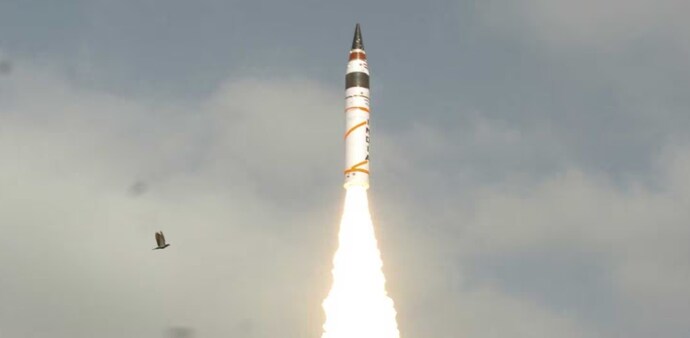
India slightly expanded its nuclear arsenal in 2025 and continued developing new nuclear delivery systems, with its modernization programme increasingly geared towards long-range weapons capable of reaching targets across China, according to the latest assessment by the Stockholm International Peace Research Institute (SIPRI).
In its Yearbook 2026 released on Monday, SIPRI said India is estimated to possess 190 nuclear warheads, up from previous years, while neighboring Pakistan's arsenal stands at 170 warheads.
"India is believed to have once again slightly expanded its nuclear arsenal in 2025 and continued development of new types of nuclear delivery systems," SIPRI said.
The report noted that India's nuclear modernisation efforts are increasingly focused on China, although strategic planning continues to be shaped by its long-standing rivalry with Pakistan.
"The modernisation programme is increasingly focused on developing long-range weapons capable of reaching targets throughout China, although planning also continues to be focused on India's long-standing rivalry with Pakistan," SIPRI said.
The findings come amid a broader global trend that SIPRI says is reversing decades of nuclear restraint.
According to the institute, countries are increasingly relying on nuclear weapons as instruments of national power even as the risks of miscalculation and escalation continue to rise.
Pakistan, meanwhile, continued to develop new delivery systems and accumulate fissile material during 2025, suggesting that its nuclear arsenal could grow further in the coming years.
SIPRI also referred to the brief armed conflict between India and Pakistan in May 2025, saying Indian forces targeted Pakistani air and missile bases that were likely linked to nuclear-related roles.
"The brief armed conflict between India and Pakistan in May 2025 saw India attacking Pakistani air- and missile bases that are likely to have nuclear-related roles, but both sides took steps to avoid escalation," the institute said.
The report highlighted China's rapid nuclear expansion, describing it as the fastest-growing nuclear arsenal in the world. SIPRI estimates China now possesses around 620 nuclear warheads and has accelerated the deployment of new missile systems.
According to the institute, China had loaded hundreds of missiles into three large missile silo fields in the country's north by January 2026 and was continuing work on additional silos in eastern mountainous regions.
"China is expanding its nuclear arsenal faster than any other country," SIPRI said.
The institute added that depending on how Beijing structures its forces, China could potentially have at least as many intercontinental ballistic missiles as either Russia or the United States by the end of the decade.
However, SIPRI noted that even if China's arsenal exceeds 1,000 warheads by 2030, it would still amount to only about one-quarter of the current Russian and US nuclear stockpiles.
The report underscores a shifting strategic landscape in Asia, with India, Pakistan and China all continuing to invest in expanding or modernizing their nuclear capabilities amid growing regional and global security tensions.
India slightly expanded its nuclear arsenal in 2025 and continued developing new nuclear delivery systems, with its modernization programme increasingly geared towards long-range weapons capable of reaching targets across China, according to the latest assessment by the Stockholm International Peace Research Institute (SIPRI).
In its Yearbook 2026 released on Monday, SIPRI said India is estimated to possess 190 nuclear warheads, up from previous years, while neighboring Pakistan's arsenal stands at 170 warheads.
"India is believed to have once again slightly expanded its nuclear arsenal in 2025 and continued development of new types of nuclear delivery systems," SIPRI said.
The report noted that India's nuclear modernisation efforts are increasingly focused on China, although strategic planning continues to be shaped by its long-standing rivalry with Pakistan.
"The modernisation programme is increasingly focused on developing long-range weapons capable of reaching targets throughout China, although planning also continues to be focused on India's long-standing rivalry with Pakistan," SIPRI said.
The findings come amid a broader global trend that SIPRI says is reversing decades of nuclear restraint.
According to the institute, countries are increasingly relying on nuclear weapons as instruments of national power even as the risks of miscalculation and escalation continue to rise.
Pakistan, meanwhile, continued to develop new delivery systems and accumulate fissile material during 2025, suggesting that its nuclear arsenal could grow further in the coming years.
SIPRI also referred to the brief armed conflict between India and Pakistan in May 2025, saying Indian forces targeted Pakistani air and missile bases that were likely linked to nuclear-related roles.
"The brief armed conflict between India and Pakistan in May 2025 saw India attacking Pakistani air- and missile bases that are likely to have nuclear-related roles, but both sides took steps to avoid escalation," the institute said.
The report highlighted China's rapid nuclear expansion, describing it as the fastest-growing nuclear arsenal in the world. SIPRI estimates China now possesses around 620 nuclear warheads and has accelerated the deployment of new missile systems.
According to the institute, China had loaded hundreds of missiles into three large missile silo fields in the country's north by January 2026 and was continuing work on additional silos in eastern mountainous regions.
"China is expanding its nuclear arsenal faster than any other country," SIPRI said.
The institute added that depending on how Beijing structures its forces, China could potentially have at least as many intercontinental ballistic missiles as either Russia or the United States by the end of the decade.
However, SIPRI noted that even if China's arsenal exceeds 1,000 warheads by 2030, it would still amount to only about one-quarter of the current Russian and US nuclear stockpiles.
The report underscores a shifting strategic landscape in Asia, with India, Pakistan and China all continuing to invest in expanding or modernizing their nuclear capabilities amid growing regional and global security tensions.