
India faces fertilizer squeeze as rising costs force govt to rethink urea policy
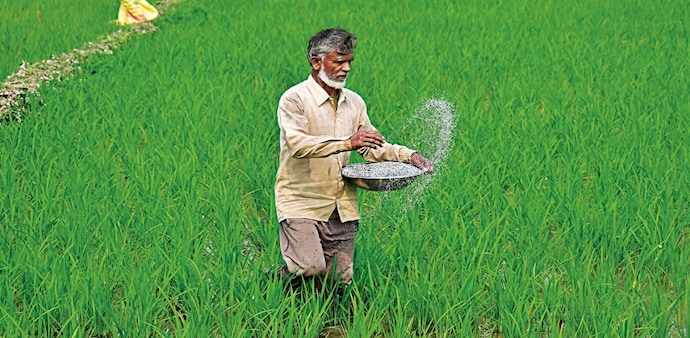
Urea is a nitrogen-based fertilizer that helps crops grow and has been an important part of India's agricultural system since the Green Revolution.
- Aug 17, 2026,
- Updated Aug 17, 2026 5:16 PM IST
India is facing a growing fertilizer problem as rising global prices, supply disruptions and a weak monsoon push up costs for the government and create uncertainty for farmers, according to a report by Bloomberg.
The government has spent decades keeping urea cheap for farmers. But the rising cost of fertilizer subsidies and concerns over excessive use are now forcing India to rethink the policy.
Why urea is so important
As per the report, Indian farmers use more urea than the US and Brazil combined.
Urea is a nitrogen-based fertilizer that helps crops grow and has been an important part of India's agricultural system since the Green Revolution.
Farmers currently pay just $2.80 (Rs 266.5) for a 45-kilogram bag of urea. This is less than a tenth of what the government paid in an April tender to procure it.
The subsidy was introduced after the food crises of the 1960s, when India wanted to increase food production and reduce its dependence on grain imports.
The policy helped India become a food-surplus country. India is now the world's No. 1 rice exporter.
Fertilizer costs are rising
India is one of the world's biggest urea buyers. It paid nearly double pre-war prices for supplies in an April tender after fertilizer flows through the Strait of Hormuz were disrupted.
Natural gas imports have also become expensive. Gas is an important raw material used to produce fertilizer in India.
The higher costs are putting pressure on the government's subsidy bill.
India's fertilizer subsidy bill is likely to exceed $31 billion (Rs 3 trillion) in the current fiscal year, compared with the budgeted Rs 1.71 trillion, according to a government official familiar with the matter.
The bill could rise further if the conflict in the West Asia continues. The Indian Council for Research on International Economic Relations has forecast that the subsidy could reach Rs 3.32 trillion if the conflict is prolonged.
Even if tensions ease, spending could reach at least Rs 2.42 trillion, more than 40% above the amount allocated in the annual budget.
Must Read: AI is no longer a startup pitch differentiator, says Zerodha CEO Nithin Kamath
Government wants farmers to use less fertilizer
The government is now trying to reduce excessive fertilizer use.
In a May speech, Prime Minister Narendra Modi said it’s “essential” for the country to reduce consumption of chemical fertilizers. He urged farmers to cut use by as much as half.
By doing so, “we can save our Mother Earth,” he said. “We have to do it.”
The agriculture ministry also ran a nationwide campaign through June to encourage farmers to reduce fertilizer use and get their soil tested.
Agriculture Minister Shivraj Singh Chouhan warned that excessive fertilizer use can kill beneficial microorganisms, reduce yields and increase costs.
Too much fertilizer is also damaging soil
Farmers often use fertilizer above recommended levels to maximise crop yields, according to industry officials.
Years of excessive use have affected soil health. Fertilizer runoff can contaminate groundwater and rivers, while excess nitrogen releases nitrous oxide, a powerful greenhouse gas that also contributes to air pollution.
More than half of the 9 million soil samples tested across India during the 2025-26 season had low levels of organic carbon, an important measure of soil fertility, according to Agriculture Ministry data.
“The spending on fertilizer subsidies is ‘money being used inefficiently, ineffectively,’” said Avinash Kishore, a senior research fellow at the International Food Policy Research Institute. “It is baking in unhealthy, not environmentally friendly, unproductive practices in Indian agriculture.”
Farmers are not ready to cut use
For farmers, reducing fertilizer use is not easy because they depend on their harvests for income.
Farmer Sukhbir Ram said previous attempts to reduce fertilizer use had affected his yields. He initially said he would consider cutting back on a small part of his land, but later said he planned to use urea as usual.
Prem Chand, a 53-year-old farmer from Haryana, also said his focus was on protecting his yield and income in the next harvest rather than preserving soil quality over the long term.
“As long as there is nothing stipulating legally that they have to cut back, there’s very little reason for the farmer to do it,” said Josh Linville, vice president of fertilizer at StoneX. “The Indian farmer’s no different than the rest of the world where they’re basically sitting there saying, ‘I need to produce as many bushels as humanly possible on every acre of ground.’”
Fertilizer is already being rationed
The shortage is becoming more visible during July and August, when fertilizer use peaks.
Ram said he needs four to five 45-kilogram bags of urea per acre for his rice crop. But his cooperative supplied only three bags per acre for his 15-acre farm after authorities instructed it to limit sales.
He plans to buy the remaining fertilizer from private dealers. Some dealers require farmers to buy additional crop supplements along with urea, which could increase costs.
A fertilizer retail outlet sales manager in Karnal, Haryana, who asked not to be identified, also said sales were being rationed because of tight supplies.
A fertilizer ministry official said India has capped subsidized fertilizer purchases to prevent diversion and ensure fair distribution. Some states are restricting sales to 50 bags a month per buyer.
The government is also testing a new fertilizer distribution system in 40 districts. Under the system, farmers will pre-book fertilizer based on their landholding and the crops they have sown.
Weak monsoon adds to the risk
The fertilizer problem comes as India faces concerns over rainfall.
June was the driest in 12 years, and rainfall is expected to remain below normal through September, according to the country's meteorological department.
El Niño, which is known to affect monsoon rainfall, is adding to concerns about crop production.
Food prices are already rising. Food accounts for more than a third of India's consumer basket and prices climbed about 5.5% last month from a year earlier.
“Food inflation faces upside risks this year, as tightening global fertilizer supplies and deficient rainfall so far this season could weigh on agricultural output and put upward pressure on food prices,” said Sonal Varma, chief economist for Asia ex-Japan at Nomura Holdings Inc.
What happens next?
The government plans to increase annual urea production capacity by 10 million tons, about a third higher than current levels. But experts say managing demand remains the bigger challenge. ICRIER’s Sachchida Nand said “urea policy reforms are long overdue” and warned that without them, supply-side measures would continue to come at a “high fiscal and economic cost.”
India is facing a growing fertilizer problem as rising global prices, supply disruptions and a weak monsoon push up costs for the government and create uncertainty for farmers, according to a report by Bloomberg.
The government has spent decades keeping urea cheap for farmers. But the rising cost of fertilizer subsidies and concerns over excessive use are now forcing India to rethink the policy.
Why urea is so important
As per the report, Indian farmers use more urea than the US and Brazil combined.
Urea is a nitrogen-based fertilizer that helps crops grow and has been an important part of India's agricultural system since the Green Revolution.
Farmers currently pay just $2.80 (Rs 266.5) for a 45-kilogram bag of urea. This is less than a tenth of what the government paid in an April tender to procure it.
The subsidy was introduced after the food crises of the 1960s, when India wanted to increase food production and reduce its dependence on grain imports.
The policy helped India become a food-surplus country. India is now the world's No. 1 rice exporter.
Fertilizer costs are rising
India is one of the world's biggest urea buyers. It paid nearly double pre-war prices for supplies in an April tender after fertilizer flows through the Strait of Hormuz were disrupted.
Natural gas imports have also become expensive. Gas is an important raw material used to produce fertilizer in India.
The higher costs are putting pressure on the government's subsidy bill.
India's fertilizer subsidy bill is likely to exceed $31 billion (Rs 3 trillion) in the current fiscal year, compared with the budgeted Rs 1.71 trillion, according to a government official familiar with the matter.
The bill could rise further if the conflict in the West Asia continues. The Indian Council for Research on International Economic Relations has forecast that the subsidy could reach Rs 3.32 trillion if the conflict is prolonged.
Even if tensions ease, spending could reach at least Rs 2.42 trillion, more than 40% above the amount allocated in the annual budget.
Must Read: AI is no longer a startup pitch differentiator, says Zerodha CEO Nithin Kamath
Government wants farmers to use less fertilizer
The government is now trying to reduce excessive fertilizer use.
In a May speech, Prime Minister Narendra Modi said it’s “essential” for the country to reduce consumption of chemical fertilizers. He urged farmers to cut use by as much as half.
By doing so, “we can save our Mother Earth,” he said. “We have to do it.”
The agriculture ministry also ran a nationwide campaign through June to encourage farmers to reduce fertilizer use and get their soil tested.
Agriculture Minister Shivraj Singh Chouhan warned that excessive fertilizer use can kill beneficial microorganisms, reduce yields and increase costs.
Too much fertilizer is also damaging soil
Farmers often use fertilizer above recommended levels to maximise crop yields, according to industry officials.
Years of excessive use have affected soil health. Fertilizer runoff can contaminate groundwater and rivers, while excess nitrogen releases nitrous oxide, a powerful greenhouse gas that also contributes to air pollution.
More than half of the 9 million soil samples tested across India during the 2025-26 season had low levels of organic carbon, an important measure of soil fertility, according to Agriculture Ministry data.
“The spending on fertilizer subsidies is ‘money being used inefficiently, ineffectively,’” said Avinash Kishore, a senior research fellow at the International Food Policy Research Institute. “It is baking in unhealthy, not environmentally friendly, unproductive practices in Indian agriculture.”
Farmers are not ready to cut use
For farmers, reducing fertilizer use is not easy because they depend on their harvests for income.
Farmer Sukhbir Ram said previous attempts to reduce fertilizer use had affected his yields. He initially said he would consider cutting back on a small part of his land, but later said he planned to use urea as usual.
Prem Chand, a 53-year-old farmer from Haryana, also said his focus was on protecting his yield and income in the next harvest rather than preserving soil quality over the long term.
“As long as there is nothing stipulating legally that they have to cut back, there’s very little reason for the farmer to do it,” said Josh Linville, vice president of fertilizer at StoneX. “The Indian farmer’s no different than the rest of the world where they’re basically sitting there saying, ‘I need to produce as many bushels as humanly possible on every acre of ground.’”
Fertilizer is already being rationed
The shortage is becoming more visible during July and August, when fertilizer use peaks.
Ram said he needs four to five 45-kilogram bags of urea per acre for his rice crop. But his cooperative supplied only three bags per acre for his 15-acre farm after authorities instructed it to limit sales.
He plans to buy the remaining fertilizer from private dealers. Some dealers require farmers to buy additional crop supplements along with urea, which could increase costs.
A fertilizer retail outlet sales manager in Karnal, Haryana, who asked not to be identified, also said sales were being rationed because of tight supplies.
A fertilizer ministry official said India has capped subsidized fertilizer purchases to prevent diversion and ensure fair distribution. Some states are restricting sales to 50 bags a month per buyer.
The government is also testing a new fertilizer distribution system in 40 districts. Under the system, farmers will pre-book fertilizer based on their landholding and the crops they have sown.
Weak monsoon adds to the risk
The fertilizer problem comes as India faces concerns over rainfall.
June was the driest in 12 years, and rainfall is expected to remain below normal through September, according to the country's meteorological department.
El Niño, which is known to affect monsoon rainfall, is adding to concerns about crop production.
Food prices are already rising. Food accounts for more than a third of India's consumer basket and prices climbed about 5.5% last month from a year earlier.
“Food inflation faces upside risks this year, as tightening global fertilizer supplies and deficient rainfall so far this season could weigh on agricultural output and put upward pressure on food prices,” said Sonal Varma, chief economist for Asia ex-Japan at Nomura Holdings Inc.
What happens next?
The government plans to increase annual urea production capacity by 10 million tons, about a third higher than current levels. But experts say managing demand remains the bigger challenge. ICRIER’s Sachchida Nand said “urea policy reforms are long overdue” and warned that without them, supply-side measures would continue to come at a “high fiscal and economic cost.”