
India, New Zealand seal major strategic partnership: Why India's latest global deal is worth watching
The meeting yielded 18 concrete outcomes, including 10 agreements. Among the key announcements were a roadmap to expand bilateral ties over the next four years, a framework to enhance Indo-Pacific maritime cooperation, and a reciprocal logistics support pact between the Indian Navy and the New Zealand Defence Force.
- Jul 11, 2026,
- Updated Jul 11, 2026 9:07 AM IST
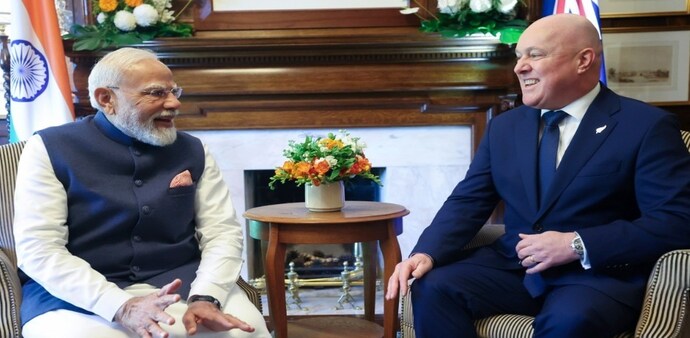
India and New Zealand on Saturday took a major step towards deepening their partnership, signalling a shared vision for stronger economic and strategic ties in an increasingly uncertain global landscape. Following talks between Prime Minister Narendra Modi and his New Zealand counterpart Christopher Luxon, the two countries elevated their relationship to a strategic partnership and set an ambitious target of doubling annual bilateral trade in goods and services to Rs 35,000 crore by 2030.
The meeting yielded 18 concrete outcomes, including 10 agreements. Among the key announcements were a roadmap to expand bilateral ties over the next four years, a framework to enhance Indo-Pacific maritime cooperation, and a reciprocal logistics support pact between the Indian Navy and the New Zealand Defence Force.
Trade target and FTA push
The visit followed the recent signing of the India–New Zealand Free Trade Agreement (FTA).
The two leaders agreed to work towards an aspirational goal of doubling bilateral trade in goods and services to 7 billion New Zealand dollars, or around Rs 35,000 crore, by 2030. The target reflects the growing momentum in economic ties between the two countries and their intent to build a more resilient and forward-looking trade relationship.
They also resolved to work together to ensure the early entry into force of the FTA, which is expected to provide a stronger framework for trade in goods and services and deepen economic cooperation between the two sides.
Focus on the Indo-Pacific
A joint statement said Modi and Luxon exchanged views on the Indo-Pacific and reaffirmed their shared commitment to a free, open and prosperous region. They also underscored the importance of safeguarding sovereignty, territorial integrity and the rules-based international order.
The two prime ministers also called for freedom of navigation and overflight, along with other lawful uses of the seas, in accordance with international law, particularly the 1982 United Nations Convention on the Law of the Sea.
Reflecting their focus on greater cooperation in the Indo-Pacific, the two sides agreed to establish a maritime security dialogue to strengthen coordination, cooperation and information exchange.
Modi arrived in Auckland on Friday night for the third and final leg of his three-nation tour, which largely focused on expanding cooperation in the Indo-Pacific amid China's growing assertiveness in the region.
Speaking during the talks, Modi said closer cooperation between India and New Zealand, both maritime nations, would strengthen the Indo-Pacific.
"As two maritime nations, our close cooperation, lends new strength to the Indo-Pacific, and our ties can infuse fresh energy into achieving our shared goals of peace," the prime minister said in Hindi.
West Asia conflict and UN reforms
Turning to the conflict in West Asia, Modi and Luxon expressed concern over the renewed escalation of tensions and called on all parties to exercise restraint, de-escalate the situation and ensure the protection of civilians, according to the joint statement.
"They called for full restoration of freedom of navigation and the global flow of commerce through the Strait of Hormuz, while opposing any constraints on shipping," it said.
The two leaders reiterated the importance of dialogue, diplomacy and adherence to international law to achieve a peaceful and lasting resolution to the conflict.
Modi and Luxon also called for "bold and effective" reforms of the United Nations and reaffirmed their support for expanding the UN Security Council.
India and New Zealand on Saturday took a major step towards deepening their partnership, signalling a shared vision for stronger economic and strategic ties in an increasingly uncertain global landscape. Following talks between Prime Minister Narendra Modi and his New Zealand counterpart Christopher Luxon, the two countries elevated their relationship to a strategic partnership and set an ambitious target of doubling annual bilateral trade in goods and services to Rs 35,000 crore by 2030.
The meeting yielded 18 concrete outcomes, including 10 agreements. Among the key announcements were a roadmap to expand bilateral ties over the next four years, a framework to enhance Indo-Pacific maritime cooperation, and a reciprocal logistics support pact between the Indian Navy and the New Zealand Defence Force.
Trade target and FTA push
The visit followed the recent signing of the India–New Zealand Free Trade Agreement (FTA).
The two leaders agreed to work towards an aspirational goal of doubling bilateral trade in goods and services to 7 billion New Zealand dollars, or around Rs 35,000 crore, by 2030. The target reflects the growing momentum in economic ties between the two countries and their intent to build a more resilient and forward-looking trade relationship.
They also resolved to work together to ensure the early entry into force of the FTA, which is expected to provide a stronger framework for trade in goods and services and deepen economic cooperation between the two sides.
Focus on the Indo-Pacific
A joint statement said Modi and Luxon exchanged views on the Indo-Pacific and reaffirmed their shared commitment to a free, open and prosperous region. They also underscored the importance of safeguarding sovereignty, territorial integrity and the rules-based international order.
The two prime ministers also called for freedom of navigation and overflight, along with other lawful uses of the seas, in accordance with international law, particularly the 1982 United Nations Convention on the Law of the Sea.
Reflecting their focus on greater cooperation in the Indo-Pacific, the two sides agreed to establish a maritime security dialogue to strengthen coordination, cooperation and information exchange.
Modi arrived in Auckland on Friday night for the third and final leg of his three-nation tour, which largely focused on expanding cooperation in the Indo-Pacific amid China's growing assertiveness in the region.
Speaking during the talks, Modi said closer cooperation between India and New Zealand, both maritime nations, would strengthen the Indo-Pacific.
"As two maritime nations, our close cooperation, lends new strength to the Indo-Pacific, and our ties can infuse fresh energy into achieving our shared goals of peace," the prime minister said in Hindi.
West Asia conflict and UN reforms
Turning to the conflict in West Asia, Modi and Luxon expressed concern over the renewed escalation of tensions and called on all parties to exercise restraint, de-escalate the situation and ensure the protection of civilians, according to the joint statement.
"They called for full restoration of freedom of navigation and the global flow of commerce through the Strait of Hormuz, while opposing any constraints on shipping," it said.
The two leaders reiterated the importance of dialogue, diplomacy and adherence to international law to achieve a peaceful and lasting resolution to the conflict.
Modi and Luxon also called for "bold and effective" reforms of the United Nations and reaffirmed their support for expanding the UN Security Council.