
'India hit Nur Khan, Shorkot bases...': Pak Deputy PM's explosive admission on Operation Sindoor. Watch here
In another revealing twist, Ishaq Dar said Saudi Prince Faisal bin Salman personally asked if Pakistan was ready to stop and convey the message to Indian Foreign Minister S Jaishankar — indicating that Islamabad turned to Riyadh, not just Washington, in its effort to de-escalate.
- Jun 19, 2025,
- Updated Jun 19, 2025 8:27 PM IST
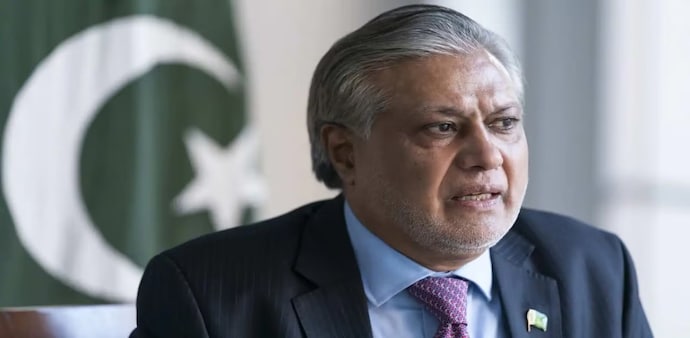
In a startling departure from the narrative spun by Pakistan’s leadership, Deputy Prime Minister Ishaq Dar has admitted that India struck key Pakistani airbases during recent military clashes under Operation Sindoor.
Speaking to Geo News, Dar revealed that India’s precision strikes targeted the Nur Khan and Shorkot airbases — a disclosure that sharply contradicts Pakistan Prime Minister Shehbaz Sharif’s earlier claims of a triumphant operation. In another revealing twist, Dar said Saudi Prince Faisal bin Salman personally asked if Pakistan was ready to stop and convey the message to Indian Foreign Minister S Jaishankar — indicating that Islamabad turned to Riyadh, not just Washington, in its effort to de-escalate.
Talking to Geo News, Deputy PM Ishaq Dar acknowledged that India hit the strategic Nur Khan and Shorkot airbases just as it was preparing to launch retaliatory strikes. "Saudi Prince Faisal bin Salman called and asked if he could tell Jaishankar that Pakistan is ready to stop," Dar said, confirming that Pakistan reached out to Saudi Arabia alongside the US to mediate with India.
Dar’s statement starkly contrasts with PM Shehbaz Sharif’s claim that Pakistan delivered a decisive blow to India during Operation Sindoor. The reality painted by recent disclosures suggests otherwise.
Just days after India’s strikes, Pakistan’s armed forces — led by Army Chief General Asim Munir — were reeling from a surprise hit that reportedly disrupted planned Pakistani counterattacks. In a surprising move, Munir has since been elevated to the rank of Field Marshal, even as protests by PTI supporters shadowed his ongoing visit to the United States.
“India attempted to establish a ‘new normal’ — a dangerous precedent of crossing international borders at will,” Munir told a gathering of overseas Pakistanis in Washington, as quoted by *Dawn*. He was referring to India’s precision operations under Operation Sindoor, which targeted nine terror-linked facilities across Pakistan and Pakistan-occupied Kashmir.
PM Sharif, too, recently admitted that India carried out BrahMos missile strikes on Pakistani territory, including Rawalpindi airport. "India again launched missile attacks, BrahMos, and hit Pakistan's various provinces, including airport in Rawalpindi and other places," Sharif stated. He added that Pakistan’s planned counterstrike for 4:30 AM on May 10 was preempted by India’s offensive on the night of May 9-10, catching the military off guard.
Together, these acknowledgments present a sharp shift from Islamabad’s earlier boasts, revealing instead a defensive scramble against India’s "new normal."
In a startling departure from the narrative spun by Pakistan’s leadership, Deputy Prime Minister Ishaq Dar has admitted that India struck key Pakistani airbases during recent military clashes under Operation Sindoor.
Speaking to Geo News, Dar revealed that India’s precision strikes targeted the Nur Khan and Shorkot airbases — a disclosure that sharply contradicts Pakistan Prime Minister Shehbaz Sharif’s earlier claims of a triumphant operation. In another revealing twist, Dar said Saudi Prince Faisal bin Salman personally asked if Pakistan was ready to stop and convey the message to Indian Foreign Minister S Jaishankar — indicating that Islamabad turned to Riyadh, not just Washington, in its effort to de-escalate.
Talking to Geo News, Deputy PM Ishaq Dar acknowledged that India hit the strategic Nur Khan and Shorkot airbases just as it was preparing to launch retaliatory strikes. "Saudi Prince Faisal bin Salman called and asked if he could tell Jaishankar that Pakistan is ready to stop," Dar said, confirming that Pakistan reached out to Saudi Arabia alongside the US to mediate with India.
Dar’s statement starkly contrasts with PM Shehbaz Sharif’s claim that Pakistan delivered a decisive blow to India during Operation Sindoor. The reality painted by recent disclosures suggests otherwise.
Just days after India’s strikes, Pakistan’s armed forces — led by Army Chief General Asim Munir — were reeling from a surprise hit that reportedly disrupted planned Pakistani counterattacks. In a surprising move, Munir has since been elevated to the rank of Field Marshal, even as protests by PTI supporters shadowed his ongoing visit to the United States.
“India attempted to establish a ‘new normal’ — a dangerous precedent of crossing international borders at will,” Munir told a gathering of overseas Pakistanis in Washington, as quoted by *Dawn*. He was referring to India’s precision operations under Operation Sindoor, which targeted nine terror-linked facilities across Pakistan and Pakistan-occupied Kashmir.
PM Sharif, too, recently admitted that India carried out BrahMos missile strikes on Pakistani territory, including Rawalpindi airport. "India again launched missile attacks, BrahMos, and hit Pakistan's various provinces, including airport in Rawalpindi and other places," Sharif stated. He added that Pakistan’s planned counterstrike for 4:30 AM on May 10 was preempted by India’s offensive on the night of May 9-10, catching the military off guard.
Together, these acknowledgments present a sharp shift from Islamabad’s earlier boasts, revealing instead a defensive scramble against India’s "new normal."