
India to modify Su-30MKI jets for 300-km Russian air-to-air missile: What it means for IAF
India operates more than 260 Su-30MKI aircraft, making the Russian-origin fighter one of the most important platforms in the IAF’s combat fleet. The aircraft is also being progressively upgraded under broader modernisation programmes.
- Sep 7, 2026,
- Updated Sep 7, 2026 12:29 PM IST
India is considering a major upgrade to its Su-30MKI fighter fleet that could give the Indian Air Force (IAF) a significantly longer reach in beyond-visual-range air combat. The Defence Ministry is looking at modifying the aircraft to integrate the Russian-origin RVV-BD long-range air-to-air missile, according to reports.
The proposal is expected to be considered by the Defence Acquisition Council (DAC), the Defence Ministry’s top body for major military procurement decisions. The development comes as India continues to expand its long-range air-to-air warfare capabilities through a combination of Russian, French and indigenous missile systems.
What is the RVV-BD?
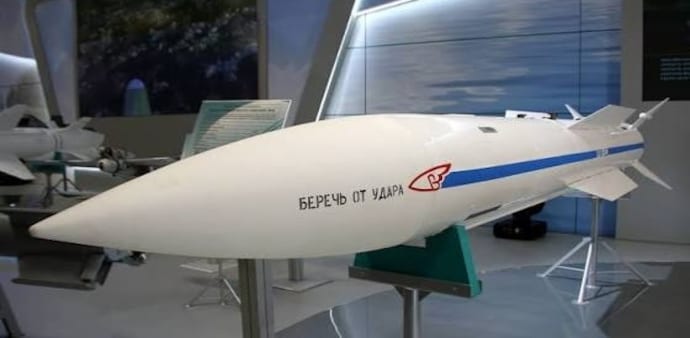
The RVV-BD — short for Raketa Vozduh-Vozduh Bolshoy Dalnosti, or long-range air-to-air missile — is the export designation associated with Russia’s R-37M missile family.
It is a very-long-range, air-launched weapon designed to engage targets well beyond the range of conventional fighter missiles. The missile is particularly suited to attacking high-value aircraft such as airborne early warning and control (AEW&C) platforms, reconnaissance aircraft and other support aircraft operating behind fighter formations.
Recent reports have cited an engagement range of around 300 km, while technical publications have reported substantially higher maximum figures under particular flight conditions. The actual effective range against a specific target depends on factors including launch altitude, speed, target behaviour and engagement conditions.
The missile is also reported to reach speeds of around Mach 6, giving it substantial kinetic energy during the terminal phase.
Why does the Su-30MKI need modification?
Integrating a missile of the RVV-BD class is not simply a matter of mounting it under a fighter’s wing.
The Su-30MKI would need modifications to its weapons-management system, avionics and associated software so that the aircraft can communicate with, launch and support the missile throughout an engagement. The fighter’s sensors and fire-control architecture must also provide the missile with appropriate target information.
The integration would therefore involve engineering work, testing and validation before the weapon could become an operational capability.
This is particularly important because the Su-30MKI is already undergoing extensive modernisation aimed at improving its sensors, avionics and ability to detect and engage targets at longer distances.
Why target AEW&C aircraft?
The RVV-BD could change the way the IAF approaches high-value enemy aircraft.
AEW&C aircraft act as airborne command-and-control nodes. Their powerful radars can detect aircraft at considerable distances and provide targeting information to fighter formations. Taking such an aircraft out of action — or forcing it to operate farther from the battlespace — can reduce the effectiveness of an opposing air force.
The RVV-BD’s long reach could therefore allow a Su-30MKI to threaten such platforms without necessarily having to penetrate deeply into heavily defended airspace.
This makes the missile particularly relevant to counter-support aircraft warfare, rather than simply being another weapon for fighter-versus-fighter combat.
How does it fit with India’s other missiles?
The reported move does not mean India is abandoning indigenous weapons.
The IAF is simultaneously pursuing longer-range versions of the Astra family developed by the Defence Research and Development Organisation (DRDO). India has also acquired the French Meteor beyond-visual-range air-to-air missile for its Rafale fighters.
These weapons serve overlapping but different operational requirements. The RVV-BD would provide the IAF with a very-long-range option, while systems such as Meteor are designed around a different combination of range, manoeuvrability and propulsion.
The longer-term objective is therefore a layered air-to-air weapons inventory rather than dependence on a single missile.
India operates more than 260 Su-30MKI aircraft, making the Russian-origin fighter one of the most important platforms in the IAF’s combat fleet. The aircraft is also being progressively upgraded under broader modernisation programmes.
India is considering a major upgrade to its Su-30MKI fighter fleet that could give the Indian Air Force (IAF) a significantly longer reach in beyond-visual-range air combat. The Defence Ministry is looking at modifying the aircraft to integrate the Russian-origin RVV-BD long-range air-to-air missile, according to reports.
The proposal is expected to be considered by the Defence Acquisition Council (DAC), the Defence Ministry’s top body for major military procurement decisions. The development comes as India continues to expand its long-range air-to-air warfare capabilities through a combination of Russian, French and indigenous missile systems.
What is the RVV-BD?
The RVV-BD — short for Raketa Vozduh-Vozduh Bolshoy Dalnosti, or long-range air-to-air missile — is the export designation associated with Russia’s R-37M missile family.
It is a very-long-range, air-launched weapon designed to engage targets well beyond the range of conventional fighter missiles. The missile is particularly suited to attacking high-value aircraft such as airborne early warning and control (AEW&C) platforms, reconnaissance aircraft and other support aircraft operating behind fighter formations.
Recent reports have cited an engagement range of around 300 km, while technical publications have reported substantially higher maximum figures under particular flight conditions. The actual effective range against a specific target depends on factors including launch altitude, speed, target behaviour and engagement conditions.
The missile is also reported to reach speeds of around Mach 6, giving it substantial kinetic energy during the terminal phase.
Why does the Su-30MKI need modification?
Integrating a missile of the RVV-BD class is not simply a matter of mounting it under a fighter’s wing.
The Su-30MKI would need modifications to its weapons-management system, avionics and associated software so that the aircraft can communicate with, launch and support the missile throughout an engagement. The fighter’s sensors and fire-control architecture must also provide the missile with appropriate target information.
The integration would therefore involve engineering work, testing and validation before the weapon could become an operational capability.
This is particularly important because the Su-30MKI is already undergoing extensive modernisation aimed at improving its sensors, avionics and ability to detect and engage targets at longer distances.
Why target AEW&C aircraft?
The RVV-BD could change the way the IAF approaches high-value enemy aircraft.
AEW&C aircraft act as airborne command-and-control nodes. Their powerful radars can detect aircraft at considerable distances and provide targeting information to fighter formations. Taking such an aircraft out of action — or forcing it to operate farther from the battlespace — can reduce the effectiveness of an opposing air force.
The RVV-BD’s long reach could therefore allow a Su-30MKI to threaten such platforms without necessarily having to penetrate deeply into heavily defended airspace.
This makes the missile particularly relevant to counter-support aircraft warfare, rather than simply being another weapon for fighter-versus-fighter combat.
How does it fit with India’s other missiles?
The reported move does not mean India is abandoning indigenous weapons.
The IAF is simultaneously pursuing longer-range versions of the Astra family developed by the Defence Research and Development Organisation (DRDO). India has also acquired the French Meteor beyond-visual-range air-to-air missile for its Rafale fighters.
These weapons serve overlapping but different operational requirements. The RVV-BD would provide the IAF with a very-long-range option, while systems such as Meteor are designed around a different combination of range, manoeuvrability and propulsion.
The longer-term objective is therefore a layered air-to-air weapons inventory rather than dependence on a single missile.
India operates more than 260 Su-30MKI aircraft, making the Russian-origin fighter one of the most important platforms in the IAF’s combat fleet. The aircraft is also being progressively upgraded under broader modernisation programmes.