
'India warned us, we...': Belgian PM admits Europe slept on warnings about China's market play
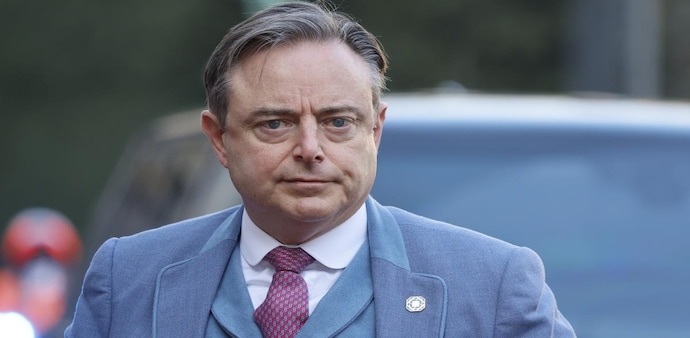
Belgian Prime Minister Bart De Wever outlined key areas for immediate bilateral cooperation between India and Europe, urging joint initiatives across critical minerals, pharmaceuticals, semiconductors, green energy, technology, defense, and maritime security.
- Sep 4, 2026,
- Updated Sep 4, 2026 2:52 PM IST
Speaking at a Confederation of Indian Industry (CII) event in New Delhi, Belgian Prime Minister Bart De Wever issued a candid admission regarding Europe’s historical miscalculation of China's economic strategy, acknowledging that Western nations had ignored early warnings from New Delhi.
Setting a serious tone on the risks of unchecked global trade reliance on September 4, De Wever highlighted how critical economic dependencies can be weaponised by foreign powers to exert geopolitical pressure. Addressing the audience in New Delhi, the Belgian leader directly credited Indian leadership for foreseeing the vulnerabilities associated with market distortions and over-reliance on Beijing.
"India saw this earlier than we did...they warned us. And we didn't listen," De Wever said. Pointing to past geopolitical discussions, he added that Prime Minister Narendra Modi had personally cautioned European leaders about the strategic risks, concluding, "We're listening now."
The Belgian Prime Minister emphasised that Europe is currently facing a rude awakening as it grapples with market imbalances, aggressive dumping of goods, and supply chain vulnerabilities. To counter these systemic threats, he called for a swift, decisive push to finalise the India-European Union Free Trade Agreement (FTA), describing it as an essential foundation for long-term economic resilience.
De Wever outlined key areas for immediate bilateral cooperation between India and Europe, urging joint initiatives across critical minerals, pharmaceuticals, semiconductors, green energy, technology, defense, and maritime security.
By strengthening supply chain integrations and fostering resilient economic frameworks, he noted, both regions can effectively anchor a stable, rules-based global order amid growing protectionism and global economic fragmentation.
Moving to secure supply chains and deepen strategic ties amid growing global geopolitical instability, Prime Minister Narendra Modi and Belgian Prime Minister Bart De Wever oversaw the signing of several pacts to expand bilateral defence cooperation on September 3.
The signing signals a concerted effort by both nations to insulate their economies from market disruptions and geopolitical friction. During bilateral discussions in New Delhi, the two leaders identified critical minerals, semiconductors, high technology, and trade and investment as the foundational pillars required to strengthen resilience against an increasingly fragmented global order.
Underlining the necessity of mutual support, Modi emphasised that deep economic partnerships across critical supply chains are essential for long-term stability. The agreements focus on establishing robust joint initiatives in emerging technology sectors while fostering stronger industrial and security frameworks between India and Belgium.
Speaking at a Confederation of Indian Industry (CII) event in New Delhi, Belgian Prime Minister Bart De Wever issued a candid admission regarding Europe’s historical miscalculation of China's economic strategy, acknowledging that Western nations had ignored early warnings from New Delhi.
Setting a serious tone on the risks of unchecked global trade reliance on September 4, De Wever highlighted how critical economic dependencies can be weaponised by foreign powers to exert geopolitical pressure. Addressing the audience in New Delhi, the Belgian leader directly credited Indian leadership for foreseeing the vulnerabilities associated with market distortions and over-reliance on Beijing.
"India saw this earlier than we did...they warned us. And we didn't listen," De Wever said. Pointing to past geopolitical discussions, he added that Prime Minister Narendra Modi had personally cautioned European leaders about the strategic risks, concluding, "We're listening now."
The Belgian Prime Minister emphasised that Europe is currently facing a rude awakening as it grapples with market imbalances, aggressive dumping of goods, and supply chain vulnerabilities. To counter these systemic threats, he called for a swift, decisive push to finalise the India-European Union Free Trade Agreement (FTA), describing it as an essential foundation for long-term economic resilience.
De Wever outlined key areas for immediate bilateral cooperation between India and Europe, urging joint initiatives across critical minerals, pharmaceuticals, semiconductors, green energy, technology, defense, and maritime security.
By strengthening supply chain integrations and fostering resilient economic frameworks, he noted, both regions can effectively anchor a stable, rules-based global order amid growing protectionism and global economic fragmentation.
Moving to secure supply chains and deepen strategic ties amid growing global geopolitical instability, Prime Minister Narendra Modi and Belgian Prime Minister Bart De Wever oversaw the signing of several pacts to expand bilateral defence cooperation on September 3.
The signing signals a concerted effort by both nations to insulate their economies from market disruptions and geopolitical friction. During bilateral discussions in New Delhi, the two leaders identified critical minerals, semiconductors, high technology, and trade and investment as the foundational pillars required to strengthen resilience against an increasingly fragmented global order.
Underlining the necessity of mutual support, Modi emphasised that deep economic partnerships across critical supply chains are essential for long-term stability. The agreements focus on establishing robust joint initiatives in emerging technology sectors while fostering stronger industrial and security frameworks between India and Belgium.