
India's 'Desi S-400': DRDO's Project Kusha takes maiden flight. How it could transform air defence
India's 'Desi S-400': DRDO's Project Kusha takes maiden flight. How it could transform air defence
Project Kusha is being developed by the Defence Research & Development Organisation (DRDO) as a next-generation, long-range surface-to-air missile (LR-SAM) system for the Indian Air Force, with potential induction into the Indian Army at a later stage.
Subhankar Paul
- Jul 24, 2026,
- Updated Jul 24, 2026 4:57 PM IST
India's Project Kusha is the Defence Research and Development Organisation's (DRDO) ambitious indigenous long-range surface-to-air missile (LR-SAM) programme designed to protect the country's airspace from advanced aerial threats.
Often described as India's answer to the Russian S-400 Triumf, the system aims to provide a multi-layered shield against fighter aircraft, cruise missiles, ballistic missiles, drones, and stealth targets.
Advertisement
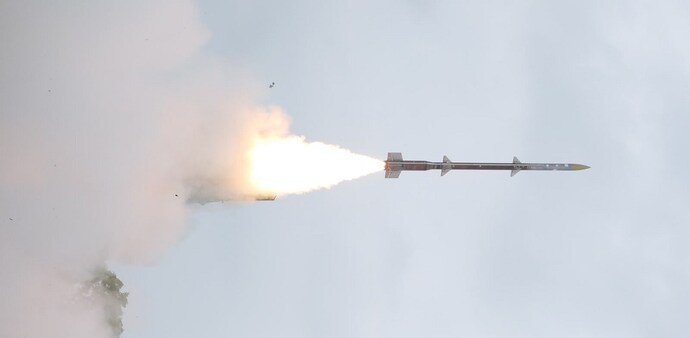
Project Kusha reached a major milestone on July 23, 2026, when the Defence Research & Development Organisation (DRDO) successfully carried out the maiden flight test of the Long-Range Surface-to-Air Missile (LR-SAM) from APJ Abdul Kalam Island off the coast of Odisha.
What is Project Kusha?
Project Kusha is being developed by the Defence Research & Development Organisation (DRDO) as a next-generation, long-range surface-to-air missile (LR-SAM) system for the Indian Air Force, with potential induction into the Indian Army at a later stage.
The system is designed to engage aerial threats at distances of up to 350 km and at altitudes of around 35 km, enabling it to defend large areas against a broad spectrum of threats. Mounted on highly mobile road-based launchers and integrated with India's network-centric air defence architecture, it is designed to engage multiple targets simultaneously.
Advertisement
The programme received approval from the Indian government in 2022 and is expected to enter service around the late 2020s or early 2030s.
Why is it Called India's 'Desi S-400'?
The comparison stems from the role both systems are designed to perform.
Like Russia's S-400, Project Kusha will:
- Provide long-range air defence
- Engage multiple targets simultaneously
- Destroy aircraft, drones, cruise missiles and ballistic missiles
- Use layered missile interceptors
- Operate through a network-centric battle management system
- Protect large strategic areas, cities and military bases
However, Project Kusha is not a copy of the S-400.
It incorporates indigenous radar technologies, command-and-control architecture, missile designs and software while being tailored to India's operational requirements and future upgrades.
Missile architecture
Unlike a single-missile system, Project Kusha employs a layered interceptor architecture built around three different missile variants, each tailored for a specific engagement range. The first interceptor is expected to have a range of about 150 km, providing medium-range air defence against aircraft and incoming missiles.
Advertisement
A second interceptor, capable of engaging targets at around 250 km, will extend the defensive envelope, while the longest-range missile will be able to strike threats up to 350 km away.
This tiered approach allows the system to intercept hostile targets at multiple distances, increasing the probability of a successful kill while providing overlapping layers of protection against saturation attacks.
System architecture
Project Kusha is a complete integrated air defence network rather than simply a missile launcher. At its core are advanced long-range surveillance radars capable of detecting and tracking multiple aerial threats hundreds of kilometres away, providing early warning to the system.
These are complemented by multifunction fire-control radars that lock onto targets and guide interceptor missiles throughout the engagement. All of these components are linked through secure digital data networks and integrated with the Indian Air Force's Integrated Air Command and Control System (IACCS), enabling Project Kusha to operate as part of India's wider, layered air defence architecture.
What threats can Project Kusha counter?
Advertisement
The system is being designed to intercept:
- Fighter aircraft
- Fifth-generation stealth aircraft
- Cruise missiles
- Tactical ballistic missiles
- Armed drones
- Loitering munitions
- Airborne Early Warning (AEW&C) aircraft
- Tanker aircraft
Its layered missile family allows engagement of threats at varying distances before they reach critical infrastructure.
Advantages of Project Kusha
Compared with imported systems, Project Kusha offers several strategic advantages:
- Self-reliance: Reduces dependence on foreign suppliers.
- Customisation: Can be tailored to India's operational requirements.
- Technology control: India retains ownership of critical technologies, including software and radar systems.
- Lower lifecycle costs: Indigenous production and maintenance can reduce long-term expenses.
- Export potential: Once mature, the system could become an exportable defence product.
How it complements the S-400?
India has already inducted Russian S-400 systems into service. Rather than replacing them immediately, Project Kusha is expected to complement the S-400 by expanding India's layered air-defence network.
In the future, the Indian Air Force could operate both systems together, using the S-400 as a proven long-range capability while progressively fielding the indigenous Project Kusha for greater self-reliance, easier upgrades, and sustained domestic production.
India's Project Kusha is the Defence Research and Development Organisation's (DRDO) ambitious indigenous long-range surface-to-air missile (LR-SAM) programme designed to protect the country's airspace from advanced aerial threats.
Often described as India's answer to the Russian S-400 Triumf, the system aims to provide a multi-layered shield against fighter aircraft, cruise missiles, ballistic missiles, drones, and stealth targets.
Advertisement
Project Kusha reached a major milestone on July 23, 2026, when the Defence Research & Development Organisation (DRDO) successfully carried out the maiden flight test of the Long-Range Surface-to-Air Missile (LR-SAM) from APJ Abdul Kalam Island off the coast of Odisha.
What is Project Kusha?
Project Kusha is being developed by the Defence Research & Development Organisation (DRDO) as a next-generation, long-range surface-to-air missile (LR-SAM) system for the Indian Air Force, with potential induction into the Indian Army at a later stage.
The system is designed to engage aerial threats at distances of up to 350 km and at altitudes of around 35 km, enabling it to defend large areas against a broad spectrum of threats. Mounted on highly mobile road-based launchers and integrated with India's network-centric air defence architecture, it is designed to engage multiple targets simultaneously.
Advertisement
The programme received approval from the Indian government in 2022 and is expected to enter service around the late 2020s or early 2030s.
Why is it Called India's 'Desi S-400'?
The comparison stems from the role both systems are designed to perform.
Like Russia's S-400, Project Kusha will:
- Provide long-range air defence
- Engage multiple targets simultaneously
- Destroy aircraft, drones, cruise missiles and ballistic missiles
- Use layered missile interceptors
- Operate through a network-centric battle management system
- Protect large strategic areas, cities and military bases
However, Project Kusha is not a copy of the S-400.
It incorporates indigenous radar technologies, command-and-control architecture, missile designs and software while being tailored to India's operational requirements and future upgrades.
Missile architecture
Unlike a single-missile system, Project Kusha employs a layered interceptor architecture built around three different missile variants, each tailored for a specific engagement range. The first interceptor is expected to have a range of about 150 km, providing medium-range air defence against aircraft and incoming missiles.
Advertisement
A second interceptor, capable of engaging targets at around 250 km, will extend the defensive envelope, while the longest-range missile will be able to strike threats up to 350 km away.
This tiered approach allows the system to intercept hostile targets at multiple distances, increasing the probability of a successful kill while providing overlapping layers of protection against saturation attacks.
System architecture
Project Kusha is a complete integrated air defence network rather than simply a missile launcher. At its core are advanced long-range surveillance radars capable of detecting and tracking multiple aerial threats hundreds of kilometres away, providing early warning to the system.
These are complemented by multifunction fire-control radars that lock onto targets and guide interceptor missiles throughout the engagement. All of these components are linked through secure digital data networks and integrated with the Indian Air Force's Integrated Air Command and Control System (IACCS), enabling Project Kusha to operate as part of India's wider, layered air defence architecture.
What threats can Project Kusha counter?
Advertisement
The system is being designed to intercept:
- Fighter aircraft
- Fifth-generation stealth aircraft
- Cruise missiles
- Tactical ballistic missiles
- Armed drones
- Loitering munitions
- Airborne Early Warning (AEW&C) aircraft
- Tanker aircraft
Its layered missile family allows engagement of threats at varying distances before they reach critical infrastructure.
Advantages of Project Kusha
Compared with imported systems, Project Kusha offers several strategic advantages:
- Self-reliance: Reduces dependence on foreign suppliers.
- Customisation: Can be tailored to India's operational requirements.
- Technology control: India retains ownership of critical technologies, including software and radar systems.
- Lower lifecycle costs: Indigenous production and maintenance can reduce long-term expenses.
- Export potential: Once mature, the system could become an exportable defence product.
How it complements the S-400?
India has already inducted Russian S-400 systems into service. Rather than replacing them immediately, Project Kusha is expected to complement the S-400 by expanding India's layered air-defence network.
In the future, the Indian Air Force could operate both systems together, using the S-400 as a proven long-range capability while progressively fielding the indigenous Project Kusha for greater self-reliance, easier upgrades, and sustained domestic production.
Read more!