
Kharif sowing gains pace despite weak monsoon, recovery uneven across crops
Rainfall remained 23% below normal through mid-July, with East and Northeast India bearing the sharpest deficit
Ujjwal Thakur
- Jul 21, 2026,
- Updated Jul 21, 2026 5:52 PM IST
India's kharif sowing has started to improve despite the southwest monsoon's poor start, as farmers were encouraged to speed up sowing by last week's better rainfall. But the recovery is still uneven, with cotton, oilseeds, pulses, and coarse cereals still lagging last year.India’s Monsoon picture
India received 23% less rainfall than the Long Period Average (LPA) between June 1 and July 15, according to the India Meteorological Department (IMD). The rainfall deficit was widespread but uneven, with East and Northeast India recording the steepest shortfall at 36% below normal, followed by the South Peninsula (-26%), Northwest India (-19%), and Central India (-13%).
Advertisement
Compared with the corresponding period last year, this year's monsoon has been significantly less intense, especially in eastern and southern India, where rain-fed farming relies heavily on punctual seasonal rains. The irregular distribution of rainfall has caused delays in sowing in various areas during the initial weeks of the kharif season.Impact of Low monsoon level
The impact is now visible in the latest sowing data released by the Ministry of Agriculture.
As of July 17, farmers had sown 658.19 lakh hectares under kharif crops, compared with 700.47 lakh hectares during the corresponding period last year, leaving the total sown area 6.04% lower.
The recovery has been uneven across crops
Advertisement
Pulses continue to register the steepest decline, with acreage 15.08% lower than a year ago. Coarse cereals remain 11.23% below last year's level, while cotton (-5.96%) and oilseeds (-5.54%) have also recorded lower sowing. These crops are generally more sensitive to the timing of early monsoon rainfall, and delayed showers can shorten the sowing window or influence farmers' cropping decisions.
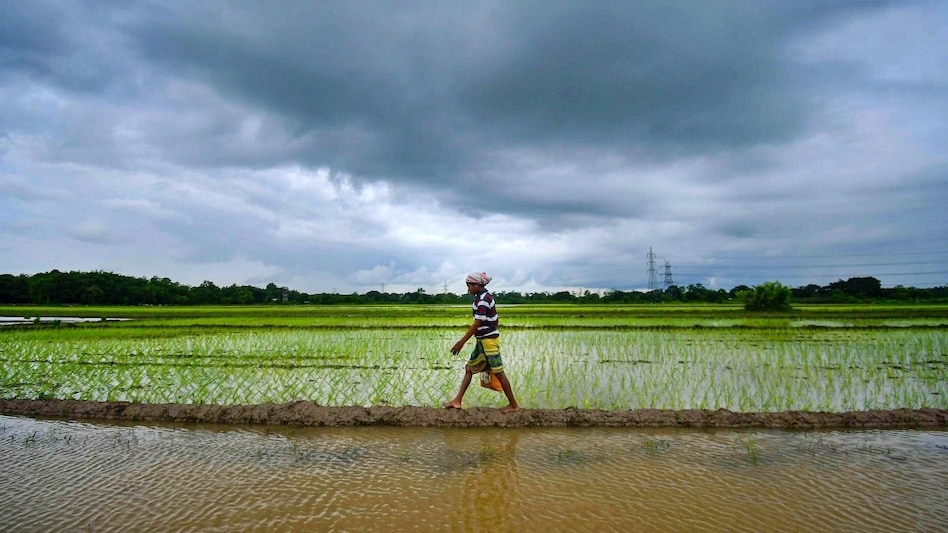
Rice, on the other hand, presents a contrasting picture. The area planted with paddy is just 0.84% lower than it was last year, suggesting that recent rain has helped farmers to accelerate transplantation across multiple states. Sugarcane stands out as the only significant crop with an increase in acreage compared to the previous year. The progress of the monsoon over the coming weeks will determine whether the existing sowing gap decreases further. Although recent rainfall has boosted planting efforts, ongoing precipitation will be vital for finishing sowing in areas that are behind and for fostering crop growth.
India's kharif sowing has started to improve despite the southwest monsoon's poor start, as farmers were encouraged to speed up sowing by last week's better rainfall. But the recovery is still uneven, with cotton, oilseeds, pulses, and coarse cereals still lagging last year.India’s Monsoon picture
India received 23% less rainfall than the Long Period Average (LPA) between June 1 and July 15, according to the India Meteorological Department (IMD). The rainfall deficit was widespread but uneven, with East and Northeast India recording the steepest shortfall at 36% below normal, followed by the South Peninsula (-26%), Northwest India (-19%), and Central India (-13%).
Advertisement
Compared with the corresponding period last year, this year's monsoon has been significantly less intense, especially in eastern and southern India, where rain-fed farming relies heavily on punctual seasonal rains. The irregular distribution of rainfall has caused delays in sowing in various areas during the initial weeks of the kharif season.Impact of Low monsoon level
The impact is now visible in the latest sowing data released by the Ministry of Agriculture.
As of July 17, farmers had sown 658.19 lakh hectares under kharif crops, compared with 700.47 lakh hectares during the corresponding period last year, leaving the total sown area 6.04% lower.
The recovery has been uneven across crops
Advertisement
Pulses continue to register the steepest decline, with acreage 15.08% lower than a year ago. Coarse cereals remain 11.23% below last year's level, while cotton (-5.96%) and oilseeds (-5.54%) have also recorded lower sowing. These crops are generally more sensitive to the timing of early monsoon rainfall, and delayed showers can shorten the sowing window or influence farmers' cropping decisions.
Rice, on the other hand, presents a contrasting picture. The area planted with paddy is just 0.84% lower than it was last year, suggesting that recent rain has helped farmers to accelerate transplantation across multiple states. Sugarcane stands out as the only significant crop with an increase in acreage compared to the previous year. The progress of the monsoon over the coming weeks will determine whether the existing sowing gap decreases further. Although recent rainfall has boosted planting efforts, ongoing precipitation will be vital for finishing sowing in areas that are behind and for fostering crop growth.
Read more!