
London road dues: India fourth-biggest debtor among embassies with £10.79 million tab
London road dues: India fourth-biggest debtor among embassies with £10.79 million tab
Official records compiled by Transport for London spanning from 2003 through mid-2026 reveal that foreign diplomatic posts collectively owe roughly £173.82 million in outstanding driving fees and accrued fines. India's High Commission accounts for roughly 6.2% of that total debt.
Business Today Desk
- Aug 16, 2026,
- Updated Aug 16, 2026 2:27 PM IST
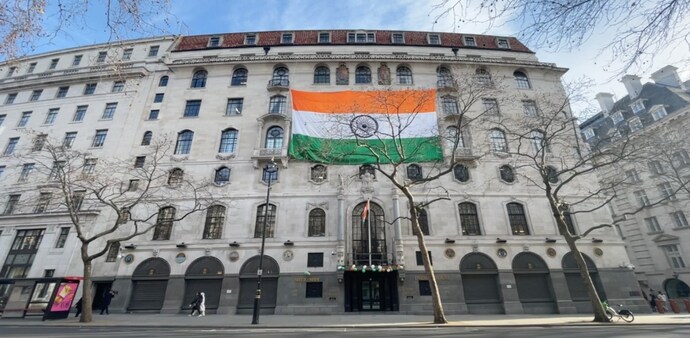
Unpaid road usage penalties accrued by India’s diplomatic mission in London have climbed past £10.7 billion, positioning the country fourth overall among international embassies carrying the heaviest unpaid Congestion Charge balances.
Official records compiled by Transport for London spanning from 2003 through mid-2026 reveal that foreign diplomatic posts collectively owe roughly £173.82 million in outstanding driving fees and accrued fines. India's High Commission accounts for roughly 6.2% of that total debt. Higher figures are recorded only by the United States at £16.31 million, China at £13.09 million, and Japan at £11.26 million.
Advertisement
At the center of the long-standing impasse is a legal debate over how the fee is defined. British transit authorities and government officials classify the Congestion Charge as a fee for service rather than a local tax, meaning foreign embassy staff must comply.
In contrast, several foreign delegations — including those representing India, the US, and Japan — treat the assessment as a direct tax. Citing Article 34 of the Vienna Convention on Diplomatic Relations, which shields diplomatic missions from local taxation, these nations have consistently withheld payment for over two decades.
Advertisement
Within South Asia, India holds the highest balance of unpaid charges by a wide margin. Pakistan’s High Commission follows behind with £4,116,630, while Sri Lanka owes £1,032,720, the Maldives owes £352,880, and Bangladesh owes £30,990.
Transport officials maintain that they intend to seek full payment of all delinquent road fees and associated fines using diplomatic channels, rejecting any requests to forgive the balances.
Unpaid road usage penalties accrued by India’s diplomatic mission in London have climbed past £10.7 billion, positioning the country fourth overall among international embassies carrying the heaviest unpaid Congestion Charge balances.
Official records compiled by Transport for London spanning from 2003 through mid-2026 reveal that foreign diplomatic posts collectively owe roughly £173.82 million in outstanding driving fees and accrued fines. India's High Commission accounts for roughly 6.2% of that total debt. Higher figures are recorded only by the United States at £16.31 million, China at £13.09 million, and Japan at £11.26 million.
Advertisement
At the center of the long-standing impasse is a legal debate over how the fee is defined. British transit authorities and government officials classify the Congestion Charge as a fee for service rather than a local tax, meaning foreign embassy staff must comply.
In contrast, several foreign delegations — including those representing India, the US, and Japan — treat the assessment as a direct tax. Citing Article 34 of the Vienna Convention on Diplomatic Relations, which shields diplomatic missions from local taxation, these nations have consistently withheld payment for over two decades.
Advertisement
Within South Asia, India holds the highest balance of unpaid charges by a wide margin. Pakistan’s High Commission follows behind with £4,116,630, while Sri Lanka owes £1,032,720, the Maldives owes £352,880, and Bangladesh owes £30,990.
Transport officials maintain that they intend to seek full payment of all delinquent road fees and associated fines using diplomatic channels, rejecting any requests to forgive the balances.
Read more!