
‘Must not misinterpret…’: Private firms contribute but ISRO will not be privatised, says Chairman V Narayanan
ISRO is planning for an October 30 launch of the navigation satellite, NVS-03. Meanwhile, Chandrayaan-4 is being planned for 2028.
- Oct 26, 2026,
- Updated Oct 26, 2026 11:14 AM IST
The Indian Space Research Organisation (ISRO) will not be privatised, reiterated Chairman V Narayanan. While private companies contribute in their individual capacities, it should not be understood as a step towards privatisation, he said. This is not the first time the space organisation has spoken about the unlikelihood of going private.
Narayanan, speaking during a graduation event at Sri Ramachandra Institute of Higher Education and Research, Porur, said the space programme is 64 years old and has as many as 56 satellites but the demand is for thousands of satellites, as mentioned in a report in The Hindu.
“The space ecosystem in the country and the country’s economy will grow, resulting in job opportunities. When a Polar Satellite Launch Vehicle (PSLV) or Geosynchronous Satellite Launch Vehicle (GSLV) rocket takes off, 75% of our budget is pumped into the private industries. The private companies are also contributing. People must not misinterpret that as ISRO will be privatised,” he said, highlighting the Indian Space Policy, 2023.
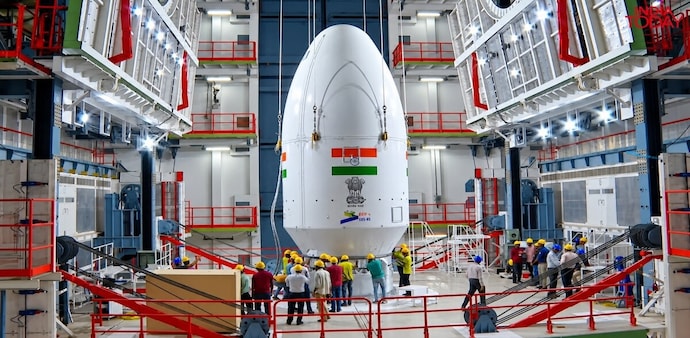
ISRO is planning for an October 30 launch of the navigation satellite, NVS-03. Meanwhile, Chandrayaan-4 is being planned for 2028. For Gaganyaan, the rocket is ready and the crew escape system on the rocket module has been developed, he said. Speaking about the mission, he said ISRO is planning to send three unmanned rockets and are working on the first rocket. As many as 8,000 experiments have been conducted on land, he said.
The space organisation had said in a detailed statement last month that it would not be privatised amid speculation. "ISRO will neither be privatised nor will its importance be diminished," it had clarified after nine ISRO employee associations had written to Narayanan seeking clarity on the proposed transfer of some manufacturing and operational functions to private entities.
ISRO had said it would continue to remain India’s principal institution for advanced space research and technology development, national and strategic missions, space science and exploration, and critical and frontier capabilities.
Pawan Goenka, chairman of the Indian National Space Promotion and Authorisation Centre (IN-SPACe), also around the same time, had assured that the role of ISRO was not diminishing and it would always remain the “bedrock of India's space sector”.