
'Need to reflect 2026, and no longer 1945': UN endorses PM Modi’s push for UNSC overhaul in BRICS 2026
The call for reform was further reinforced in the unanimously adopted New Delhi Declaration, which reiterated member states' commitment to upgrading international governance to make it more representative of developing nations and Least Developed Countries.
- Sep 13, 2026,
- Updated Sep 13, 2026 11:46 AM IST
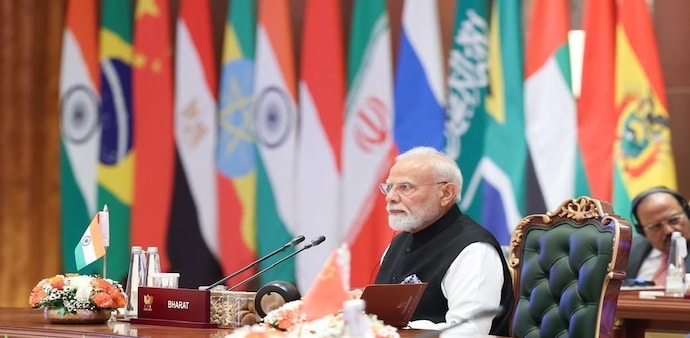
Addressing the opening session of the 18th BRICS Summit 2026 in New Delhi, Prime Minister Narendra Modi declared that reform of the United Nations Security Council (UNSC) "can no longer be delayed," calling for fixed timelines and concrete outcomes to reshape a global governance structure that currently resembles a "pyramid of privilege".
Backing the Prime Minister's stance, Stéphane Dujarric, Spokesperson for UN Secretary-General António Guterres, confirmed that the United Nations aligns with the push for comprehensive structural changes across international bodies.
"If you listen to what the Secretary-General has been saying since he took office... there is a fundamental need for reform of the Security Council," Dujarric said on the sidelines of the summit. "The fact that you look at the way the Council is made up now, of the 5 permanent members, it is no longer a reflection of the 21st century. Whether it is the Security Council or international financial institutions, they need to reflect 2026, and no longer 1945".
During the BRICS 2026 session focused on inclusive global governance and multilateralism, Prime Minister Modi highlighted the growing imbalance between decision-makers and those affected by global policy. He noted that while countries of the Global South remain at the forefront of global crises, they are frequently relegated to the "back row" of international decision-making.
To bridge this gap, Modi proposed transforming the existing governance framework into a "platform of partnership" where every nation holds a voice. He suggested that BRICS member states draft 10 unified proposals focused on representation, responsiveness, and rule-making to establish a formal "BRICS Reform Roadmap" by the next summit.
The call for reform was further reinforced in the unanimously adopted New Delhi Declaration, which reiterated member states' commitment to upgrading international governance to make it more representative of developing nations and Least Developed Countries (LDCs) across Asia, Africa, and Latin America.
Acknowledging India's leadership during its BRICS chairship, Dujarric commended the successful consensus behind the joint statement, emphasizing that building constructive dialogue remains crucial to ensuring global institutions stay agile, effective, and representative of contemporary economic and geopolitical realities.
Addressing the opening session of the 18th BRICS Summit 2026 in New Delhi, Prime Minister Narendra Modi declared that reform of the United Nations Security Council (UNSC) "can no longer be delayed," calling for fixed timelines and concrete outcomes to reshape a global governance structure that currently resembles a "pyramid of privilege".
Backing the Prime Minister's stance, Stéphane Dujarric, Spokesperson for UN Secretary-General António Guterres, confirmed that the United Nations aligns with the push for comprehensive structural changes across international bodies.
"If you listen to what the Secretary-General has been saying since he took office... there is a fundamental need for reform of the Security Council," Dujarric said on the sidelines of the summit. "The fact that you look at the way the Council is made up now, of the 5 permanent members, it is no longer a reflection of the 21st century. Whether it is the Security Council or international financial institutions, they need to reflect 2026, and no longer 1945".
During the BRICS 2026 session focused on inclusive global governance and multilateralism, Prime Minister Modi highlighted the growing imbalance between decision-makers and those affected by global policy. He noted that while countries of the Global South remain at the forefront of global crises, they are frequently relegated to the "back row" of international decision-making.
To bridge this gap, Modi proposed transforming the existing governance framework into a "platform of partnership" where every nation holds a voice. He suggested that BRICS member states draft 10 unified proposals focused on representation, responsiveness, and rule-making to establish a formal "BRICS Reform Roadmap" by the next summit.
The call for reform was further reinforced in the unanimously adopted New Delhi Declaration, which reiterated member states' commitment to upgrading international governance to make it more representative of developing nations and Least Developed Countries (LDCs) across Asia, Africa, and Latin America.
Acknowledging India's leadership during its BRICS chairship, Dujarric commended the successful consensus behind the joint statement, emphasizing that building constructive dialogue remains crucial to ensuring global institutions stay agile, effective, and representative of contemporary economic and geopolitical realities.