
NEET paper leak protests: RAF opens inquiry into alleged pellet gun use
Officials clarified that while a formal Court of Inquiry (CoI) has not yet been ordered, a decision on whether to institute one will be made once the preliminary verification exercise establishes the facts.
- Jul 24, 2026,
- Updated Jul 24, 2026 9:30 PM IST
Facing severe scrutiny over allegations of disproportionate force during the July 20 'Sansad Chalo' march, the Rapid Action Force (RAF) has initiated an internal inquiry into its personnel, specifically regarding the alleged firing of pellet guns at student demonstrators in New Delhi.
The Central Reserve Police Force (CRPF), under which the RAF operates, directed the Inspector General (IG) of the specialized anti-riot wing to reconstruct the operational sequence of events. Officials confirmed that the verification process will examine the steps taken by various teams to control the crowd, as well as instances where security personnel came under attack from demonstrators.
The inquiry follows public outcry after social media flooded with footage depicting RAF jawans in their signature blue camouflage uniforms deploying batons, lathis, and firearms. The video clips also capture scenes of jawans surrounded by hostile crowds and being subjected to attacks. A senior officer assured that "all legal procedures stipulated to check the conduct of the personnel during such operational duties will be followed."
Officials clarified that while a formal Court of Inquiry (CoI) has not yet been ordered, a decision on whether to institute one will be made once the preliminary verification exercise establishes the facts.
The July 20 march, organised from Jantar Mantar under the banner of the Cockroach Janta Party (CJP), saw thousands of students protesting alleged irregularities and paper leaks in the NEET-UG examination while demanding the resignation of Union Education Minister Dharmendra Pradhan.
The peaceful rally descended into violence near Connaught Place and Palika Bazaar when police and security forces moved to block demonstrators from marching toward Parliament on the opening day of the Monsoon Session.
While the Delhi Police issued statements categorically denying the ownership or use of pellet guns during the operation, the 12-bore pump-action gun — commonly known as a pellet gun — remains a standard component of the RAF's riot-control armoury.
According to the force's Standard Operating Procedure (SOP), pellet guns are reserved for extreme scenarios where jawans face imminent danger to life. SOP guidelines further require that the weapons be equipped with deflectors to ensure metal or rubber pellets strike only the lower half of the body to minimize critical injuries.
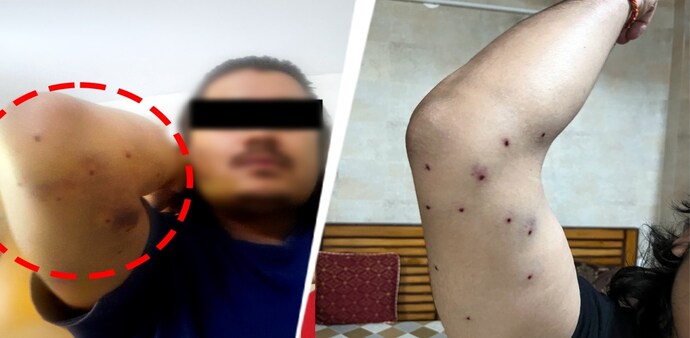
The internal probe comes as hospital records and student testimonies confirm multiple cases of severe pellet wounds among demonstrators. Among those injured, 19-year-old Delhi University student Sahil Lochab underwent emergency surgery at AIIMS after pellets struck his right eye, leaving him with a high risk of permanent vision loss. Another protester, 25-year-old Shaikh Irshad Mansoori, is undergoing treatment at Lady Hardinge Medical College after sustaining multiple pellet wounds to his face and neck.
The verification exercise is currently reviewing social media evidence, medical reports, and field operational logs, alongside footage showing jawans using stun guns and physically tripping fleeing demonstrators.
Facing severe scrutiny over allegations of disproportionate force during the July 20 'Sansad Chalo' march, the Rapid Action Force (RAF) has initiated an internal inquiry into its personnel, specifically regarding the alleged firing of pellet guns at student demonstrators in New Delhi.
The Central Reserve Police Force (CRPF), under which the RAF operates, directed the Inspector General (IG) of the specialized anti-riot wing to reconstruct the operational sequence of events. Officials confirmed that the verification process will examine the steps taken by various teams to control the crowd, as well as instances where security personnel came under attack from demonstrators.
The inquiry follows public outcry after social media flooded with footage depicting RAF jawans in their signature blue camouflage uniforms deploying batons, lathis, and firearms. The video clips also capture scenes of jawans surrounded by hostile crowds and being subjected to attacks. A senior officer assured that "all legal procedures stipulated to check the conduct of the personnel during such operational duties will be followed."
Officials clarified that while a formal Court of Inquiry (CoI) has not yet been ordered, a decision on whether to institute one will be made once the preliminary verification exercise establishes the facts.
The July 20 march, organised from Jantar Mantar under the banner of the Cockroach Janta Party (CJP), saw thousands of students protesting alleged irregularities and paper leaks in the NEET-UG examination while demanding the resignation of Union Education Minister Dharmendra Pradhan.
The peaceful rally descended into violence near Connaught Place and Palika Bazaar when police and security forces moved to block demonstrators from marching toward Parliament on the opening day of the Monsoon Session.
While the Delhi Police issued statements categorically denying the ownership or use of pellet guns during the operation, the 12-bore pump-action gun — commonly known as a pellet gun — remains a standard component of the RAF's riot-control armoury.
According to the force's Standard Operating Procedure (SOP), pellet guns are reserved for extreme scenarios where jawans face imminent danger to life. SOP guidelines further require that the weapons be equipped with deflectors to ensure metal or rubber pellets strike only the lower half of the body to minimize critical injuries.
The internal probe comes as hospital records and student testimonies confirm multiple cases of severe pellet wounds among demonstrators. Among those injured, 19-year-old Delhi University student Sahil Lochab underwent emergency surgery at AIIMS after pellets struck his right eye, leaving him with a high risk of permanent vision loss. Another protester, 25-year-old Shaikh Irshad Mansoori, is undergoing treatment at Lady Hardinge Medical College after sustaining multiple pellet wounds to his face and neck.
The verification exercise is currently reviewing social media evidence, medical reports, and field operational logs, alongside footage showing jawans using stun guns and physically tripping fleeing demonstrators.