
Next major wave in retail broking will originate from smaller towns and villages: SEBI chief
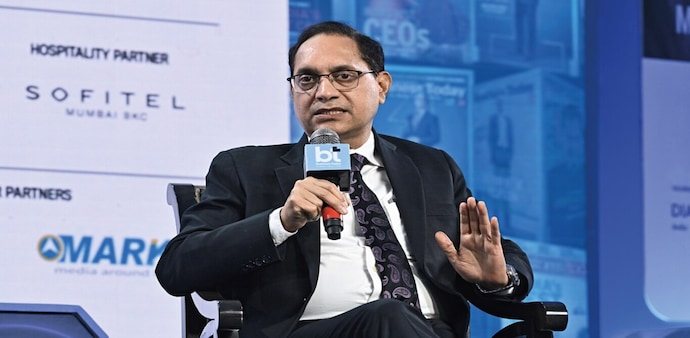
Highlighting India's steady 7% economic growth projection by the IMF, SEBI Chairman Tuhin Kanta Pandey said that the country's performance continues to outpace global averages at more than twice the international pace.
- Oct 25, 2026,
- Updated Oct 25, 2026 9:02 AM IST
India's capital markets stand on the cusp of a major transformation, backed by a robust equity market capitalization of around ₹470 lakh crore and over 15 crore unique investors, SEBI Chairman Tuhin Kanta Pandey announced at the 16th ANMI International Capital Market Convention in Mumbai.
Highlighting India's steady 7% economic growth projection by the International Monetary Fund (IMF), Pandey noted that the country's performance continues to outpace global averages at more than twice the international pace, driven by a young population, a large domestic market, and consistent structural reforms.
Tracing the evolution of the country's financial landscape from paper certificates and screen-based trading to dematerialisation and advanced online platforms, Pandey commended market participants for championing pioneering shifts.
India remains a global frontrunner, standing out as the first major market to settle trades on a T+1 basis, establish interoperable clearing corporations, and adopt upstreaming and downstreaming of client funds alongside the new pledge-repledge mechanism, he said.
Expanding market depth & reaching rural frontiers
Outlining the future blueprint for the financial sector, Pandey emphasised three key priorities: depth, trust, and technology. Although SEBI's investor surveys indicate that nearly two in three households are aware of securities market products, fewer than one in ten actively invest.
With nearly half of prospective investors residing in rural India, Pandey emphasised that the next major wave in retail broking will originate from smaller towns and villages.
To build greater market depth beyond equities, the regulator is looking to broaden product choices, noting that corporate bond markets remain thin.
To address this, SEBI is reviewing short selling and securities lending and borrowing (SLB) frameworks to improve price discovery and liquidity, while developing a dedicated market-making framework to stimulate secondary trading in corporate bonds. Under the upcoming next phase of Demat 2.0, tokenised corporate bonds will be introduced to the secondary market to drive liquidity, lower settlement risk, and provide faster access to funds.
Reinforcing investor trust and combating fraud
Addressing the prerequisite of trust, Pandey stated that market confidence is vital for enduring growth. He urged brokers to move beyond treating KYC as a one-time form-filling exercise, redefining it as "Know Your Client's Needs" to maintain an ongoing dialogue about client risk profiles. "A client who understands risk invests wisely and stays invested longer. That is good for the client, for you and for the market," Pandey remarked.
To protect investors from unregistered advisers, misleading finfluencers, and fraudsters misusing broker identities, SEBI is taking strict enforcement measures bolstered by verified labels, SEBI Check tools, and validated UPI handles.
Complementing these efforts is the extensive public awareness initiative "Samajh Se Investing Simple" under Project Jagrook. Since its launch on October 5, the multimedia campaign across television, radio, print, WhatsApp, and social media platforms has garnered over 15 crore views and dispatched nearly 110 crore WhatsApp messages.
Technological frontiers & cyber resilience
With technological integration accelerating algorithmic trading and artificial intelligence adoption, Pandey cautioned that systemic vulnerabilities have also expanded. Urging intermediaries to treat cybersecurity as a vital business priority rather than a routine IT expenditure, he stressed, "Test your systems. Plan for failure".
To operationalise its comprehensive agenda anchored on simpler rules, deeper markets, responsible technology, and wider access, SEBI's regulatory roadmap introduces several structural modifications:
Simpler rules: SEBI is reworking depository participant regulations to ease compliance and fortify defenses against fraud, while expanding the Samuhik Prativedan Manch to cover depositories under a single submission window alongside exchanges.
A graded compliance framework is also under evaluation for stockbrokers, factoring in their operational scale, client exposure, and technology reliance. Additionally, parallel clearing requirements for tender offers, buybacks, and offers for sale are being streamlined to improve capital efficiency, alongside the extension of automated give-up and take-up facilities to custodial clients such as Portfolio Management Services (PMS) and Alternative Investment Funds (AIFs) in the cash segment.
Responsible technology: The regulator is formulating rules to prevent trading terminal misuse, consolidating inspection portals into a unified digital workflow, and establishing an AI sandbox for secure testing. Furthermore, guidelines on the responsible use of artificial intelligence are being finalized following a tiered approach with clear accountability, data controls, kill switches, and human oversight aligned with IOSCO toolkits.
Wider access: SEBI is streamlining digital onboarding, simplifying KYC procedures, and cutting down paperwork for global investors and Non-Resident Indians (NRIs) while maintaining robust regulatory safeguards.