
'No jurisdiction whatsoever': India rejects Hague court ruling on Indus Waters Treaty
The court's pronouncements, now or in the future, will have no effect on India's actions in connection with the projects being undertaken by New Delhi, the MEA said
- Aug 31, 2026,
- Updated Aug 31, 2026 7:03 PM IST
India on Monday rejected a ruling by the Permanent Court of Arbitration in The Hague on the Indus Waters Treaty, saying the court had "no jurisdiction whatsoever" over India's sovereign decisions.
The Ministry of External Affairs (MEA) said India did not recognise the arbitration body and had never appeared before it.
"Today, the illegally constituted so-called Court of Arbitration (CoA) has issued what it termed as an award concerning Interim Measures and Status of the Indus Waters Treaty," the MEA said.
India said the court was constituted by the World Bank in "patent breach" of the treaty and rejected the latest award as well as its earlier pronouncements.
Don't Miss: Asia’s ‘Water Tower’ under climate stress: What a ‘wobbling’ Tibetan Plateau means for India
India Rejects Court's Jurisdiction
The MEA said India had "never recognised the existence in law" of the arbitration body. It said the establishment of the body itself was a "grave violation" of the Indus Waters Treaty.
India has therefore refused to appear before it or take cognisance of its earlier pronouncements, the ministry said.
"This so-called Court of Arbitration has no jurisdiction whatsoever to pronounce on India’s sovereign decisions," the MEA said. "Its pronouncements, now or in the future, will have no effect on India’s actions in connection with the projects being undertaken by India."
"India's decision to hold the Indus Waters Treaty in abeyance remains in force," the MEA said.
Hague Court Says Treaty Remains In Force
Earlier today, the Permanent Court of Arbitration said that India must uphold the water-sharing treaty with Pakistan and limit work on a hydroelectric plant in Kashmir. It also ruled that the Indus Waters Treaty remained fully in force and that India had no justification for ending or suspending it.
"India must observe its obligations under the Treaty, including those relating to the design and operation of its hydro-electric projects on the Western Rivers," the intergovernmental court said.
India suspended the treaty in April last year after a terrorist attack in Pahalgam.
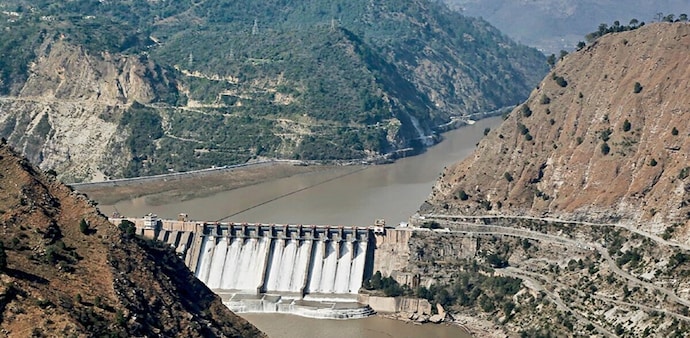
India later began work to increase reservoir holding capacity at two hydroelectric projects in Kashmir.
The Indus Waters Treaty, signed in 1960, governs the sharing of river waters between India and Pakistan.
India on Monday rejected a ruling by the Permanent Court of Arbitration in The Hague on the Indus Waters Treaty, saying the court had "no jurisdiction whatsoever" over India's sovereign decisions.
The Ministry of External Affairs (MEA) said India did not recognise the arbitration body and had never appeared before it.
"Today, the illegally constituted so-called Court of Arbitration (CoA) has issued what it termed as an award concerning Interim Measures and Status of the Indus Waters Treaty," the MEA said.
India said the court was constituted by the World Bank in "patent breach" of the treaty and rejected the latest award as well as its earlier pronouncements.
Don't Miss: Asia’s ‘Water Tower’ under climate stress: What a ‘wobbling’ Tibetan Plateau means for India
India Rejects Court's Jurisdiction
The MEA said India had "never recognised the existence in law" of the arbitration body. It said the establishment of the body itself was a "grave violation" of the Indus Waters Treaty.
India has therefore refused to appear before it or take cognisance of its earlier pronouncements, the ministry said.
"This so-called Court of Arbitration has no jurisdiction whatsoever to pronounce on India’s sovereign decisions," the MEA said. "Its pronouncements, now or in the future, will have no effect on India’s actions in connection with the projects being undertaken by India."
"India's decision to hold the Indus Waters Treaty in abeyance remains in force," the MEA said.
Hague Court Says Treaty Remains In Force
Earlier today, the Permanent Court of Arbitration said that India must uphold the water-sharing treaty with Pakistan and limit work on a hydroelectric plant in Kashmir. It also ruled that the Indus Waters Treaty remained fully in force and that India had no justification for ending or suspending it.
"India must observe its obligations under the Treaty, including those relating to the design and operation of its hydro-electric projects on the Western Rivers," the intergovernmental court said.
India suspended the treaty in April last year after a terrorist attack in Pahalgam.
India later began work to increase reservoir holding capacity at two hydroelectric projects in Kashmir.
The Indus Waters Treaty, signed in 1960, governs the sharing of river waters between India and Pakistan.