
Noel Tata vs Chandrasekaran: How Tata Sons’ boardroom battle turned into a public fight
The immediate dispute began after the RBI rejected Tata Sons’ request on September 11 for an exemption from rules that could require it to list.
- Sep 21, 2026,
- Updated Sep 21, 2026 5:50 PM IST
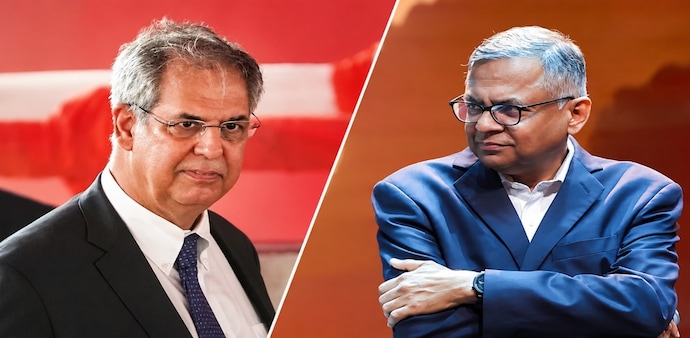
Tata Sons’ boardroom fight over its future turned public on September 17 after directors backed N Chandrasekaran for another five-year term and supported steps towards a public listing, despite opposition from Tata Trusts chairman Noel Tata, Bloomberg reported on Sunday.
The board voted 4-1 to extend Chandrasekaran’s tenure as chairman of Tata Sons, the holding company of the Tata Group. It also backed steps to meet the Reserve Bank of India’s requirements for a public listing.
Noel Tata opposed both moves. Tata Trusts, which owns 66% of Tata Sons, later called Chandrasekaran’s extension “illegal” and said the decision was a “legal nullity”.
The dispute comes at a key time for the Tata Group, which has businesses ranging from Air India and Jaguar Land Rover to Tata Consultancy Services. The group is also expanding iPhone production in India and building the country’s first chipmaking facility.
What happened in the board meeting
The immediate dispute began after the RBI rejected Tata Sons’ request on September 11 for an exemption from rules that could require it to list.
At the September 17 board meeting at Bombay House in Mumbai, directors first discussed routine matters before turning to the RBI decision.
Noel argued that Tata Sons should make another attempt to remain private. He proposed approaching senior RBI officials, exploring legal options and seeking at least three more years to comply if those efforts failed.
He also pointed to a decision taken before Ratan Tata’s death in October 2024. Seven months before his death, the Tata Sons board had unanimously decided to remain private.
Don't Miss: Tata Sons power struggle: Who will pay for the next legal battle?
Tata Sons had since spent about 200 billion rupees ($2.1 billion) paying down debt and cleaning up its balance sheet, partly to avoid the regulatory status that could force it to list.
Noel also proposed buying back part of Shapoorji Pallonji Group’s 18.4% stake in Tata Sons. The plan could give Tata Sons at least 250 billion rupees ($2.6 billion) in cash without a public listing.
Why Chandrasekaran became the other flashpoint
Chandrasekaran had earlier decided not to seek another term after his reappointment failed to get unanimous support.
During the September 17 meeting, however, the board considered a proposal to extend his term by another five years. Chandrasekaran left the room while the directors discussed the matter.
Noel opposed the move, saying Chandrasekaran’s August 12 decision to step down had already been communicated and accepted.
Noel told the board that “the page has turned.”
He also cited Article 121 of Tata Sons’ governing documents, arguing that a chairman’s appointment or reappointment required support from a majority of Tata Trust-nominated directors.
The two Trust nominees were split 1-1, with Noel opposing the extension and Venu Srinivasan supporting it. The other directors then backed Chandrasekaran for another five years.
Fight moves outside the boardroom
By around 3 p.m., Noel had left Bombay House. Tata Sons soon briefed the media about the board’s decisions.
Tata Trusts then launched a public counterattack. By around 9:15 p.m., it had issued five press releases disputing Tata Sons’ account.
The Trusts said there had been no agreement to list Tata Sons and that all available alternatives would be explored. It called Chandrasekaran’s extension “illegal” and said the 1-1 split between the Trust nominees made the appointment a “legal nullity.”
The dispute could now move to court. Chandrasekaran’s reappointment as a director will also require shareholder approval at Tata Sons’ next annual meeting, whose date has not yet been announced.
The boardroom fight also hit Tata stocks. Tata Chemicals fell 11% on Friday after rising 6.5% on Thursday. Tata Investment Corp. fell 2.4% after gaining 5.5%, while Tata Motors Passenger Vehicles fell 3.4% after rising 4.5% the previous day.
Tata Sons’ boardroom fight over its future turned public on September 17 after directors backed N Chandrasekaran for another five-year term and supported steps towards a public listing, despite opposition from Tata Trusts chairman Noel Tata, Bloomberg reported on Sunday.
The board voted 4-1 to extend Chandrasekaran’s tenure as chairman of Tata Sons, the holding company of the Tata Group. It also backed steps to meet the Reserve Bank of India’s requirements for a public listing.
Noel Tata opposed both moves. Tata Trusts, which owns 66% of Tata Sons, later called Chandrasekaran’s extension “illegal” and said the decision was a “legal nullity”.
The dispute comes at a key time for the Tata Group, which has businesses ranging from Air India and Jaguar Land Rover to Tata Consultancy Services. The group is also expanding iPhone production in India and building the country’s first chipmaking facility.
What happened in the board meeting
The immediate dispute began after the RBI rejected Tata Sons’ request on September 11 for an exemption from rules that could require it to list.
At the September 17 board meeting at Bombay House in Mumbai, directors first discussed routine matters before turning to the RBI decision.
Noel argued that Tata Sons should make another attempt to remain private. He proposed approaching senior RBI officials, exploring legal options and seeking at least three more years to comply if those efforts failed.
He also pointed to a decision taken before Ratan Tata’s death in October 2024. Seven months before his death, the Tata Sons board had unanimously decided to remain private.
Don't Miss: Tata Sons power struggle: Who will pay for the next legal battle?
Tata Sons had since spent about 200 billion rupees ($2.1 billion) paying down debt and cleaning up its balance sheet, partly to avoid the regulatory status that could force it to list.
Noel also proposed buying back part of Shapoorji Pallonji Group’s 18.4% stake in Tata Sons. The plan could give Tata Sons at least 250 billion rupees ($2.6 billion) in cash without a public listing.
Why Chandrasekaran became the other flashpoint
Chandrasekaran had earlier decided not to seek another term after his reappointment failed to get unanimous support.
During the September 17 meeting, however, the board considered a proposal to extend his term by another five years. Chandrasekaran left the room while the directors discussed the matter.
Noel opposed the move, saying Chandrasekaran’s August 12 decision to step down had already been communicated and accepted.
Noel told the board that “the page has turned.”
He also cited Article 121 of Tata Sons’ governing documents, arguing that a chairman’s appointment or reappointment required support from a majority of Tata Trust-nominated directors.
The two Trust nominees were split 1-1, with Noel opposing the extension and Venu Srinivasan supporting it. The other directors then backed Chandrasekaran for another five years.
Fight moves outside the boardroom
By around 3 p.m., Noel had left Bombay House. Tata Sons soon briefed the media about the board’s decisions.
Tata Trusts then launched a public counterattack. By around 9:15 p.m., it had issued five press releases disputing Tata Sons’ account.
The Trusts said there had been no agreement to list Tata Sons and that all available alternatives would be explored. It called Chandrasekaran’s extension “illegal” and said the 1-1 split between the Trust nominees made the appointment a “legal nullity.”
The dispute could now move to court. Chandrasekaran’s reappointment as a director will also require shareholder approval at Tata Sons’ next annual meeting, whose date has not yet been announced.
The boardroom fight also hit Tata stocks. Tata Chemicals fell 11% on Friday after rising 6.5% on Thursday. Tata Investment Corp. fell 2.4% after gaining 5.5%, while Tata Motors Passenger Vehicles fell 3.4% after rising 4.5% the previous day.