
'Nvidia is an amazing company, but a bad investment': Aswath Damodaran's valuation warning
This observation features in 'The India Opportunity', a new book by Shrishti Sahu. Drawing on conversations with leading investors and market experts, the book examines India's growth prospects, investment opportunities, and the principles behind long-term wealth creation
- Nov 11, 2026,
- Updated Nov 11, 2026 1:50 PM IST
India's long-term economic story remains promising, but infrastructure bottlenecks, a slow legal system, and risk-averse bureaucracy could hold back its progress, according to valuation expert Aswath Damodaran. He also cautions investors against confusing great companies with great investments, arguing that even the strongest businesses can disappoint when their shares are priced too high.
These observations feature in 'The India Opportunity', a new book by Shrishti Sahu, published by Juggernaut. Drawing on conversations with leading investors and market experts, the book examines India's growth prospects, investment opportunities and the principles behind long-term wealth creation.
Sahu, a third-generation entrepreneur who grew up in the Sahu Group, which has interests in hospitality, real estate, automotive and financial services, founded Swadharma Source Ventures (SSV), the group's single-family office. She now serves as its managing partner.
In the following excerpt, Sahu recounts her conversation with Damodaran on three structural weaknesses in India's growth story, the limitations of identifying future multibaggers, and why valuation matters as much as business quality.
Here's The Excerpt
The Three Glitches
When Aswath (Damodaran) talks about glitches in the India story, he is precise. He does not mean abstract risks. He means three structural weaknesses that he believes the market is largely ignoring. The first is infrastructure. Indian highways have done well, he says. The rural infrastructure investment has paid off, but Indian cities are a different story. The cities, he told me, are a complete infrastructure mess; they are not fixable with reasonable amounts of money because they are already built. You cannot widen the streets without creating chaos. You cannot rebuild the underground without halting the city. China could fix infrastructure by edict because it is an authoritarian regime. India cannot, and that is a good thing. But it also means infrastructure repair in India is going to be slow and expensive.
The second is the legal system. He calls it creaky and slow. ‘A slow legal system,’ he says, ‘is almost as bad as having no legal system at all.’ Business is built on property rights, patents, contracts, and the right to recover what is owed to you. If the courts take 25 years to settle a dispute, you will go bankrupt before they decide. This is not abstract. Every business owner in India knows it. I have heard it from founders on my podcast. The sentiment is universal, but nobody bothers taking anyone to court anymore. You cannot.
The third is bureaucracy. And here Aswath surprised me. He said his bigger concern with Indian bureaucracy is not corruption; it is risk aversion. Indian bureaucracy, like bureaucracy everywhere, is incredibly risk-averse. There is no upside to making good decisions because somebody else claims credit. But there is a fatal downside to making bad ones because the fingers always point downwards. The minister never says it was my mistake. So decisions get passed up the ranks and down the ranks – files get thicker and thicker. Nobody wants to make a decision
His verdict on these three is, ‘India should be ready for some slowdowns. Some reversals along the way. The India story will deliver. But it will be four steps forward, two steps back. Net two steps.’ That is the honest summary – not failure, not effortless success either. Net two steps, with the steps back being painful when they come.
When I asked Aswath about how to identify the next set of great companies, he said something that I have been thinking about ever since. He has very little time for books about 10-baggers and 100-baggers. He said it violates the basic laws of statistics. You pick the biggest winners, work backwards, and come up with a storyline. You imply that if you can find other companies with the same storyline, they will be just like the original. But history does not repeat. The biggest driver of who wins and loses over time, he said, is luck. It is being in the right place at the right time. You are never going to replicate that. He calls ‘consistent compounders’ a hindsight bias. He said, ‘Find me the person who bought Infosys in the 1990s because it was a consistent compounder.’ You will not find that person. They bought it for a different reason: a high-growth tech company, a bet on Indian software. In hindsight, it is a consistent compounder. Every great company looks like a consistent compounder in retrospect. You cannot use the label as a guide to finding the next one.
I sat with that for a while. I have sold the consistent compounder narrative to my own portfolio and to people who have asked me how to think about the markets, and so have most of the people in this book. Then he said the thing that actually matters. The key words are ‘at the right price’.
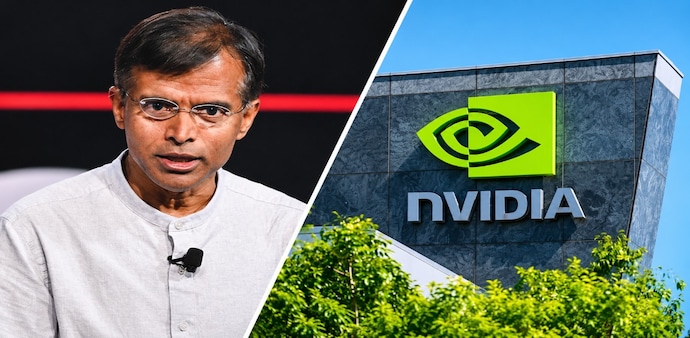
A great company at the wrong price is a terrible investment. A bad company at the right price can be a great investment. He has a matrix he uses in class. On one axis, what you think about the company, from amazing down to abysmal. On the other axis, what the market thinks about the company. If you have an amazing company that the market also thinks is the best company ever, you have a problem. The price already reflects the best company ever, and you have only valued it as amazing. He used Nvidia as the example – an amazing company priced as the best company ever. Bad investment.
I am writing this in 2026, and the lesson lands as hard for me about the Indian darlings as it does for the Mag 7 in the United States. Bajaj Finance is an amazing company; so are Asian Paints and HDFC Bank. The question is not whether they are amazing. The question is whether they are priced as the best companies ever. And if they are, even being amazing is not enough.
India's long-term economic story remains promising, but infrastructure bottlenecks, a slow legal system, and risk-averse bureaucracy could hold back its progress, according to valuation expert Aswath Damodaran. He also cautions investors against confusing great companies with great investments, arguing that even the strongest businesses can disappoint when their shares are priced too high.
These observations feature in 'The India Opportunity', a new book by Shrishti Sahu, published by Juggernaut. Drawing on conversations with leading investors and market experts, the book examines India's growth prospects, investment opportunities and the principles behind long-term wealth creation.
Sahu, a third-generation entrepreneur who grew up in the Sahu Group, which has interests in hospitality, real estate, automotive and financial services, founded Swadharma Source Ventures (SSV), the group's single-family office. She now serves as its managing partner.
In the following excerpt, Sahu recounts her conversation with Damodaran on three structural weaknesses in India's growth story, the limitations of identifying future multibaggers, and why valuation matters as much as business quality.
Here's The Excerpt
The Three Glitches
When Aswath (Damodaran) talks about glitches in the India story, he is precise. He does not mean abstract risks. He means three structural weaknesses that he believes the market is largely ignoring. The first is infrastructure. Indian highways have done well, he says. The rural infrastructure investment has paid off, but Indian cities are a different story. The cities, he told me, are a complete infrastructure mess; they are not fixable with reasonable amounts of money because they are already built. You cannot widen the streets without creating chaos. You cannot rebuild the underground without halting the city. China could fix infrastructure by edict because it is an authoritarian regime. India cannot, and that is a good thing. But it also means infrastructure repair in India is going to be slow and expensive.
The second is the legal system. He calls it creaky and slow. ‘A slow legal system,’ he says, ‘is almost as bad as having no legal system at all.’ Business is built on property rights, patents, contracts, and the right to recover what is owed to you. If the courts take 25 years to settle a dispute, you will go bankrupt before they decide. This is not abstract. Every business owner in India knows it. I have heard it from founders on my podcast. The sentiment is universal, but nobody bothers taking anyone to court anymore. You cannot.
The third is bureaucracy. And here Aswath surprised me. He said his bigger concern with Indian bureaucracy is not corruption; it is risk aversion. Indian bureaucracy, like bureaucracy everywhere, is incredibly risk-averse. There is no upside to making good decisions because somebody else claims credit. But there is a fatal downside to making bad ones because the fingers always point downwards. The minister never says it was my mistake. So decisions get passed up the ranks and down the ranks – files get thicker and thicker. Nobody wants to make a decision
His verdict on these three is, ‘India should be ready for some slowdowns. Some reversals along the way. The India story will deliver. But it will be four steps forward, two steps back. Net two steps.’ That is the honest summary – not failure, not effortless success either. Net two steps, with the steps back being painful when they come.
When I asked Aswath about how to identify the next set of great companies, he said something that I have been thinking about ever since. He has very little time for books about 10-baggers and 100-baggers. He said it violates the basic laws of statistics. You pick the biggest winners, work backwards, and come up with a storyline. You imply that if you can find other companies with the same storyline, they will be just like the original. But history does not repeat. The biggest driver of who wins and loses over time, he said, is luck. It is being in the right place at the right time. You are never going to replicate that. He calls ‘consistent compounders’ a hindsight bias. He said, ‘Find me the person who bought Infosys in the 1990s because it was a consistent compounder.’ You will not find that person. They bought it for a different reason: a high-growth tech company, a bet on Indian software. In hindsight, it is a consistent compounder. Every great company looks like a consistent compounder in retrospect. You cannot use the label as a guide to finding the next one.
I sat with that for a while. I have sold the consistent compounder narrative to my own portfolio and to people who have asked me how to think about the markets, and so have most of the people in this book. Then he said the thing that actually matters. The key words are ‘at the right price’.
A great company at the wrong price is a terrible investment. A bad company at the right price can be a great investment. He has a matrix he uses in class. On one axis, what you think about the company, from amazing down to abysmal. On the other axis, what the market thinks about the company. If you have an amazing company that the market also thinks is the best company ever, you have a problem. The price already reflects the best company ever, and you have only valued it as amazing. He used Nvidia as the example – an amazing company priced as the best company ever. Bad investment.
I am writing this in 2026, and the lesson lands as hard for me about the Indian darlings as it does for the Mag 7 in the United States. Bajaj Finance is an amazing company; so are Asian Paints and HDFC Bank. The question is not whether they are amazing. The question is whether they are priced as the best companies ever. And if they are, even being amazing is not enough.