
Power sector offers Rs 200 lakh crore investment opportunity: Power Minister Manohar Lal Khattar
According to figures shared by the government, India’s installed capacity is now about 563 GW, and more than 55% of it is non-fossil. In the last 12 months, around 60 GW of capacity was added, 87% of it from non-fossil sources.
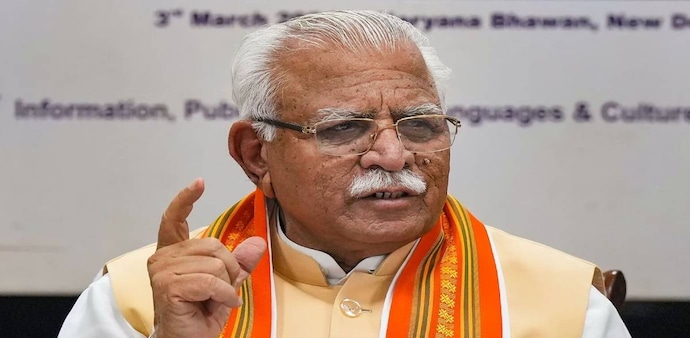
- Nov 27, 2026,
- Updated Nov 27, 2026 2:57 PM IST
India’s power sector is staring at a Rs 200 lakh crore investment opportunity over the next 20 years, Union Power Minister Manohar Lal Khattar said, as the country added nearly 60 GW of generation capacity in the past 12 months. Notably, non-fossil sources accounted for 87% of the additions, taking India's total installed power capacity to around 563 GW.
Speaking at the Power Ministers’ Conference, the Minister said all stakeholders, including private sector players, must work together to make this possible. The two-day conference is being attended by state power ministers.
The data speaks volumes about the sector’s growth. According to figures shared by the government, India’s installed capacity is now about 563 GW, and more than 55% of it is non-fossil. In the last 12 months, around 60 GW of capacity was added, 87% of it from non-fossil sources.
The Minister emphasised the need for the Centre and the States to work together to develop the power sector.
“India has made significant progress in expanding generation capacity, integrating renewable energy and strengthening the national grid. The next phase of our journey requires us to move towards a more integrated approach to power sector planning, where generation, storage, transmission and distribution are planned as interconnected elements of a single system,” he said.
He further stressed that States must implement smart meters, which offer significant benefits to consumers, and said that, through collaboration between the Centre and the States, distribution companies (DISCOMs) have achieved profitability after a prolonged period.
“The DISCOMs as a whole turned a positive PAT during FY 2024-25. We need to ensure that their financial position is strengthened, and that necessary changes in policy, operations and regulation facilitate the continuation of this turnaround,” he added.
The meeting discussed key issues such as the implementation of Resource Adequacy (RA) plans, including accelerated energy storage deployment; inter-state and intra-state transmission; the financial viability of distribution companies; implementation of the Revamped Distribution Sector Scheme (RDSS), with emphasis on smart metering, feeder separation and household electrification; and issues related to nuclear sites.