
Profit-driven world is dystopian, says Zoho's Sridhar Vembu
Modern finance and economic theory encourages essentially all human activity to be profit-driven, says Sridhar Vembu
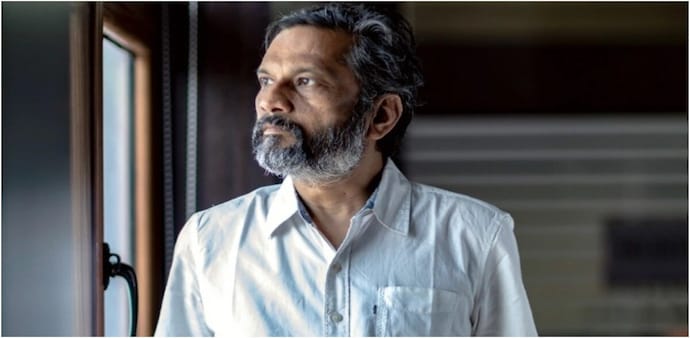
- Aug 30, 2026,
- Updated Aug 30, 2026 11:56 AM IST
Zoho founder and chief scientist Sridhar Vembu has questioned the idea that profit should drive all human activity. He argued that modern economic thinking overlooks the civilisational, spiritual, and cultural foundations on which markets themselves depend.
"Do we want our farmers, teachers, doctors and priests to be profit-driven?" Vembu wrote in a post on Sunday. "Modern finance and economic theory encourages essentially all human activity to be profit-driven. This leads to a dystopian world."
Vembu said the market celebrated by modern economics rests on a foundation that is not itself driven by market forces.
"The 'market' that currently fashionable schools of economics like to extoll is built on a bedrock of human civilization, spirituality and culture and those are themselves not market driven," he wrote.
Don't Miss: 'Consider Singapore-like laws': Zoho founder's pitch to Tamil Nadu CM Vijay on corruption
The former Zoho CEO argued that modern economic theory either ignores or actively denies this foundation. "In fact, the dogma is that economics fundamentally shapes all of them," he said. "That raises the question: who supports that bedrock? The ones who are in the "market", companies like us."
"In fact, I would make an even stronger assertion: the entire purpose of profit is to sustain this bedrock, which I categorise into nature (food and spirit), nurture (teaching and spirit), culture (entertainment and spirit), scripture (spirit)," he added.
Vembu also said he does not view technology as an end in itself. "I look at technology as the means to an end, not an end itself," he wrote.
Arindam Banerjee, Senior Manager at Persistent Systems, said that this is a problem that India by itself cannot solve. In fact, he added, this problem has been exacerbated in the world by the US, which the rest of the world has gladly accepted. "Theoretically, I agree with your concept, but I cannot see how this can be implemented in the whole world."
One user responding to Vembu's post took the argument further, saying many major technology companies had increasingly built their businesses around products designed to keep people hooked to screens.
"All top companies have become addiction-seller and most of their products are primarily to addict ppl to their screens...unfortunately, that is where most certain and profitable money is - addiction business," the user wrote.
The user questioned whether companies that genuinely tried to make people's lives more comfortable and easier could succeed if consumers continued to choose addictive products. "But as human beings we just love to buy addictions, so I wonder even if someone wants to do good things may be we just kill them by not buying and harm ourselves!"
Zoho founder and chief scientist Sridhar Vembu has questioned the idea that profit should drive all human activity. He argued that modern economic thinking overlooks the civilisational, spiritual, and cultural foundations on which markets themselves depend.
"Do we want our farmers, teachers, doctors and priests to be profit-driven?" Vembu wrote in a post on Sunday. "Modern finance and economic theory encourages essentially all human activity to be profit-driven. This leads to a dystopian world."
Vembu said the market celebrated by modern economics rests on a foundation that is not itself driven by market forces.
"The 'market' that currently fashionable schools of economics like to extoll is built on a bedrock of human civilization, spirituality and culture and those are themselves not market driven," he wrote.
Don't Miss: 'Consider Singapore-like laws': Zoho founder's pitch to Tamil Nadu CM Vijay on corruption
The former Zoho CEO argued that modern economic theory either ignores or actively denies this foundation. "In fact, the dogma is that economics fundamentally shapes all of them," he said. "That raises the question: who supports that bedrock? The ones who are in the "market", companies like us."
"In fact, I would make an even stronger assertion: the entire purpose of profit is to sustain this bedrock, which I categorise into nature (food and spirit), nurture (teaching and spirit), culture (entertainment and spirit), scripture (spirit)," he added.
Vembu also said he does not view technology as an end in itself. "I look at technology as the means to an end, not an end itself," he wrote.
Arindam Banerjee, Senior Manager at Persistent Systems, said that this is a problem that India by itself cannot solve. In fact, he added, this problem has been exacerbated in the world by the US, which the rest of the world has gladly accepted. "Theoretically, I agree with your concept, but I cannot see how this can be implemented in the whole world."
One user responding to Vembu's post took the argument further, saying many major technology companies had increasingly built their businesses around products designed to keep people hooked to screens.
"All top companies have become addiction-seller and most of their products are primarily to addict ppl to their screens...unfortunately, that is where most certain and profitable money is - addiction business," the user wrote.
The user questioned whether companies that genuinely tried to make people's lives more comfortable and easier could succeed if consumers continued to choose addictive products. "But as human beings we just love to buy addictions, so I wonder even if someone wants to do good things may be we just kill them by not buying and harm ourselves!"