
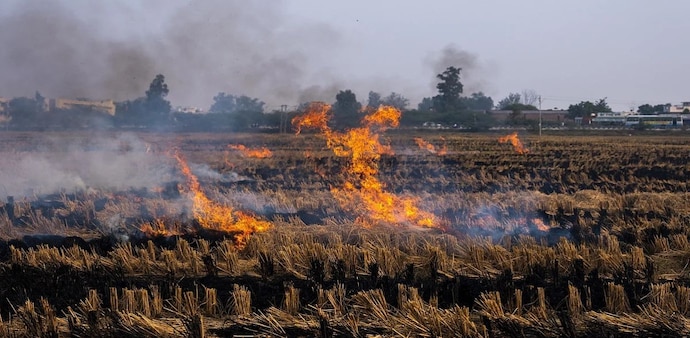
Punjab records 1,152 fresh farm fires on Diwali, Sangrur reports highest daily count
The sharp increase comes despite government advisories, enforcement drives and monetary penalties aimed at curbing crop residue burning, which contributes to air pollution across northern India during the post-monsoon period
- Nov 9, 2026,
- Updated Nov 9, 2026 4:37 PM IST
Punjab witnessed its sharpest single-day rise in paddy stubble-burning incidents this season on Diwali, with 1,152 fresh farm fires reported on November 8, taking the state’s cumulative tally to 4,459 from 3,307 recorded on November 7, according to official data, reported by PTI on Monday.
The sharp increase comes despite government advisories, enforcement drives and monetary penalties aimed at curbing crop residue burning, which contributes to air pollution across northern India during the post-monsoon period.
In comparison, Punjab recorded just 45 farm fires on Diwali last year, which fell on October 20. However, the comparison comes with a caveat: only 32 per cent of the total paddy-sown area had been harvested by October 20 last year, compared with nearly 92 per cent by November 8 this year.
The state recorded 5,114 farm fires by November 30 last year. On November 8, 2025, the cumulative number of incidents stood at 3,622, official figures showed.
Tarn Taran reports highest number of farm fires
Tarn Taran recorded the highest number of farm fires this season, with 654 incidents reported so far. Among the districts reporting fresh cases on Sunday, Sangrur topped the list with 194 fires, taking its seasonal tally to 488.
Ferozepur reported 157 new incidents, pushing its cumulative count to 592, while Bathinda recorded 132 fresh cases, taking its total to 406. Patiala reported 92 additional farm fires, raising its tally to 288.
Barnala recorded 91 fresh incidents, while Ludhiana reported 71, according to the data.
The annual farm-fire monitoring period begins on September 15, approximately two weeks before paddy procurement starts on October 1, and continues until the end of November.
Punjab steps up enforcement against stubble burning
Authorities have taken enforcement action against farmers found burning paddy residue. According to official data, agencies had registered 884 FIRs under Section 223 of the Bharatiya Nyaya Sanhita (BNS), which deals with disobedience of an order duly promulgated by a public servant.
Officials have also marked 1,017 red entries in land revenue records against farmers identified as having burned stubble.
Environmental compensation amounting to more than Rs 62 lakh has been imposed in 1,228 cases, while over Rs 32 lakh has already been recovered.
ALSO READ: Punjab's Barnala chokes as AQI hits 1,104; farm fire incidents surge past 2,100
CAQM directs officials to intensify monitoring
Recently, the Commission for Air Quality Management (CAQM) expressed serious concern over the “very high” number of farm fires in Punjab and held a meeting with senior bureaucrats and police officers from 12 districts to review measures to prevent the practice.
The commission directed authorities to intensify monitoring and enforcement efforts and ensure greater accountability among officials responsible for preventing stubble burning.