
Republic Day 2026: Delhi Police to use AI gear to monitor parade crowd at Kartavya Path
For the first time, Delhi Police personnel will use wearable technology during the Republic Day parade.
- Jan 25, 2026,
- Updated Jan 25, 2026 3:07 PM IST
Republic Day 2026: celebrations, Delhi Police will use AI-based smart glasses and an advanced facial recognition system to strengthen security in the national capital.
The new system is part of an upgraded security plan to improve surveillance and detect threats. Additional Commissioner of Police Devesh Kumar Mahala said technology is being used to improve security arrangements.
“All CCTV cameras will be equipped with video analytics and Facial Recognition Systems (FRS), enabling police to identify suspects with greater accuracy,” Mahala said. “There are various types of video analytics, and we will utilise them as well. This time, we are also using specially developed cameras and wearable glasses.”
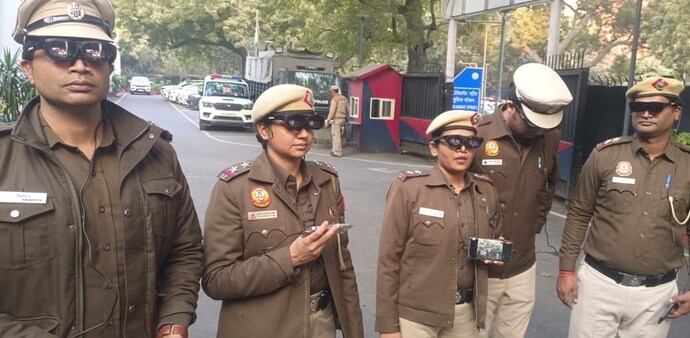
For the first time, Delhi Police personnel will use wearable technology during the Republic Day parade. Selected police officers will wear smart glasses while on duty along the parade route to monitor crowds and identify possible threats.
Mahala said the database has been trained using different algorithms and can identify people even if their appearance has changed. It can match faces from old or recent photos, regardless of changes such as a beard, long hair, or a cut on the face.
He said data security has been given importance. The facial recognition cameras and smart glasses will work on standalone systems that are not connected to the internet. Each device will have its own encrypted database stored locally on mobile phones linked to the smart glasses.
Police said the smart glasses have a built-in camera connected to a mobile app and linked to a database of around 65,000 criminals. The device scans faces in real time and alerts police immediately if a person with a criminal record is detected.
The smart glasses also have thermal scanning, which will help detect hidden weapons or suspicious objects carried by people attending the parade.
Along with technological surveillance, strong physical security measures have also been put in place. Around 10,000 police personnel will be deployed in the New Delhi district alone. More than 3,000 CCTV cameras have been installed, and over 30 control rooms have been set up.
Police will carry out three layers of physical checks for pedestrians, with similar checks for vehicles.
(With inputs from ANI)
Republic Day 2026: celebrations, Delhi Police will use AI-based smart glasses and an advanced facial recognition system to strengthen security in the national capital.
The new system is part of an upgraded security plan to improve surveillance and detect threats. Additional Commissioner of Police Devesh Kumar Mahala said technology is being used to improve security arrangements.
“All CCTV cameras will be equipped with video analytics and Facial Recognition Systems (FRS), enabling police to identify suspects with greater accuracy,” Mahala said. “There are various types of video analytics, and we will utilise them as well. This time, we are also using specially developed cameras and wearable glasses.”
For the first time, Delhi Police personnel will use wearable technology during the Republic Day parade. Selected police officers will wear smart glasses while on duty along the parade route to monitor crowds and identify possible threats.
Mahala said the database has been trained using different algorithms and can identify people even if their appearance has changed. It can match faces from old or recent photos, regardless of changes such as a beard, long hair, or a cut on the face.
He said data security has been given importance. The facial recognition cameras and smart glasses will work on standalone systems that are not connected to the internet. Each device will have its own encrypted database stored locally on mobile phones linked to the smart glasses.
Police said the smart glasses have a built-in camera connected to a mobile app and linked to a database of around 65,000 criminals. The device scans faces in real time and alerts police immediately if a person with a criminal record is detected.
The smart glasses also have thermal scanning, which will help detect hidden weapons or suspicious objects carried by people attending the parade.
Along with technological surveillance, strong physical security measures have also been put in place. Around 10,000 police personnel will be deployed in the New Delhi district alone. More than 3,000 CCTV cameras have been installed, and over 30 control rooms have been set up.
Police will carry out three layers of physical checks for pedestrians, with similar checks for vehicles.
(With inputs from ANI)