
'Retaining capital is not a unilateral thing I can do': FM Sitharaman on India’s capital outflows
Sitharaman said India has taken a realistic approach to semiconductor manufacturing, focusing on chips required for everyday applications, including refrigerators, cars and Internet of Things devices.
- Oct 13, 2026,
- Updated Oct 13, 2026 2:54 PM IST
Finance Minister Nirmala Sitharaman on Tuesday said that retaining capital in the country is not something she can do unilaterally.
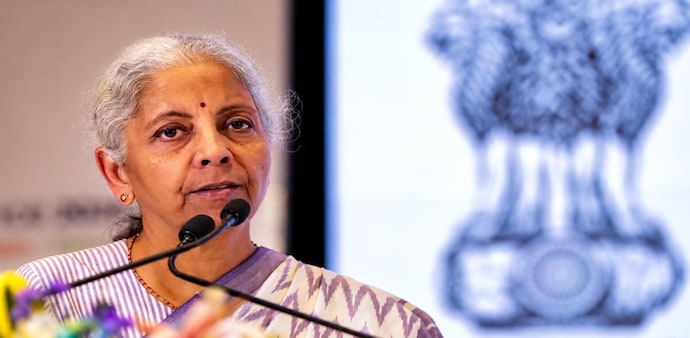
“While capital is coming to India, there’s also lots of outflows. Retaining capital in the country ‘is not a unilateral thing that I can do," she said while speaking on the first day of Bloomberg’s New Economy Forum in New Delhi.
The Finance Minister also spoke about the rupee, taxation, artificial intelligence, energy sufficiency and India’s semiconductor push during the forum.
She said external challenges were adding to the rupee’s woes and reiterated that fiscal discipline should not worry investors as the government has been very prudent in its approach.
“But as regards rupee, and as regards the way it is reacting to the ups and downs with the dollar, yes, that’s where the challenge is, and we will be attending to that,” she said.
Don't Miss: 'We grow with the world, not at anyone's cost': PM Modi on India's economic growth
Sitharaman said RBI was making a lot of efforts to ensure the rupee stays stable and that RBI efforts to stabilise the rupee would continue. She added that RBI’s regulatory measures are not “to fix” the rupee.
“Rupee weakness is very significant in last couple of years,” she said.
India’s AI and semiconductor push
Sitharaman said India is rapidly moving into areas that enable AI and has attracted capital in semiconductor and chip manufacturing.
She said energy sufficiency is a major challenge as AI requires significant power. India needs sustainable green power to support its growing data centre industry, she said.
India is attracting capital into semiconductor manufacturing, transmission lines and renewable energy, while green hydrogen, green ammonia and electric vehicles are emerging as investment opportunities.
Sitharaman said India has taken a realistic approach to semiconductor manufacturing, focusing on chips required for everyday applications, including refrigerators, cars and Internet of Things devices.
Demand for less advanced semiconductor chips will remain significant across India and advanced economies, she said. India aims to develop advanced chips while also manufacturing chips essential for the wider economy.
Must Read: ‘US-led global order is over’: Rishi Sunak says Trump is a ‘symptom’ of changing power dynamics
Long-term capital gains tax debate
Sitharaman also acknowledged the ongoing debate over long-term capital gains tax and securities transaction tax, with some arguing that the two levies overlap and that only one should remain.
She said she would want to “tread cautiously” on the question of taxation very close to the Budget. “But of course, the long-term capital gains tax is something on which a lot of people have been commenting,” she said.
Long-term capital gains tax remains a subject of debate among domestic and foreign investors. Securities transaction tax and capital gains tax have both featured in discussions on India’s market taxation.
Sitharaman said aligning tax treatment across asset classes was intended to bring them at par, not simply to increase taxes.
Finance Minister Nirmala Sitharaman on Tuesday said that retaining capital in the country is not something she can do unilaterally.
“While capital is coming to India, there’s also lots of outflows. Retaining capital in the country ‘is not a unilateral thing that I can do," she said while speaking on the first day of Bloomberg’s New Economy Forum in New Delhi.
The Finance Minister also spoke about the rupee, taxation, artificial intelligence, energy sufficiency and India’s semiconductor push during the forum.
She said external challenges were adding to the rupee’s woes and reiterated that fiscal discipline should not worry investors as the government has been very prudent in its approach.
“But as regards rupee, and as regards the way it is reacting to the ups and downs with the dollar, yes, that’s where the challenge is, and we will be attending to that,” she said.
Don't Miss: 'We grow with the world, not at anyone's cost': PM Modi on India's economic growth
Sitharaman said RBI was making a lot of efforts to ensure the rupee stays stable and that RBI efforts to stabilise the rupee would continue. She added that RBI’s regulatory measures are not “to fix” the rupee.
“Rupee weakness is very significant in last couple of years,” she said.
India’s AI and semiconductor push
Sitharaman said India is rapidly moving into areas that enable AI and has attracted capital in semiconductor and chip manufacturing.
She said energy sufficiency is a major challenge as AI requires significant power. India needs sustainable green power to support its growing data centre industry, she said.
India is attracting capital into semiconductor manufacturing, transmission lines and renewable energy, while green hydrogen, green ammonia and electric vehicles are emerging as investment opportunities.
Sitharaman said India has taken a realistic approach to semiconductor manufacturing, focusing on chips required for everyday applications, including refrigerators, cars and Internet of Things devices.
Demand for less advanced semiconductor chips will remain significant across India and advanced economies, she said. India aims to develop advanced chips while also manufacturing chips essential for the wider economy.
Must Read: ‘US-led global order is over’: Rishi Sunak says Trump is a ‘symptom’ of changing power dynamics
Long-term capital gains tax debate
Sitharaman also acknowledged the ongoing debate over long-term capital gains tax and securities transaction tax, with some arguing that the two levies overlap and that only one should remain.
She said she would want to “tread cautiously” on the question of taxation very close to the Budget. “But of course, the long-term capital gains tax is something on which a lot of people have been commenting,” she said.
Long-term capital gains tax remains a subject of debate among domestic and foreign investors. Securities transaction tax and capital gains tax have both featured in discussions on India’s market taxation.
Sitharaman said aligning tax treatment across asset classes was intended to bring them at par, not simply to increase taxes.