
Blinkit Ambulance has handled 42,000 cases for free: Why Blinkit Ambulance is changing its pricing
Beyond ambulance availability, Goyal highlighted another major obstacle to expanding the service: finding and training qualified paramedics. He said scaling a high-quality emergency ambulance network was difficult because trained and empathetic paramedics remained the biggest bottleneck.
- Nov 5, 2026,
- Updated Nov 5, 2026 2:35 PM IST
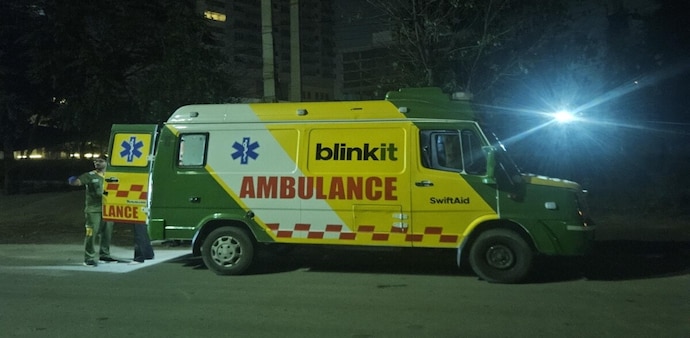
Blinkit Ambulance, the emergency medical service operated by Eternal (formerly Zomato), will now charge ₹2,500 for non-emergency patient transfers while continuing to offer emergency ambulance services free of cost. The move is aimed at discouraging routine bookings and ensuring that fully equipped ambulances remain available for patients facing life-threatening medical emergencies.
Deepinder Goyal, founder and CEO of Temple and Zomato, announced the change in a post on X (formally twitter), explaining that the decision was driven by the growing use of Blinkit Ambulance for non-emergency transportation, including routine checkups, hospital visits and hospital-to-home transfers.
Goyal said the service had handled approximately 20,000 emergency cases over the past two years, with around 42,000 cases in total. The company has not charged users for any of these services so far.
"I started Zomato with a spirit of service. Blinkit Ambulance is what that spirit of service looks like today," Goyal wrote.
However, he said the increasing number of non-emergency bookings was creating an operational challenge. When an ambulance is occupied transporting a patient for a routine hospital visit, it cannot respond to another emergency where minutes could make the difference between life and death.
Why is Blinkit Ambulance introducing a ₹2,500 charge?
According to Goyal, the decision is intended to reduce the use of emergency ambulances for journeys that could be handled by conventional private transport or other ambulance services.
Under the revised policy:
- Emergency transfers: Remain completely free of cost.
- Non-emergency transfers: Will attract a charge of ₹2,500, payable after the trip.
Where does the money go? The amount will be transferred to the Eternal Foundation, which operates the ambulance service and will use the funds to support its expansion.
Goyal said the proposed charge was broadly in line with what private ambulance operators charge.
He added that the company hopes the fee will significantly reduce non-emergency bookings, allowing its emergency response network to prioritise patients who genuinely need urgent medical assistance.
The underlying concern is the availability of emergency vehicles. Blinkit Ambulance operates on a rapid-response model, with the objective of reaching patients within 10 minutes. Keeping these vehicles occupied with routine transportation could undermine the very purpose of the service.
How Blinkit Ambulance became a critical emergency service
Goyal's announcement came in response to an X post by a user, Sparsh Sehgal, who credited Blinkit Ambulance with helping save his grandmother's life.
Sehgal said his grandmother's condition deteriorated suddenly, prompting the family to seek emergency medical assistance. According to his account, a Blinkit ambulance reached their home in eight minutes and transported her to the emergency ward.
He also claimed that no hospital ambulance could have matched the response time.
The incident prompted Goyal to acknowledge the importance of the service while explaining why maintaining ambulance availability is becoming increasingly important. He also wished Sehgal's grandmother a speedy recovery.
Trained paramedics remain the biggest challenge
Beyond ambulance availability, Goyal highlighted another major obstacle to expanding the service: finding and training qualified paramedics. He said scaling a high-quality emergency ambulance network was difficult because trained and empathetic paramedics remained the biggest bottleneck.
The company is expanding its training academy but wants to ensure that the quality of training is not compromised in the process.
Goyal also said Blinkit CEO Albinder Dhindsa and his team were committed to taking the ambulance service to all major Indian cities over the next two to four years.
The expansion will depend not only on adding more ambulances but also on building the trained workforce and operational infrastructure required to deliver reliable emergency medical assistance.