
Sadhguru returns to Nepal; Isha says 'no encouraging indication of survivors at immigration office'
Maa Gambhiri said that there was considerable pressure from the Indian government for Sadhguru to travel by air, "but he has a different plan."
- Aug 30, 2026,
- Updated Aug 30, 2026 8:21 AM IST
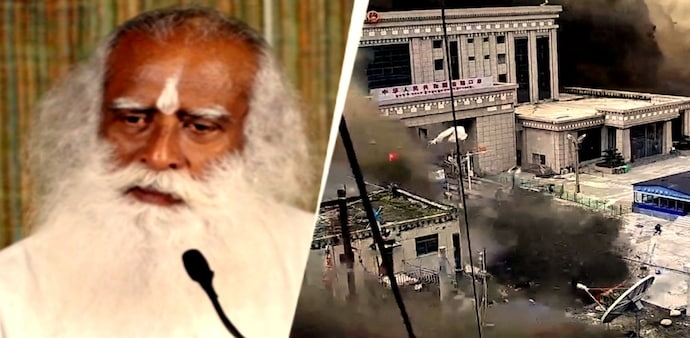
Spiritual leader Sadhguru has returned to Nepal from Tibet and is currently in Kathmandu. He had stayed back in Tibet in an effort to reach the site of the deadly Bhote Koshi River flash floods and assist in the aftermath, Maa Gambhiri, an Isha Foundation coordinator, said on Saturday.
Don't Miss: Nepal issues fresh flood alert as Bhote Koshi river flow increases further
Also, the Isha Foundation, in a statement, said there was "no encouraging indication of survivors" at Tibet's immigration office where 77 of its pilgrims were caught in the disaster.
Maa Gambhiri said that there was considerable pressure from the Indian government for Sadhguru to travel by air, "but he has a different plan."
"In fact, he wants to visit the site (ground zero) where the incident occurred so that he can provide all possible assistance. Sadhguru wanted to travel by road," Maa Gambhiri, coordinator of Isha Sacred Walks, told news agency ANI.
Gambhiri said Sadhguru's decision to stay in Tibet was also linked to the more than 700 Isha members who remained there and needed a way to leave. "Sadhguru wanted to take the land route because there were also about 700 plus of our members who are currently in Tibet. So there has to be a path for them to exit Tibet as well," she said.
Gambhiri said the group extended its stay in Tibet while seeking official permissions to reach Gyirong, where the August 26 flash floods struck. The group could not get the required clearance because Chinese military and rescue teams had restricted access to the area while search operations were underway.
The biggest challenge, she said, was not being able to reach the site and establish what had happened to 77 participants caught in the disaster.
The 77 Isha pilgrims, who were returning from the Mansarovar Yatra, were at the immigration centre in Tibet's Gyirong when it was washed away in Wednesday's devastating flood.
The organisation has been relying on photographs, videos, ground visuals, and reports from Chinese media to track the situation. "I think the challenge was more emotional. The challenge was of our inability to reach that place where we actually wanted to go. So that was a big challenge for us," Gambhiri said.
"It is just the challenge of not finding what has happened to our members. So I think that was the biggest challenge. And it was also very emotional for us. We also understand what it must be doing to the families of these people," she added.
No Specific Information On Missing Participants
Gambhiri said the organisation had not received any specific or official information about the participants caught in the disaster.
"Unfortunately, we do not have any specific news," she said, adding that the organisation was monitoring photographs, videos, and reports from Chinese media about the rescue operation.
The Isha Foundation has mobilised volunteers in several countries to support families waiting for information. Volunteers have been reaching out to families, including visiting them personally, while helplines have been set up in the countries from which participants travelled.
"It's not an easy time for any family, for the friends and the family. It's a very harrowing time for them," Gambhiri said.
"Our hotlines have been ringing constantly and we have a very large number of volunteers handling these calls, providing all the necessary support," she added.
A team has also been set up in Kathmandu to gather information and pass it on to families.
Another team is stationed close to Gyirong on the Tibet side to collect information as it emerges.
"We have made a team; we have created a team so that they can get all the whatever the information that comes and pass it on to us. They are stationed right now very close to Gyirong, where this happened," Gambhiri said.
Search Operations Resume
In an update posted on X, the Isha Foundation said Chinese authorities resumed search and rescue operations at Gyirong Port around noon on August 28. The operations had been temporarily paused because of secondary flood risks.
The foundation said its ground teams, positioned at the closest permitted locations on both sides of the border in Nepal and Tibet, had corroborated visual evidence of the destruction at the site.
The organisation said the findings so far offered no encouraging indication of survivors at the immigration office area.
"At this time, there seem to be no encouraging indications of survivors at the immigration office area. The immigration office complex has been completely washed away. We have been able to verify the extent of the destruction through multiple publicly available sources, as well as information being received from people on the ground," Isha said in a statement on Saturday.
It said it would continue operating round-the-clock helplines and deploying volunteers to support families waiting for information.
Spiritual leader Sadhguru has returned to Nepal from Tibet and is currently in Kathmandu. He had stayed back in Tibet in an effort to reach the site of the deadly Bhote Koshi River flash floods and assist in the aftermath, Maa Gambhiri, an Isha Foundation coordinator, said on Saturday.
Don't Miss: Nepal issues fresh flood alert as Bhote Koshi river flow increases further
Also, the Isha Foundation, in a statement, said there was "no encouraging indication of survivors" at Tibet's immigration office where 77 of its pilgrims were caught in the disaster.
Maa Gambhiri said that there was considerable pressure from the Indian government for Sadhguru to travel by air, "but he has a different plan."
"In fact, he wants to visit the site (ground zero) where the incident occurred so that he can provide all possible assistance. Sadhguru wanted to travel by road," Maa Gambhiri, coordinator of Isha Sacred Walks, told news agency ANI.
Gambhiri said Sadhguru's decision to stay in Tibet was also linked to the more than 700 Isha members who remained there and needed a way to leave. "Sadhguru wanted to take the land route because there were also about 700 plus of our members who are currently in Tibet. So there has to be a path for them to exit Tibet as well," she said.
Gambhiri said the group extended its stay in Tibet while seeking official permissions to reach Gyirong, where the August 26 flash floods struck. The group could not get the required clearance because Chinese military and rescue teams had restricted access to the area while search operations were underway.
The biggest challenge, she said, was not being able to reach the site and establish what had happened to 77 participants caught in the disaster.
The 77 Isha pilgrims, who were returning from the Mansarovar Yatra, were at the immigration centre in Tibet's Gyirong when it was washed away in Wednesday's devastating flood.
The organisation has been relying on photographs, videos, ground visuals, and reports from Chinese media to track the situation. "I think the challenge was more emotional. The challenge was of our inability to reach that place where we actually wanted to go. So that was a big challenge for us," Gambhiri said.
"It is just the challenge of not finding what has happened to our members. So I think that was the biggest challenge. And it was also very emotional for us. We also understand what it must be doing to the families of these people," she added.
No Specific Information On Missing Participants
Gambhiri said the organisation had not received any specific or official information about the participants caught in the disaster.
"Unfortunately, we do not have any specific news," she said, adding that the organisation was monitoring photographs, videos, and reports from Chinese media about the rescue operation.
The Isha Foundation has mobilised volunteers in several countries to support families waiting for information. Volunteers have been reaching out to families, including visiting them personally, while helplines have been set up in the countries from which participants travelled.
"It's not an easy time for any family, for the friends and the family. It's a very harrowing time for them," Gambhiri said.
"Our hotlines have been ringing constantly and we have a very large number of volunteers handling these calls, providing all the necessary support," she added.
A team has also been set up in Kathmandu to gather information and pass it on to families.
Another team is stationed close to Gyirong on the Tibet side to collect information as it emerges.
"We have made a team; we have created a team so that they can get all the whatever the information that comes and pass it on to us. They are stationed right now very close to Gyirong, where this happened," Gambhiri said.
Search Operations Resume
In an update posted on X, the Isha Foundation said Chinese authorities resumed search and rescue operations at Gyirong Port around noon on August 28. The operations had been temporarily paused because of secondary flood risks.
The foundation said its ground teams, positioned at the closest permitted locations on both sides of the border in Nepal and Tibet, had corroborated visual evidence of the destruction at the site.
The organisation said the findings so far offered no encouraging indication of survivors at the immigration office area.
"At this time, there seem to be no encouraging indications of survivors at the immigration office area. The immigration office complex has been completely washed away. We have been able to verify the extent of the destruction through multiple publicly available sources, as well as information being received from people on the ground," Isha said in a statement on Saturday.
It said it would continue operating round-the-clock helplines and deploying volunteers to support families waiting for information.