
SEBI chief Tuhin Kanta Pandey signals faster FPI onboarding with RBI: Report
SEBI and the RBI are currently refining draft guidelines to enable derivatives linked to corporate bond indices — a step designed to help institutional investors hedge interest rate and credit risks while deepening liquidity in fixed-income secondary markets.
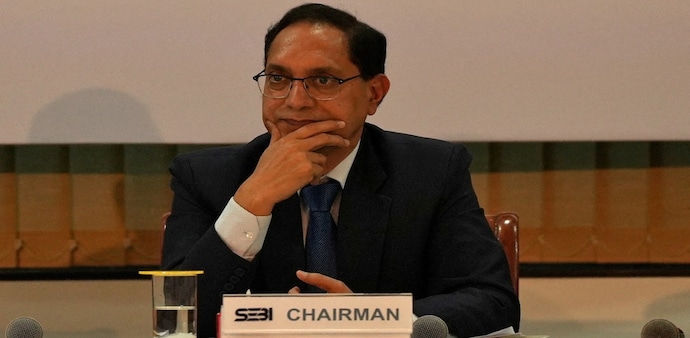
- Oct 3, 2026,
- Updated Oct 3, 2026 2:10 PM IST
In an effort to make capital entry friction-free for foreign portfolio investors, market regulator Securities and Exchange Board of India (SEBI) and the Reserve Bank of India (RBI) are actively dismantling regulatory and operational hurdles, SEBI Chairman Tuhin Kanta Pandey said, as reported by Moneycontrol.
Addressing concerns over foreign capital flows, Pandey clarified that regulators cannot compel foreign investors to allocate capital to domestic markets. Foreign investment decisions remain fundamentally guided by net returns and risk-reward dynamics across global financial hubs. What regulatory authorities can control, however, is the structural ease with which international investors access domestic capital channels.
To achieve this, SEBI and the central bank are overhauling the onboarding framework to ensure registration processes become fully digital, seamless, and expedited, Moneycontrol reported. Recent operational measures include facilitating digital signatures on submitted documentation in place of physical notarisation or apostillation requirements, alongside allowing overseas branches of Indian banks with correspondent relationships to certify documents directly.
Beyond portfolio investment onboarding, the regulatory push extends into broader market infrastructure. SEBI and the RBI are currently refining draft guidelines to enable derivatives linked to corporate bond indices — a step designed to help institutional investors hedge interest rate and credit risks while deepening liquidity in fixed-income secondary markets.
Addressing broader market structural queries, Pandey dismissed speculation regarding exchange-level interoperability between the BSE and the NSE. He confirmed that SEBI maintains a strict line between market dynamics and regulatory oversight, keeping existing framework rules unchanged while continuing to prioritise transparency, enhanced surveillance, and investor protection across domestic trading venues.
In an effort to make capital entry friction-free for foreign portfolio investors, market regulator Securities and Exchange Board of India (SEBI) and the Reserve Bank of India (RBI) are actively dismantling regulatory and operational hurdles, SEBI Chairman Tuhin Kanta Pandey said, as reported by Moneycontrol.
Addressing concerns over foreign capital flows, Pandey clarified that regulators cannot compel foreign investors to allocate capital to domestic markets. Foreign investment decisions remain fundamentally guided by net returns and risk-reward dynamics across global financial hubs. What regulatory authorities can control, however, is the structural ease with which international investors access domestic capital channels.
To achieve this, SEBI and the central bank are overhauling the onboarding framework to ensure registration processes become fully digital, seamless, and expedited, Moneycontrol reported. Recent operational measures include facilitating digital signatures on submitted documentation in place of physical notarisation or apostillation requirements, alongside allowing overseas branches of Indian banks with correspondent relationships to certify documents directly.
Beyond portfolio investment onboarding, the regulatory push extends into broader market infrastructure. SEBI and the RBI are currently refining draft guidelines to enable derivatives linked to corporate bond indices — a step designed to help institutional investors hedge interest rate and credit risks while deepening liquidity in fixed-income secondary markets.
Addressing broader market structural queries, Pandey dismissed speculation regarding exchange-level interoperability between the BSE and the NSE. He confirmed that SEBI maintains a strict line between market dynamics and regulatory oversight, keeping existing framework rules unchanged while continuing to prioritise transparency, enhanced surveillance, and investor protection across domestic trading venues.