
Shashi Tharoor congratulates Jaishankar on Nalanda revival - How MEA rebuilt a global university
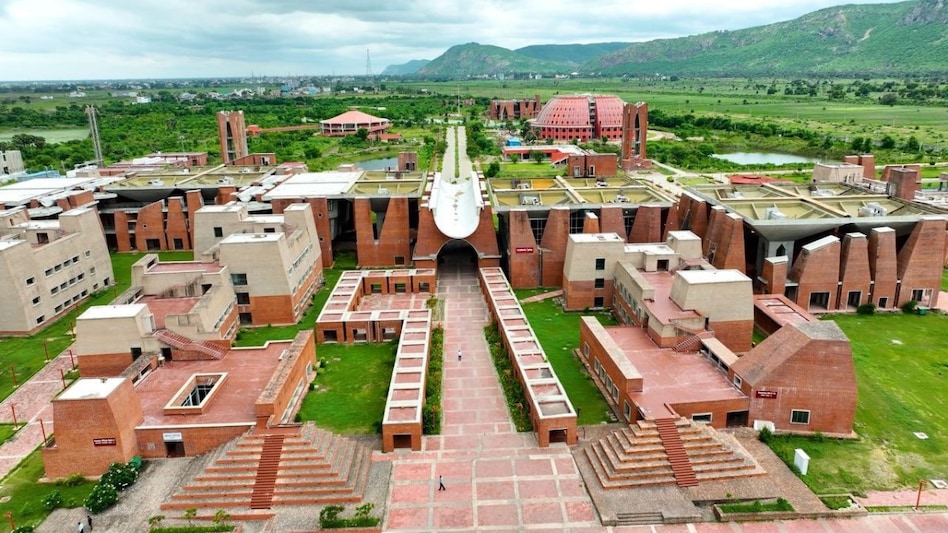
The modern Nalanda University received a major push in June 2024, when Prime Minister Narendra Modi inaugurated the new campus near Rajgir in Bihar
- Dec 23, 2025,
- Updated Dec 23, 2025 2:10 PM IST
Congress MP Shashi Tharoor on Tuesday praised the Ministry of External Affairs for the revival of Nalanda University, calling it a major but largely under-recognised national achievement.
"Couldn't agree more Amitabh Kant! I was hugely impressed by the Nalanda University campus while attending the Nalanda Literature Festival," he wrote on X. "My warm congratulations to Dr S Jaishankar and Indian Diplomacy for this wonderful achievement, which deserves a higher rating among the many unsung contributions of MEA to our nation."
Tharoor's comment came in response to a post by former NITI Aayog CEO Amitabh Kant, who described the Nalanda University campus as "awe-inspiring" after visiting it during the Nalanda Literature Festival.
"Thanks to the Nalanda Literature Festival, I got the opportunity to make a visit to the Nalanda University," Kant wrote. "The architecture, the campus, the net zero initiative, the serenity, the knowledge – everything about it is awe-inspiring! In my view, it has one of the finest campuses in the world."
What role did MEA play in reviving Nalanda?
Nalanda University has been established as a non-profit, public-private partnership international institution of academic excellence, with the Ministry of External Affairs playing a central coordinating and funding role.
In July 2025, the MEA told Parliament that India, as the host country, had made substantial contributions to the project. The Government of Bihar gave 455 acres of land to the University while the central government made an allocation of Rs 2,727.10 crores towards capital and recurring expenditure during the establishment phase of Nalanda University up to 2021-22. "The allocation is made from MEA's Plan Budget," the ministry said.
The MEA has also anchored Nalanda as a multilateral project. Contributions were received from several countries, including China (US $1 million), Thailand (US $100,000), Lao PDR (US $50,000), Australia (AU $1 million), and Japan through two ODA loans of Yen 21,426 million each. Citizens of Singapore have also proposed contributions ranging between S$5–10 million.
Nalanda University was conceived as part of India's broader diplomatic outreach in Asia. The Nalanda University Act provides the framework to implement decisions taken at the second East Asia Summit in 2007 and the fourth summit in 2009, embedding the university within India's Act East policy.
When did the new Nalanda campus come up?
The modern Nalanda University received a major push in June 2024, when Prime Minister Narendra Modi inaugurated the new campus near Rajgir in Bihar.
Although the Nalanda University Act was passed by Parliament in 2010, construction of the present campus began in 2017 under the direction of the Modi government.
India is joined by 17 participating countries in the Nalanda project, including Australia, Bangladesh, Bhutan, Brunei, Cambodia, China, Indonesia, Laos, Mauritius, Myanmar, New Zealand, Portugal, Singapore, South Korea, Sri Lanka, Thailand and Vietnam. Ambassadors from these countries attended the inauguration ceremony.
What does the Nalanda University campus have?
Spread across 455 acres, the Nalanda University campus has been designed to echo the architectural elements of the ancient Nalanda Mahavihara while incorporating modern sustainability standards.
The campus is a net-zero green campus. It includes over 100 acres of water bodies known as the Kamal Sagar ponds, an on-grid solar power plant, a domestic and drinking water treatment plant, and a water recycling system that allows wastewater reuse. The campus also has more than 100 acres of green cover.
Facilities include a 250-capacity yoga centre, a state-of-the-art auditorium, a library, an archival centre and a fully equipped sports complex.
What does Nalanda teach today?
Nalanda University places emphasis on higher education and research, offering postgraduate and doctoral programmes across a range of disciplines. These include Buddhist studies, philosophy and comparative religions, languages and literature, ecology and environmental studies, sustainable development, international relations and peace studies.
Students from more than 20 countries, including India, are currently enrolled at the university, reinforcing its identity as an international centre of learning.
Congress MP Shashi Tharoor on Tuesday praised the Ministry of External Affairs for the revival of Nalanda University, calling it a major but largely under-recognised national achievement.
"Couldn't agree more Amitabh Kant! I was hugely impressed by the Nalanda University campus while attending the Nalanda Literature Festival," he wrote on X. "My warm congratulations to Dr S Jaishankar and Indian Diplomacy for this wonderful achievement, which deserves a higher rating among the many unsung contributions of MEA to our nation."
Tharoor's comment came in response to a post by former NITI Aayog CEO Amitabh Kant, who described the Nalanda University campus as "awe-inspiring" after visiting it during the Nalanda Literature Festival.
"Thanks to the Nalanda Literature Festival, I got the opportunity to make a visit to the Nalanda University," Kant wrote. "The architecture, the campus, the net zero initiative, the serenity, the knowledge – everything about it is awe-inspiring! In my view, it has one of the finest campuses in the world."
What role did MEA play in reviving Nalanda?
Nalanda University has been established as a non-profit, public-private partnership international institution of academic excellence, with the Ministry of External Affairs playing a central coordinating and funding role.
In July 2025, the MEA told Parliament that India, as the host country, had made substantial contributions to the project. The Government of Bihar gave 455 acres of land to the University while the central government made an allocation of Rs 2,727.10 crores towards capital and recurring expenditure during the establishment phase of Nalanda University up to 2021-22. "The allocation is made from MEA's Plan Budget," the ministry said.
The MEA has also anchored Nalanda as a multilateral project. Contributions were received from several countries, including China (US $1 million), Thailand (US $100,000), Lao PDR (US $50,000), Australia (AU $1 million), and Japan through two ODA loans of Yen 21,426 million each. Citizens of Singapore have also proposed contributions ranging between S$5–10 million.
Nalanda University was conceived as part of India's broader diplomatic outreach in Asia. The Nalanda University Act provides the framework to implement decisions taken at the second East Asia Summit in 2007 and the fourth summit in 2009, embedding the university within India's Act East policy.
When did the new Nalanda campus come up?
The modern Nalanda University received a major push in June 2024, when Prime Minister Narendra Modi inaugurated the new campus near Rajgir in Bihar.
Although the Nalanda University Act was passed by Parliament in 2010, construction of the present campus began in 2017 under the direction of the Modi government.
India is joined by 17 participating countries in the Nalanda project, including Australia, Bangladesh, Bhutan, Brunei, Cambodia, China, Indonesia, Laos, Mauritius, Myanmar, New Zealand, Portugal, Singapore, South Korea, Sri Lanka, Thailand and Vietnam. Ambassadors from these countries attended the inauguration ceremony.
What does the Nalanda University campus have?
Spread across 455 acres, the Nalanda University campus has been designed to echo the architectural elements of the ancient Nalanda Mahavihara while incorporating modern sustainability standards.
The campus is a net-zero green campus. It includes over 100 acres of water bodies known as the Kamal Sagar ponds, an on-grid solar power plant, a domestic and drinking water treatment plant, and a water recycling system that allows wastewater reuse. The campus also has more than 100 acres of green cover.
Facilities include a 250-capacity yoga centre, a state-of-the-art auditorium, a library, an archival centre and a fully equipped sports complex.
What does Nalanda teach today?
Nalanda University places emphasis on higher education and research, offering postgraduate and doctoral programmes across a range of disciplines. These include Buddhist studies, philosophy and comparative religions, languages and literature, ecology and environmental studies, sustainable development, international relations and peace studies.
Students from more than 20 countries, including India, are currently enrolled at the university, reinforcing its identity as an international centre of learning.