
‘SIR must rethought or abandoned’: Shashi Tharoor says exercise risks disenfranchising legitimate voters
Shashi Tharoor argued that some discrepancies may originate in the Election Commission’s own databases rather than with voters.
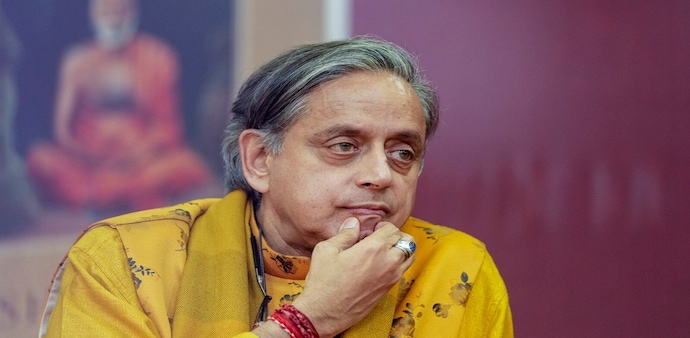
- Sep 25, 2026,
- Updated Sep 25, 2026 12:59 PM IST
Congress MP Shashi Tharoor has argued that the Election Commission’s Special Intensive Revision (SIR) of electoral rolls should be “rethought or abandoned”, saying the exercise risks disenfranchising legitimate voters because of technical and administrative errors.
He argued for the rehaul of the SIR in an opinion piece published in The Indian Express.
Tharoor’s central concern is the scale of voter deletions. He pointed to Delhi, where, according to figures cited in his article, more than 80 lakh of 1.45 crore registered voters were either marked for deletion or served notices seeking proof of eligibility. He argued that such a contraction is difficult to reconcile with a growing adult population.
A key part of his argument is the large number of alleged errors in the revision process. Tharoor cited West Bengal, where 27 lakh voters were flagged for tribunal review over “logical discrepancies”. Of 82,000 cases adjudicated, he said, 91% were found to have been wrongly deleted and subsequently restored.
He argued that some discrepancies may originate in the Election Commission’s own databases rather than with voters. Examples cited included incorrect coding of a parent’s age and misspelled names. He also pointed to cases in which legitimate voters were reportedly removed despite being found eligible after review.
Tharoor questioned the reliability of the technological systems being used to conduct the exercise, as well as the decision to use the 2002 electoral roll as a baseline for voter mapping. He also raised concerns about Booth Level Officers, largely government school teachers, being given responsibilities involving verification of citizenship credentials.
“While ministers, judges, and high-ranking officials possess the institutional access and resources to rectify technical glitches seamlessly, the average citizen is plunged into administrative chaos. Furthermore, many of these “discrepancies” originate not from citizen error, but from flawed internal ECI databases” he wrote.
Tharoor said, “Equally alarming is the delegation of quasi-judicial power to Booth Level Officers (predominantly government school teachers) who are effectively tasked with verifying citizenship credentials for long-standing voters. Giving them and unreliable software the authority to decide whether citizens remain entitled to vote risks converting routine documentation checks into arbitrary purges.”
Another concern is timing. Tharoor argued that conducting SIR shortly before elections in states including Bihar, West Bengal, Kerala and Tamil Nadu leaves insufficient time for voters to correct errors or appeal against deletions.
He acknowledged that cleaning electoral rolls is a legitimate administrative objective. His objection is to a process in which genuine voters could lose their franchise because of faulty databases, software problems or rushed verification.
“The ECI has yet to provide a convincing rationale for forcing millions of voters into an administrative straitjacket under tight statutory deadlines just weeks before they are due to exercise their franchise, without enough time to appeal and rectify an injustice. Disenfranchising genuine citizens in haste is worse than allowing 10 times as many dead voters to remain on the rolls,” Tharoor wrote.
Congress MP Shashi Tharoor has argued that the Election Commission’s Special Intensive Revision (SIR) of electoral rolls should be “rethought or abandoned”, saying the exercise risks disenfranchising legitimate voters because of technical and administrative errors.
He argued for the rehaul of the SIR in an opinion piece published in The Indian Express.
Tharoor’s central concern is the scale of voter deletions. He pointed to Delhi, where, according to figures cited in his article, more than 80 lakh of 1.45 crore registered voters were either marked for deletion or served notices seeking proof of eligibility. He argued that such a contraction is difficult to reconcile with a growing adult population.
A key part of his argument is the large number of alleged errors in the revision process. Tharoor cited West Bengal, where 27 lakh voters were flagged for tribunal review over “logical discrepancies”. Of 82,000 cases adjudicated, he said, 91% were found to have been wrongly deleted and subsequently restored.
He argued that some discrepancies may originate in the Election Commission’s own databases rather than with voters. Examples cited included incorrect coding of a parent’s age and misspelled names. He also pointed to cases in which legitimate voters were reportedly removed despite being found eligible after review.
Tharoor questioned the reliability of the technological systems being used to conduct the exercise, as well as the decision to use the 2002 electoral roll as a baseline for voter mapping. He also raised concerns about Booth Level Officers, largely government school teachers, being given responsibilities involving verification of citizenship credentials.
“While ministers, judges, and high-ranking officials possess the institutional access and resources to rectify technical glitches seamlessly, the average citizen is plunged into administrative chaos. Furthermore, many of these “discrepancies” originate not from citizen error, but from flawed internal ECI databases” he wrote.
Tharoor said, “Equally alarming is the delegation of quasi-judicial power to Booth Level Officers (predominantly government school teachers) who are effectively tasked with verifying citizenship credentials for long-standing voters. Giving them and unreliable software the authority to decide whether citizens remain entitled to vote risks converting routine documentation checks into arbitrary purges.”
Another concern is timing. Tharoor argued that conducting SIR shortly before elections in states including Bihar, West Bengal, Kerala and Tamil Nadu leaves insufficient time for voters to correct errors or appeal against deletions.
He acknowledged that cleaning electoral rolls is a legitimate administrative objective. His objection is to a process in which genuine voters could lose their franchise because of faulty databases, software problems or rushed verification.
“The ECI has yet to provide a convincing rationale for forcing millions of voters into an administrative straitjacket under tight statutory deadlines just weeks before they are due to exercise their franchise, without enough time to appeal and rectify an injustice. Disenfranchising genuine citizens in haste is worse than allowing 10 times as many dead voters to remain on the rolls,” Tharoor wrote.