
State Bank of India declines to share SOP for sale, redemption of electoral bonds
Transparency activist Anjali Bhardwaj had filed a petition under RTI Act, seeking information about the SOPs laid down by the bank for the electoral bonds scheme.
- Apr 2, 2024,
- Updated Apr 2, 2024 8:10 PM IST
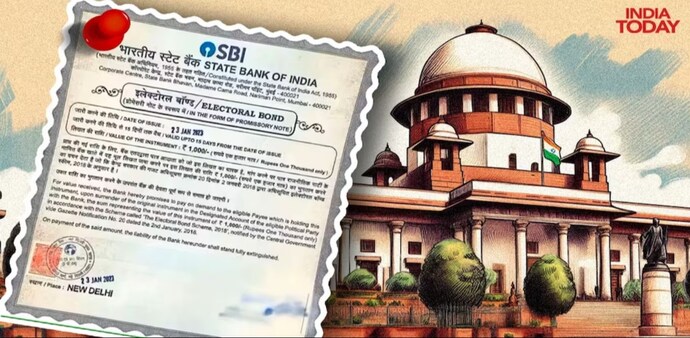
Electoral bond scheme: The State Bank of India (SBI), the sole issuer of electoral bonds, on Tuesday refused to let out its standard operating procedure (SOP) for the sale and redemption of the controversial bonds that were issued to its authorised branches. The public sector bank cited the exemption given under "commercial confidence", according to an RTI response.
Transparency activist Anjali Bhardwaj had filed a petition under RTI Act, seeking information about the SOPs laid down by the bank for the electoral bonds scheme.
In response to the RTI plea, M Kanna Babu, the central public information officer and deputy general manager of the SBI, said SOPs of Electoral Bond Scheme-2018 issued to authorised branches from time to time are internal guidelines.
"Standard Operating Procedures (SOPs) of Electoral Bond Scheme-2018 issued to authorised branches from time to time are internal guidelines with regard to sale and redemption of electoral bonds (meant for internal circulation only), which is exempted under section 8(1)(d) of the Right to Information Act," Babu said in his reply.
Section 8(1)(d) of the RTI Act pertains to “information including commercial confidence, trade secrets or intellectual property, the disclosure of which would harm the competitive position of a third party, unless the competent authority is satisfied that larger public interest warrants the disclosure of such information;”.
In February this year, the Supreme Court struck down the electoral bonds scheme calling it unconstitutional, and ordered disclosure by the EC of the donors, the amounts donated by them and the recipients by March 13.
The apex court directed the Election Commission of India to publish on its website the information shared by SBI by March 15. SBI needs to provide details of each electoral bonds purchased, name of purchaser, denomination of electoral bonds, and details of each electoral bond redeemed by political parties including the date of encashment.
In response to SBI's reply, RTI activist Bhardwaj said: "It is shocking to note that even after the Supreme Court has struck down the electoral bonds scheme as unconstitutional and explicitly directed and ensured disclosure of all details of the EBs purchased and redeemed, the SBI continues to deny important information about the operation of the electoral bonds scheme."
"It is relevant to note that the SBI cited the standard operating procedures in its application dated March 4, when it sought additional time of four months to comply with the Supreme Court's judgment to disclose the details of the electoral bonds," she said.
The electoral bond scheme was introduced to allow individual and domestic companies to anonymously donate bonds to political parties in multiples of Rs 1,000, Rs 10,000, Rs 1 lakh, Rs 10 lakh, and Rs 1 crore. The bonds needed to be redeemed within 15 days by a political party.
In all, 22,217 electoral bonds were redeemed since the inception of the scheme. The BJP redeemed Rs 8,451 crore; Congress Rs 1,950 crore; Trinamool Congress Rs 1,707.81 crore and BRS Rs 1,407.30 crore.
(With agency inputs)