
Sugar to maize: Why ethanol demand could make your eggs & chicken costlier
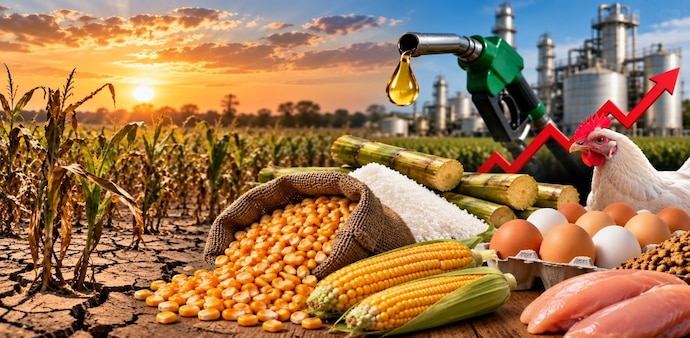
Sugar prices have risen sharply after lower sugarcane production and the diversion of sugar for ethanol and exports.
- Sep 16, 2026,
- Updated Sep 16, 2026 3:54 PM IST
India’s sugar shortage could soon create a new problem for consumers. With sugarcane output falling and sugar unlikely to be available for ethanol production next season, ethanol makers may turn to maize in a bigger way, Mint reported on Tuesday.
But maize is also a key ingredient in poultry feed, raising concerns over higher costs for eggs and chicken.
The pressure comes at a time when deficit rainfall is expected to hurt maize production, while soybean meal, another important animal-feed ingredient, has also become more expensive.
Why is sugar becoming a problem?
Sugar prices have risen sharply after lower sugarcane production and the diversion of sugar for ethanol and exports.
As per the report, sugar output estimates for 2025-26 were cut by the Indian Sugar and Bio-energy Manufacturers Association from nearly 35 million tonnes in July 2025 to 31 million tonnes last month. More than 3 million tonnes of sugarcane were used for ethanol production in 2025-26, while 0.8 million tonnes were exported.
Sugar prices rose from around ₹49 per kg at the end of July to ₹65 per kg at the end of August, according to the report.
About 25% of India’s ethanol supply comes from sugarcane-based feedstock. With E20 petrol, containing 20% ethanol, becoming the standard across India from 1 April 2026, demand for ethanol has remained high.
Why does this affect maize?
The sugar shortage means sugar is expected to be unavailable for ethanol production in the 2026-27 season. This could force ethanol makers to rely more heavily on maize and rice.
Don't Miss: ITC cigarette prices revised again: Classic Connect, Gold Flake Super Star get costlier
Chandra Kumar Jain, president of the Grain Ethanol Manufacturers Association, estimates that maize demand for ethanol could rise by 40-50% next year if rice supplies remain unchanged.
But maize production is also under pressure.
The US Department of Agriculture’s Foreign Agricultural Service expects India’s maize production to fall by 10% in 2026-27. The agriculture ministry also reported that maize planting was down 3.2% year-on-year as of 4 September.
Industry surveys cited in the report suggest maize acreage could be down nearly 7%, while lower rainfall could further hurt yields.
Why should poultry consumers worry?
Maize is a major source of energy for poultry birds and makes up around 55% of poultry feed by weight.
That means ethanol makers and poultry farmers could end up competing for the same crop.
Current wholesale maize prices are around ₹27 per kg, more than 30% higher than in May-June. Poultry feed prices have also risen from around ₹25 per kg in April to more than ₹30 per kg now, according to poultry entrepreneur Obada Habib.
The impact is already visible in egg prices. Wholesale egg prices in Delhi touched ₹6.70 per egg in July, nearly 39% higher than a year earlier. Prices fell in August as demand weakened during Shravan, but remained 7% above last year.
Must Read: Onion wholesale prices fall 9% in 9 days, retail rates may ease: Govt
What happens next?
Ethanol producers are seeking more rice from government stocks to reduce pressure on maize. But rice prices are already rising, up 8% year-on-year as of 13 September.
ICRIER has also warned that India may need to consider a lower ethanol blending rate when crops such as sugar and maize are in short supply.
The bigger concern is the widening gap between fuel demand and agricultural supply. Ethanol demand is estimated to have grown from 1.7 billion litres in 2019-20 to 12 billion litres in 2025-26, while production of key feedstocks such as maize, rice and sugarcane has grown much more slowly.
For consumers, this could mean continued pressure on prices of sugar, eggs, chicken and other food products if maize and other feedstocks remain in short supply. can we bring el nino on the lead
India’s sugar shortage could soon create a new problem for consumers. With sugarcane output falling and sugar unlikely to be available for ethanol production next season, ethanol makers may turn to maize in a bigger way, Mint reported on Tuesday.
But maize is also a key ingredient in poultry feed, raising concerns over higher costs for eggs and chicken.
The pressure comes at a time when deficit rainfall is expected to hurt maize production, while soybean meal, another important animal-feed ingredient, has also become more expensive.
Why is sugar becoming a problem?
Sugar prices have risen sharply after lower sugarcane production and the diversion of sugar for ethanol and exports.
As per the report, sugar output estimates for 2025-26 were cut by the Indian Sugar and Bio-energy Manufacturers Association from nearly 35 million tonnes in July 2025 to 31 million tonnes last month. More than 3 million tonnes of sugarcane were used for ethanol production in 2025-26, while 0.8 million tonnes were exported.
Sugar prices rose from around ₹49 per kg at the end of July to ₹65 per kg at the end of August, according to the report.
About 25% of India’s ethanol supply comes from sugarcane-based feedstock. With E20 petrol, containing 20% ethanol, becoming the standard across India from 1 April 2026, demand for ethanol has remained high.
Why does this affect maize?
The sugar shortage means sugar is expected to be unavailable for ethanol production in the 2026-27 season. This could force ethanol makers to rely more heavily on maize and rice.
Don't Miss: ITC cigarette prices revised again: Classic Connect, Gold Flake Super Star get costlier
Chandra Kumar Jain, president of the Grain Ethanol Manufacturers Association, estimates that maize demand for ethanol could rise by 40-50% next year if rice supplies remain unchanged.
But maize production is also under pressure.
The US Department of Agriculture’s Foreign Agricultural Service expects India’s maize production to fall by 10% in 2026-27. The agriculture ministry also reported that maize planting was down 3.2% year-on-year as of 4 September.
Industry surveys cited in the report suggest maize acreage could be down nearly 7%, while lower rainfall could further hurt yields.
Why should poultry consumers worry?
Maize is a major source of energy for poultry birds and makes up around 55% of poultry feed by weight.
That means ethanol makers and poultry farmers could end up competing for the same crop.
Current wholesale maize prices are around ₹27 per kg, more than 30% higher than in May-June. Poultry feed prices have also risen from around ₹25 per kg in April to more than ₹30 per kg now, according to poultry entrepreneur Obada Habib.
The impact is already visible in egg prices. Wholesale egg prices in Delhi touched ₹6.70 per egg in July, nearly 39% higher than a year earlier. Prices fell in August as demand weakened during Shravan, but remained 7% above last year.
Must Read: Onion wholesale prices fall 9% in 9 days, retail rates may ease: Govt
What happens next?
Ethanol producers are seeking more rice from government stocks to reduce pressure on maize. But rice prices are already rising, up 8% year-on-year as of 13 September.
ICRIER has also warned that India may need to consider a lower ethanol blending rate when crops such as sugar and maize are in short supply.
The bigger concern is the widening gap between fuel demand and agricultural supply. Ethanol demand is estimated to have grown from 1.7 billion litres in 2019-20 to 12 billion litres in 2025-26, while production of key feedstocks such as maize, rice and sugarcane has grown much more slowly.
For consumers, this could mean continued pressure on prices of sugar, eggs, chicken and other food products if maize and other feedstocks remain in short supply. can we bring el nino on the lead