
The ₹80 lakh gamble: How a Bengaluru couple turned samosas into a ₹200 crore business
For most, a samosa is a ₹10–₹20 snack. But, for Bengaluru couple Nidhi and Shikhar Singh, it became a business bet worth selling their ₹80-lakh home for.
- Nov 8, 2026,
- Updated Nov 8, 2026 2:46 PM IST
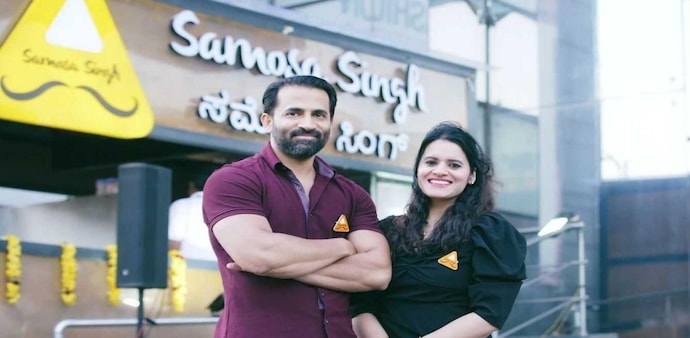
Bengaluru couple Nidhi Singh and Shikhar Veer Singh traded the comfort of high-paying corporate careers—and eventually their ₹80-lakh dream home—for an unlikely entrepreneurial bet of turning India’s beloved samosa into a scalable, modern food business, Moneycontrol reported.
A decade later, their venture, Samosa Singh, has grown into a brand valued at around ₹200 crore, serving customers across multiple cities and proving that even the most familiar street-side snack can become the foundation of a serious consumer brand.
From biotech to samosas
According to the report, the Haryana-born couple met while studying biotechnology at Kurukshetra University and married in 2010. Shikhar later joined Biocon in Bengaluru as an R&D scientist and rose to become a principal scientist, while Nidhi worked in business development at a US pharmaceutical company, eventually earning around ₹30 lakh annually.
Shikhar had been considering a samosa-focused venture since his postgraduate years. He believed that India’s familiar snack could be organised and scaled much like global fast-food chains had done with burgers and pizza.
MUST READ: From ₹52 lakh salary to momo carts: Gurugram man builds ₹5 crore food business, here's how
Betting the house
Shikhar resigned from Biocon in October 2015, and the first Samosa Singh outlet opened in Bengaluru in February 2016. The couple initially used personal savings, but a large corporate order revealed that their small kitchen could not meet bulk demand.
Rather than raise outside capital and dilute ownership, they sold their customised four-bedroom flat in Yelahanka for about ₹80 lakh. “We listed our house on Magic Bricks and it sold out for ₹80 lakh. We needed the money for Samosa Singh, and we had the conviction that we were doing the right thing,” Nidhi said in an interview with The Weekend Leader.
Building a production model
The proceeds helped establish a larger kitchen in Electronic City, giving the company capacity to pursue corporate, airline and multiplex orders. The founders experimented extensively with dough, fillings and preparation methods to create samosas that remained crisp, including variants filled with butter chicken and kadai paneer.
According to Samosa Singh's official website, its founders spent more than 10,000 hours on product development, combining standardised manufacturing, quality control and structured supply chains. The company later broadened its menu beyond samosas and expanded through delivery, cloud kitchens, retail outlets, catering and B2B partnerships.
DO CHECKOUT: Scored 48% in Class 5, now earns ₹2.5 crore: How a sweet seller's son made it big in AI
A ₹200 crore brand valuation
The company has expanded beyond Bengaluru to cities including Mumbai, Pune, Chennai, Delhi and Hyderabad. Its valuation was pegged at about ₹200 crore after a funding extension in January 2025, according to Tracxn data cited by Moneycontrol.
However, scale has not yet delivered profits. Samosa Singh’s operating revenue rose about 30 percent to ₹18 crore in FY25 from ₹13.9 crore in FY24, but it recorded an estimated net loss of ₹5.7 crore as expenses reached around ₹23.8 crore.