
Time for BRICS to have a secretariat, secretary general: Former diplomat Ajay Bisaria
I would say that it would be a good idea for India to offer New Delhi as the home of the BRICS and offer the first secretary general, says Ajay Bisaria
- Sep 10, 2026,
- Updated Sep 10, 2026 8:17 PM IST
BRICS has been functioning for nearly two decades without a permanent headquarters or formal institutional structure. It may now be time for the grouping to change that, former diplomat Ajay Bisaria said on Thursday.
Bisaria said the grouping should consider creating a permanent secretariat, appointing a secretary general and choosing a city as its headquarters.
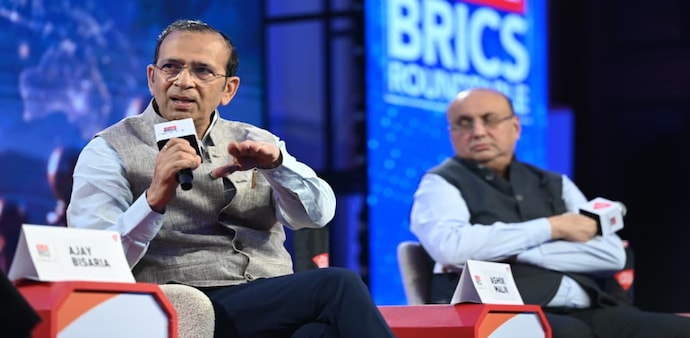
"This club has been around for 18 years. It's been functioning. People are meeting there. There are more members who want to join in," Bisaria, former High Commissioner of India to Canada, said while speaking at the India Today BRICS Roundtable. "And I think the time has come to think seriously of having a secretariat, a city, and a secretary general."
Don't Miss: India cannot become $30 tn economy without US, China, Europe: Amitabh Kant on New Delhi's BRICS challenge
India Could Offer New Delhi
The former diplomat suggested that India could take the lead by offering New Delhi as the permanent home of BRICS and putting forward its first secretary general. "I would say that it would be a good idea for India to offer New Delhi as the home of the BRICS and offer the first secretary general," he said.
For Bisaria, the change would be about making BRICS more than a forum where member countries meet.
"I think it's time to have newer ideas on pushing this along because it's not just meeting for the form, it's meeting to get substantive outcomes," he said.
In Case You Missed It: BRICS Summit 2026: India to encourage use of central bank digital currencies for cross-border payments
No Push For Common Currency
Ashok Malik, Partner and Chair of the India Practice at The Asia Group, was also part of the panel discussion.
When asked why there was no movement on a common currency, Malik said most BRICS members were unlikely to support a common currency or common denominator for trade.
"I don't think most BRICS countries want a common currency or a common denominator of trade. I imagine only China really wants that because China is the biggest economy in BRICS," Malik said.
He said a common BRICS currency could effectively become yuan-dominated, something he argued India, the UAE, and Saudi Arabia would not want.
Instead, Malik said India and other members have pushed for diversification away from the dollar where possible, including greater use of local currencies.
"This is not anti-dollar or anti-West. It's this diversification. Where you can trade in local currencies, why not?" he said.
But Malik said there were limits to such arrangements. India and Russia, for instance, have traded in rupees, but Russia has accumulated rupees that it cannot always use to buy what its economy needs.
Bisaria agreed that the idea of complete de-dollarisation was unrealistic. "Yes, I would say so. And you know, it's about local currencies, not a common currency," he said when asked whether de-dollarisation was a myth.
Local-currency trade, he added, would remain largely bilateral and would require technical arrangements involving reserve banks and central banks. "I think these are tactical moves. So there is no real common currency move, but local currencies trade is something that'll move on," Bisaria said.
BRICS has been functioning for nearly two decades without a permanent headquarters or formal institutional structure. It may now be time for the grouping to change that, former diplomat Ajay Bisaria said on Thursday.
Bisaria said the grouping should consider creating a permanent secretariat, appointing a secretary general and choosing a city as its headquarters.
"This club has been around for 18 years. It's been functioning. People are meeting there. There are more members who want to join in," Bisaria, former High Commissioner of India to Canada, said while speaking at the India Today BRICS Roundtable. "And I think the time has come to think seriously of having a secretariat, a city, and a secretary general."
Don't Miss: India cannot become $30 tn economy without US, China, Europe: Amitabh Kant on New Delhi's BRICS challenge
India Could Offer New Delhi
The former diplomat suggested that India could take the lead by offering New Delhi as the permanent home of BRICS and putting forward its first secretary general. "I would say that it would be a good idea for India to offer New Delhi as the home of the BRICS and offer the first secretary general," he said.
For Bisaria, the change would be about making BRICS more than a forum where member countries meet.
"I think it's time to have newer ideas on pushing this along because it's not just meeting for the form, it's meeting to get substantive outcomes," he said.
In Case You Missed It: BRICS Summit 2026: India to encourage use of central bank digital currencies for cross-border payments
No Push For Common Currency
Ashok Malik, Partner and Chair of the India Practice at The Asia Group, was also part of the panel discussion.
When asked why there was no movement on a common currency, Malik said most BRICS members were unlikely to support a common currency or common denominator for trade.
"I don't think most BRICS countries want a common currency or a common denominator of trade. I imagine only China really wants that because China is the biggest economy in BRICS," Malik said.
He said a common BRICS currency could effectively become yuan-dominated, something he argued India, the UAE, and Saudi Arabia would not want.
Instead, Malik said India and other members have pushed for diversification away from the dollar where possible, including greater use of local currencies.
"This is not anti-dollar or anti-West. It's this diversification. Where you can trade in local currencies, why not?" he said.
But Malik said there were limits to such arrangements. India and Russia, for instance, have traded in rupees, but Russia has accumulated rupees that it cannot always use to buy what its economy needs.
Bisaria agreed that the idea of complete de-dollarisation was unrealistic. "Yes, I would say so. And you know, it's about local currencies, not a common currency," he said when asked whether de-dollarisation was a myth.
Local-currency trade, he added, would remain largely bilateral and would require technical arrangements involving reserve banks and central banks. "I think these are tactical moves. So there is no real common currency move, but local currencies trade is something that'll move on," Bisaria said.