
Two Air India pilots flagged in initial drug test after Phuket flight incident as airline expands screening
Following the Phuket-Delhi incident, Air India introduced mandatory psychoactive substance testing for pilots across its group, including Air India Express
- Aug 17, 2026,
- Updated Aug 17, 2026 1:09 PM IST
Two Air India group pilots have returned “non-negative” results in preliminary psychoactive substance screening, sources told India Today, triggering further laboratory tests. The findings do not mean that either pilot has been confirmed to have consumed a prohibited substance. Their samples have now been sent for confirmatory analysis, which will determine whether the initial results were genuine positives.
A non-negative result means the first-stage screening has detected a substance or chemical marker that needs to be investigated further. The result can only be treated as a confirmed positive after the follow-up test establishes the presence of a prohibited substance.
The development comes as Air India carries out expanded testing of its pilot workforce following the August 4 Phuket-Delhi flight incident. The airline made psychoactive substance screening mandatory for its pilots from August 13.
Sources said around 300-400 pilots have been screened so far, with the exercise continuing across the Air India group.
Testing expanded after AI2379 incident
The wider screening programme followed the incident involving Air India flight AI2379, an Airbus A320 flying from Phuket to Delhi.
During the flight on August 4, the aircraft suddenly lost around 300 feet of altitude before recovering and continuing towards Delhi. It landed safely, although some passengers and crew members were injured.
Both pilots underwent substance screening after the incident. The co-pilot's initial test did not raise a similar concern, while the pilot-in-command's sample required additional testing. Both were removed from flying duties while the tests and investigation were underway.
Sources subsequently told India Today that the pilot-in-command's confirmatory test detected marijuana.
That finding, however, has not been linked to the aircraft's sudden altitude loss. The drug screening is only one element of the broader investigation into the incident.
Technical issues also being examined
The Aircraft Accident Investigation Bureau is separately examining the aircraft's systems, flight data and the sequence of events surrounding the altitude drop.
India Today's reporting found that a post-flight maintenance report recorded 11 system alerts within two to three minutes. These included three low hydraulic-pressure warnings followed by an autopilot disconnect.
Another report identified multiple technical problems involving the aircraft's hydraulic systems and autopilot. Investigators are examining these findings before reaching a conclusion on what caused the aircraft to lose altitude.
Air India widens pilot screening
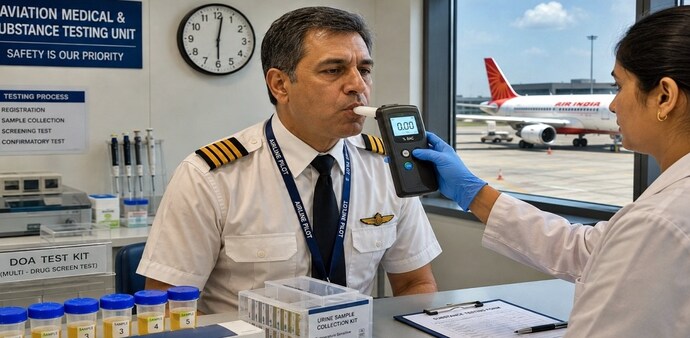
Following the Phuket-Delhi incident, Air India introduced mandatory psychoactive substance testing for pilots across its group, including Air India Express.
The programme is being conducted at pilot bases and training facilities and goes beyond the airline's existing random-testing system.
The two latest non-negative results have emerged from this expanded exercise. Their samples are now undergoing confirmatory testing, and the final findings are awaited.
Until those tests are completed, the two pilots cannot be described as having tested positive for prohibited substances.
Two Air India group pilots have returned “non-negative” results in preliminary psychoactive substance screening, sources told India Today, triggering further laboratory tests. The findings do not mean that either pilot has been confirmed to have consumed a prohibited substance. Their samples have now been sent for confirmatory analysis, which will determine whether the initial results were genuine positives.
A non-negative result means the first-stage screening has detected a substance or chemical marker that needs to be investigated further. The result can only be treated as a confirmed positive after the follow-up test establishes the presence of a prohibited substance.
The development comes as Air India carries out expanded testing of its pilot workforce following the August 4 Phuket-Delhi flight incident. The airline made psychoactive substance screening mandatory for its pilots from August 13.
Sources said around 300-400 pilots have been screened so far, with the exercise continuing across the Air India group.
Testing expanded after AI2379 incident
The wider screening programme followed the incident involving Air India flight AI2379, an Airbus A320 flying from Phuket to Delhi.
During the flight on August 4, the aircraft suddenly lost around 300 feet of altitude before recovering and continuing towards Delhi. It landed safely, although some passengers and crew members were injured.
Both pilots underwent substance screening after the incident. The co-pilot's initial test did not raise a similar concern, while the pilot-in-command's sample required additional testing. Both were removed from flying duties while the tests and investigation were underway.
Sources subsequently told India Today that the pilot-in-command's confirmatory test detected marijuana.
That finding, however, has not been linked to the aircraft's sudden altitude loss. The drug screening is only one element of the broader investigation into the incident.
Technical issues also being examined
The Aircraft Accident Investigation Bureau is separately examining the aircraft's systems, flight data and the sequence of events surrounding the altitude drop.
India Today's reporting found that a post-flight maintenance report recorded 11 system alerts within two to three minutes. These included three low hydraulic-pressure warnings followed by an autopilot disconnect.
Another report identified multiple technical problems involving the aircraft's hydraulic systems and autopilot. Investigators are examining these findings before reaching a conclusion on what caused the aircraft to lose altitude.
Air India widens pilot screening
Following the Phuket-Delhi incident, Air India introduced mandatory psychoactive substance testing for pilots across its group, including Air India Express.
The programme is being conducted at pilot bases and training facilities and goes beyond the airline's existing random-testing system.
The two latest non-negative results have emerged from this expanded exercise. Their samples are now undergoing confirmatory testing, and the final findings are awaited.
Until those tests are completed, the two pilots cannot be described as having tested positive for prohibited substances.