
UN links Delhi's Red Fort blast that killed 11 to AL-Qaida's AQIS, warns of group's growing regional reach
The UN report warns of AQIS's shift to smaller, harder-to-detect cells and its potential spread into Bangladesh, signalling a growing threat to South Asian security.
- Aug 13, 2026,
- Updated Aug 13, 2026 12:50 PM IST
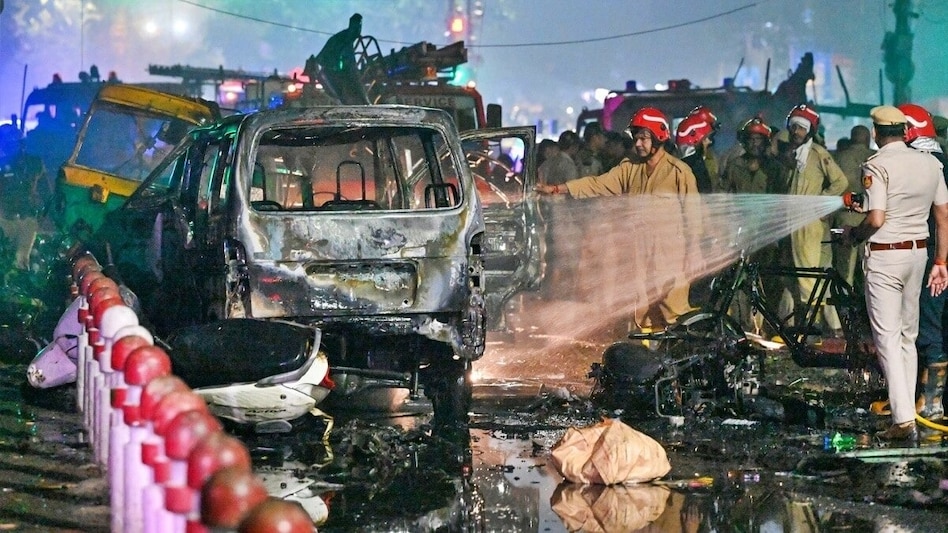
The bomb that exploded near Delhi's Red Fort on November 10, 2025, killing 11 people, has been attributed to Al-Qaida in the Indian Subcontinent by a United Nations Security Council monitoring team, and the same report warns that the outfit is no longer the fractured group it once was.
The Analytical Support and Sanctions Monitoring Team's assessment marks the first significant international attribution of the attack, adding a UN-level endorsement to the findings of India's National Investigation Agency, which had earlier identified the attack as AQIS-inspired.
"Al-Qaida in the Indian Subcontinent (AQIS, not listed) continued to evolve from a fragmented group into a regional terrorist entity; it established logistics and financial networks, working in decentralised small, scattered cells instead of large units. The attack in November 2025 on the Red Fort in Delhi was initially attributed to AQIS. There was some concern about AQIS trying to exploit Bangladesh to establish cells there," the report said.
What happened in November 2025
A vehicle-borne improvised explosive device detonated near the Red Fort on November 10, 2025. The NIA identified Umar un-Nabi, a former assistant professor of medicine at Al-Falah University in Faridabad, as the primary perpetrator. He died in the explosion. Investigators had established that the module was inspired by AQIS and that the attack formed part of a broader terror conspiracy. The UN report now places that finding within a wider international assessment.
How AQIS is rebuilding
The UN monitors describe a group that has moved away from large formations toward a network of small, dispersed cells that are significantly harder for security agencies to track and dismantle. The report credits AQIS with having rebuilt functional logistics and financial networks despite sustained counterterrorism pressure over the years, and identifies the Red Fort attack as the clearest demonstration yet of its revived operational capability.
The report also raises the possibility of AQIS expanding into Bangladesh to establish new operational cells, potentially extending its footprint across South Asia.
Pakistan-Afghanistan dimension
Separately, the UN report flags a sharp rise in cross-border violence between Pakistan and Afghanistan. The Taliban's de facto authorities have been accused of continuing to provide support to the Tehrik-e-Taliban Pakistan, which has intensified attacks on Pakistani security forces, contributing to retaliatory military action and heightened border tensions.
AQIS was also linked to attacks attributed to Ittihad-ul-Mujahideen Pakistan in Khyber Pakhtunkhwa, including a deadly suicide bombing and vehicle-borne explosive attack near a security post in Bannu.
Terror groups turning to AI
The report also highlights an emerging threat that goes beyond conventional methods. Terrorist operatives are increasingly using artificial intelligence tools, including ChatGPT, to seek information on bomb-making and target selection. The Islamic State Khorasan Province has also been using AI to translate and distribute propaganda rapidly across multiple languages, broadening its reach.
The UN monitors additionally flagged continued interest among terror groups in chemical and biological weapons. ISIL's English-language publication Invade reportedly carried material this year on botulinum toxin and cyanide — underscoring the persistence of the group's interest in unconventional weapons.
Changes to the UN sanctions list
During the reporting period, three individuals were added to the UN terrorism sanctions list and seven were removed. In a significant development, the listing of Al-Nusrah Front, also known as Hay'at Tahrir al-Sham, was formally removed from the sanctions list on February 27, 2026.
The bomb that exploded near Delhi's Red Fort on November 10, 2025, killing 11 people, has been attributed to Al-Qaida in the Indian Subcontinent by a United Nations Security Council monitoring team, and the same report warns that the outfit is no longer the fractured group it once was.
The Analytical Support and Sanctions Monitoring Team's assessment marks the first significant international attribution of the attack, adding a UN-level endorsement to the findings of India's National Investigation Agency, which had earlier identified the attack as AQIS-inspired.
"Al-Qaida in the Indian Subcontinent (AQIS, not listed) continued to evolve from a fragmented group into a regional terrorist entity; it established logistics and financial networks, working in decentralised small, scattered cells instead of large units. The attack in November 2025 on the Red Fort in Delhi was initially attributed to AQIS. There was some concern about AQIS trying to exploit Bangladesh to establish cells there," the report said.
What happened in November 2025
A vehicle-borne improvised explosive device detonated near the Red Fort on November 10, 2025. The NIA identified Umar un-Nabi, a former assistant professor of medicine at Al-Falah University in Faridabad, as the primary perpetrator. He died in the explosion. Investigators had established that the module was inspired by AQIS and that the attack formed part of a broader terror conspiracy. The UN report now places that finding within a wider international assessment.
How AQIS is rebuilding
The UN monitors describe a group that has moved away from large formations toward a network of small, dispersed cells that are significantly harder for security agencies to track and dismantle. The report credits AQIS with having rebuilt functional logistics and financial networks despite sustained counterterrorism pressure over the years, and identifies the Red Fort attack as the clearest demonstration yet of its revived operational capability.
The report also raises the possibility of AQIS expanding into Bangladesh to establish new operational cells, potentially extending its footprint across South Asia.
Pakistan-Afghanistan dimension
Separately, the UN report flags a sharp rise in cross-border violence between Pakistan and Afghanistan. The Taliban's de facto authorities have been accused of continuing to provide support to the Tehrik-e-Taliban Pakistan, which has intensified attacks on Pakistani security forces, contributing to retaliatory military action and heightened border tensions.
AQIS was also linked to attacks attributed to Ittihad-ul-Mujahideen Pakistan in Khyber Pakhtunkhwa, including a deadly suicide bombing and vehicle-borne explosive attack near a security post in Bannu.
Terror groups turning to AI
The report also highlights an emerging threat that goes beyond conventional methods. Terrorist operatives are increasingly using artificial intelligence tools, including ChatGPT, to seek information on bomb-making and target selection. The Islamic State Khorasan Province has also been using AI to translate and distribute propaganda rapidly across multiple languages, broadening its reach.
The UN monitors additionally flagged continued interest among terror groups in chemical and biological weapons. ISIL's English-language publication Invade reportedly carried material this year on botulinum toxin and cyanide — underscoring the persistence of the group's interest in unconventional weapons.
Changes to the UN sanctions list
During the reporting period, three individuals were added to the UN terrorism sanctions list and seven were removed. In a significant development, the listing of Al-Nusrah Front, also known as Hay'at Tahrir al-Sham, was formally removed from the sanctions list on February 27, 2026.