
Uttar Pradesh elections 2027: UP to be divided into 4 states? Why Om Prakash Rajbhar's claim revives an old debate
There's been no official word from the government — but the timing is telling, arriving just months before UP votes in the 2027 Assembly election. It's also not a brand-new idea: the demand dates back to 2011, and UP has been split before, when Uttarakhand broke away in 2000.
- Sep 24, 2026,
- Updated Sep 24, 2026 11:04 AM IST
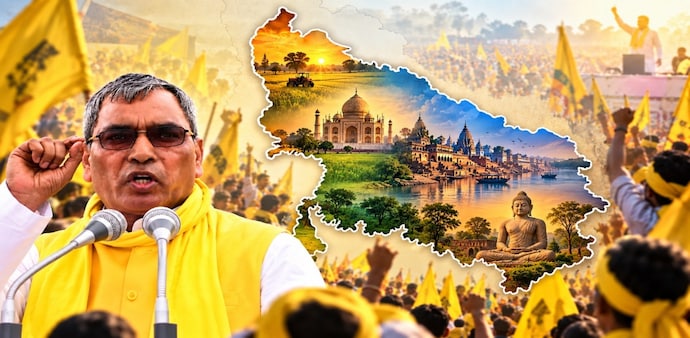
What if the UP you know today didn't exist in its current form? A senior minister in Yogi Adityanath's own cabinet is now saying exactly that — claiming Uttar Pradesh could soon be split into four separate states: Purvanchal, Madhyanchal, Bundelkhand and Harit Pradesh. The man making the claim, Uttar Pradesh Cabinet Minister and Suheldev Bharatiya Samaj Party (SBSP) chief Om Prakash Rajbhar, says he's raised it directly with PM Modi, and has linked it to the ongoing caste census.
There's been no official word from the government — but the timing is telling, arriving just months before UP votes in the 2027 Assembly election. It's also not a brand-new idea: the demand dates back to 2011, and UP has been split before, when Uttarakhand broke away in 2000. So is this a genuine policy signal, or election-season politics? We break down the claim, the history and what could come next.
Rajbhar's four-state claim
Rajbhar said that the country's most populous state will be divided into four parts after a caste census. He claimed that Prime Minister Narendra Modi "assured" him that such a development could take place after the caste census.
"We want to assure you regarding the 27 per cent reservation. I spoke with the prime minister about this. He (Modi) said, 'Om Prakash ji, your point is justified, but some people are opposing it.' I asked him how we could move forward, and he replied, 'I will conduct a caste census, and once we have counted the castes, there will be no difficulty,'" Rajbhar, whose party, is in alliance with the ruling BJP, said during an event on Sunday.
At present, India is conducting a caste census in two phases and the exercise is likely to be completed by February 2027. He added, "The state will be divided into four parts. And on the day the Purvanchal state is formed, if the chief minister is to be from any caste, then a Rajbhar's son will become the chief minister."
What exactly is being proposed?
The SBSP chief is proposing the division of Uttar Pradesh into four regions - Purvanchal, Awadh Pradesh/Madhyanchal, Bundelkhand, and Paschim Pradesh/Harit Pradesh.
| Region | Key characteristics | Districts covered |
| Purvanchal |
| 23 districts covered: Prayagraj, Varanasi, Jaunpur, Ghazipur, Ballia, Azamgarh, Mau, Gorakhpur, Deoria, Kushinagar, Maharajganj, Sant Kabir Nagar, Siddharthnagar, Basti, Ambedkar Nagar, Mirzapur, Sonbhadra, Chandauli, Kaushambi, Fatehpur, Pratapgarh, Kanpur Dehat, Kanpur Nagar |
| Awadh Pradesh/Madhyanchal |
| 17 districts covered: Lucknow, Unnao, Rae Bareli, Sitapur, Lakhimpur Kheri, Hardoi, Barabanki, Ayodhya, Sultanpur, Amethi, Bahraich, Shravasti, Gonda, Balrampur, Mainpuri and Etawah, along with parts of Kasganj |
| Bundelkhand |
|
|
| Paschim Pradesh/Harit Pradesh |
| 28 districts covered: Saharanpur, Muzaffarnagar, Shamli, Baghpat, Meerut, Hapur, Bijnor, Moradabad, Rampur, Amroha, Bulandshahr, Sambhal, Bareilly, Badaun, Pilibhit, Shahjahanpur, Aligarh, Etah, Farrukhabad, Mathura, Hathras, Agra, Firozabad, Gautam Buddha Nagar and Ghaziabad, as well as parts of Kasganj, Kannauj, Mainpuri |
Mayawati's 2011 resolution
In 2011, former Uttar Pradesh Chief Minister Mayawati passed a resolution in the Uttar Pradesh assembly proposing the four states. At the time, the state government said that Uttar Pradesh's vast size made administration difficult and that a division could lead to better governance.
The proposal was sent to the Congress-led Central government but wasn't pursued after the Samajwadi Party came in power in 2012.
Ambedkar's 1955 proposal
In 1955, Dr BR Ambedkar in Thoughts on Linguistic States proposed splitting Uttar Pradesh into 3 smaller states.
He suggested a population size of roughly 2 crore for each proposed states, while identifying Meerut, Kanpur (erstwhile Cawnpore) and Prayagraj (erstwhile Allahabad) as the potential capital cities. He argued that vast administrative units could weaken public accountability and effective governance.
BJP, allies not on the same page
While Rajbhar is actively backing the long-standing proposal of Uttar Pradesh's division, his Cabinet colleague Dr Sanjay Nishad has strongly opposed it. Dr Nishad, who is also the Nishad Party chief, said that dividing the state based on appeasement politics could create a region with a high concentration of specific demographics, resulting in conditions akin to a "new Pakistan".
"There had been a demand to divide UP earlier, but now the state is progressing rapidly in all spheres. Further, special development funds have been allocated for regions like Bundelkhand and Purvanchal that needed handholding," he told PTI.
Two-time BJP MP Sanjeev Balyan, however, backed Rajbhar. "May Rajbhar ji's words prove prophetic. We have long advocated for the division of Uttar Pradesh, and it would be a matter of great joy if separate states were created to improve the region," he said.
He added that the division would help build the high court and the AIIMS in all the four states, helping around 25 crore residents get speedy justice and affordable medical treatment.
Why dividing UP is a recurring political proposal
The division of Uttar Pradesh has been an integral part of the state's political discourse. Those who support the division say that smaller states are easier to administer. At present, Uttar Pradesh has 403 Assembly seats, the highest in India. Back in 2000, Uttaranchal, which later became Uttarakhand, was carved out of Uttar Pradesh.
What is the process of division of states?
According to Article 3 of the Indian Constitution, the process of dividing an existing state or creating a new state is executed entirely by the Parliament. A bill for the same can only be introduced in Parliament on the recommendation of the President.
Before recommending the bill, the President must refer it to the concerned state legislature to express its views within a specified time period. The opinion of the state legislature, however, is not binding on either the President or the Parliament and they can proceed regardless of whether the state agrees or disagrees.
The bill must be introduced and passed in both houses of Parliament by a simple majority of the members present and voting and not via a special constitutional amendment majority. Once passed by Parliament, the bill receives the President's assent and officially becomes an Act, creating the new divided territories.
What if the UP you know today didn't exist in its current form? A senior minister in Yogi Adityanath's own cabinet is now saying exactly that — claiming Uttar Pradesh could soon be split into four separate states: Purvanchal, Madhyanchal, Bundelkhand and Harit Pradesh. The man making the claim, Uttar Pradesh Cabinet Minister and Suheldev Bharatiya Samaj Party (SBSP) chief Om Prakash Rajbhar, says he's raised it directly with PM Modi, and has linked it to the ongoing caste census.
There's been no official word from the government — but the timing is telling, arriving just months before UP votes in the 2027 Assembly election. It's also not a brand-new idea: the demand dates back to 2011, and UP has been split before, when Uttarakhand broke away in 2000. So is this a genuine policy signal, or election-season politics? We break down the claim, the history and what could come next.
Rajbhar's four-state claim
Rajbhar said that the country's most populous state will be divided into four parts after a caste census. He claimed that Prime Minister Narendra Modi "assured" him that such a development could take place after the caste census.
"We want to assure you regarding the 27 per cent reservation. I spoke with the prime minister about this. He (Modi) said, 'Om Prakash ji, your point is justified, but some people are opposing it.' I asked him how we could move forward, and he replied, 'I will conduct a caste census, and once we have counted the castes, there will be no difficulty,'" Rajbhar, whose party, is in alliance with the ruling BJP, said during an event on Sunday.
At present, India is conducting a caste census in two phases and the exercise is likely to be completed by February 2027. He added, "The state will be divided into four parts. And on the day the Purvanchal state is formed, if the chief minister is to be from any caste, then a Rajbhar's son will become the chief minister."
What exactly is being proposed?
The SBSP chief is proposing the division of Uttar Pradesh into four regions - Purvanchal, Awadh Pradesh/Madhyanchal, Bundelkhand, and Paschim Pradesh/Harit Pradesh.
| Region | Key characteristics | Districts covered |
| Purvanchal |
| 23 districts covered: Prayagraj, Varanasi, Jaunpur, Ghazipur, Ballia, Azamgarh, Mau, Gorakhpur, Deoria, Kushinagar, Maharajganj, Sant Kabir Nagar, Siddharthnagar, Basti, Ambedkar Nagar, Mirzapur, Sonbhadra, Chandauli, Kaushambi, Fatehpur, Pratapgarh, Kanpur Dehat, Kanpur Nagar |
| Awadh Pradesh/Madhyanchal |
| 17 districts covered: Lucknow, Unnao, Rae Bareli, Sitapur, Lakhimpur Kheri, Hardoi, Barabanki, Ayodhya, Sultanpur, Amethi, Bahraich, Shravasti, Gonda, Balrampur, Mainpuri and Etawah, along with parts of Kasganj |
| Bundelkhand |
|
|
| Paschim Pradesh/Harit Pradesh |
| 28 districts covered: Saharanpur, Muzaffarnagar, Shamli, Baghpat, Meerut, Hapur, Bijnor, Moradabad, Rampur, Amroha, Bulandshahr, Sambhal, Bareilly, Badaun, Pilibhit, Shahjahanpur, Aligarh, Etah, Farrukhabad, Mathura, Hathras, Agra, Firozabad, Gautam Buddha Nagar and Ghaziabad, as well as parts of Kasganj, Kannauj, Mainpuri |
Mayawati's 2011 resolution
In 2011, former Uttar Pradesh Chief Minister Mayawati passed a resolution in the Uttar Pradesh assembly proposing the four states. At the time, the state government said that Uttar Pradesh's vast size made administration difficult and that a division could lead to better governance.
The proposal was sent to the Congress-led Central government but wasn't pursued after the Samajwadi Party came in power in 2012.
Ambedkar's 1955 proposal
In 1955, Dr BR Ambedkar in Thoughts on Linguistic States proposed splitting Uttar Pradesh into 3 smaller states.
He suggested a population size of roughly 2 crore for each proposed states, while identifying Meerut, Kanpur (erstwhile Cawnpore) and Prayagraj (erstwhile Allahabad) as the potential capital cities. He argued that vast administrative units could weaken public accountability and effective governance.
BJP, allies not on the same page
While Rajbhar is actively backing the long-standing proposal of Uttar Pradesh's division, his Cabinet colleague Dr Sanjay Nishad has strongly opposed it. Dr Nishad, who is also the Nishad Party chief, said that dividing the state based on appeasement politics could create a region with a high concentration of specific demographics, resulting in conditions akin to a "new Pakistan".
"There had been a demand to divide UP earlier, but now the state is progressing rapidly in all spheres. Further, special development funds have been allocated for regions like Bundelkhand and Purvanchal that needed handholding," he told PTI.
Two-time BJP MP Sanjeev Balyan, however, backed Rajbhar. "May Rajbhar ji's words prove prophetic. We have long advocated for the division of Uttar Pradesh, and it would be a matter of great joy if separate states were created to improve the region," he said.
He added that the division would help build the high court and the AIIMS in all the four states, helping around 25 crore residents get speedy justice and affordable medical treatment.
Why dividing UP is a recurring political proposal
The division of Uttar Pradesh has been an integral part of the state's political discourse. Those who support the division say that smaller states are easier to administer. At present, Uttar Pradesh has 403 Assembly seats, the highest in India. Back in 2000, Uttaranchal, which later became Uttarakhand, was carved out of Uttar Pradesh.
What is the process of division of states?
According to Article 3 of the Indian Constitution, the process of dividing an existing state or creating a new state is executed entirely by the Parliament. A bill for the same can only be introduced in Parliament on the recommendation of the President.
Before recommending the bill, the President must refer it to the concerned state legislature to express its views within a specified time period. The opinion of the state legislature, however, is not binding on either the President or the Parliament and they can proceed regardless of whether the state agrees or disagrees.
The bill must be introduced and passed in both houses of Parliament by a simple majority of the members present and voting and not via a special constitutional amendment majority. Once passed by Parliament, the bill receives the President's assent and officially becomes an Act, creating the new divided territories.