
Varanasi’s Rajghat: Ancient heritage faces new challenges amid rapid development
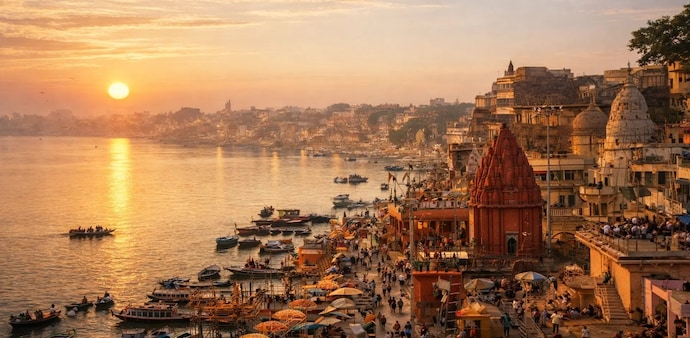
Located along the Ganga in one of Varanasi’s historically important zones, Rajghat has provided significant evidence about the evolution of ancient Kashi
- Aug 28, 2026,
- Updated Aug 28, 2026 11:00 AM IST
The debate over development and heritage conservation in Varanasi has gained fresh attention after Banaras Hindu University (BHU) recently opened 22 boxes containing archaeological material excavated from Rajghat in 1957.
The boxes, sealed for nearly seven decades, reportedly contained more than 10,000 artefacts, including pottery believed to be nearly 3,000 years old, along with coins, sculptures, tools and seals, according to a report by The Indian Express.
READ THIS: 800 trains by 2030: How Vande Bharat will reshape Indian Railways' future
Rajghat’s ancient significance
Located along the Ganga in one of Varanasi’s historically important zones, Rajghat has provided significant evidence about the evolution of ancient Kashi. Archaeological excavations at the site have revealed material representing different cultural phases, offering insights into the city’s early urban development, trade and social life.
The newly examined collection has further underlined the importance of preserving archaeological material associated with Rajghat. Among the discoveries were painted black pottery and thousands of photographic records documenting archaeological sites and sculptures.
Development brings new challenges
The latest discoveries come as Varanasi continues to witness major infrastructure expansion. The redevelopment of Kashi Railway Station is among the projects aimed at improving connectivity and integrating road and water transport. The project has an estimated cost of more than ₹300 crore, according to the Indian Express report.
The broader plan for an inter-modal station at Kashi also reflects the city's push to integrate different modes of transport. Government environmental-clearance documents identify Kashi, Varanasi, as the location for the proposed inter-modal station project.
Such projects can improve mobility and support tourism, but development around archaeologically sensitive areas requires careful planning. Construction and excavation in heritage zones can potentially disturb buried archaeological remains that have not yet been documented.
ALSO READ: Kashi Vishwanath, Triveni Sangam and Mahabodhi Temple in one trip: IRCTC’s new yatra explained
Protecting Kashi’s historical landscape
The challenge, therefore, is not to stop development but to ensure that infrastructure expansion does not come at the cost of Varanasi’s archaeological identity.
Heritage-impact assessments, archaeological surveys and scientific documentation can help authorities identify sensitive areas before major construction begins. The Varanasi Development Authority's Master Plan 2031 provides a framework for future urban development and land-use planning in the city.
The debate over development and heritage conservation in Varanasi has gained fresh attention after Banaras Hindu University (BHU) recently opened 22 boxes containing archaeological material excavated from Rajghat in 1957.
The boxes, sealed for nearly seven decades, reportedly contained more than 10,000 artefacts, including pottery believed to be nearly 3,000 years old, along with coins, sculptures, tools and seals, according to a report by The Indian Express.
READ THIS: 800 trains by 2030: How Vande Bharat will reshape Indian Railways' future
Rajghat’s ancient significance
Located along the Ganga in one of Varanasi’s historically important zones, Rajghat has provided significant evidence about the evolution of ancient Kashi. Archaeological excavations at the site have revealed material representing different cultural phases, offering insights into the city’s early urban development, trade and social life.
The newly examined collection has further underlined the importance of preserving archaeological material associated with Rajghat. Among the discoveries were painted black pottery and thousands of photographic records documenting archaeological sites and sculptures.
Development brings new challenges
The latest discoveries come as Varanasi continues to witness major infrastructure expansion. The redevelopment of Kashi Railway Station is among the projects aimed at improving connectivity and integrating road and water transport. The project has an estimated cost of more than ₹300 crore, according to the Indian Express report.
The broader plan for an inter-modal station at Kashi also reflects the city's push to integrate different modes of transport. Government environmental-clearance documents identify Kashi, Varanasi, as the location for the proposed inter-modal station project.
Such projects can improve mobility and support tourism, but development around archaeologically sensitive areas requires careful planning. Construction and excavation in heritage zones can potentially disturb buried archaeological remains that have not yet been documented.
ALSO READ: Kashi Vishwanath, Triveni Sangam and Mahabodhi Temple in one trip: IRCTC’s new yatra explained
Protecting Kashi’s historical landscape
The challenge, therefore, is not to stop development but to ensure that infrastructure expansion does not come at the cost of Varanasi’s archaeological identity.
Heritage-impact assessments, archaeological surveys and scientific documentation can help authorities identify sensitive areas before major construction begins. The Varanasi Development Authority's Master Plan 2031 provides a framework for future urban development and land-use planning in the city.