
Veg vs Non-veg: Why West Bengal's ISKCON school meal takeover policy triggered a controversy
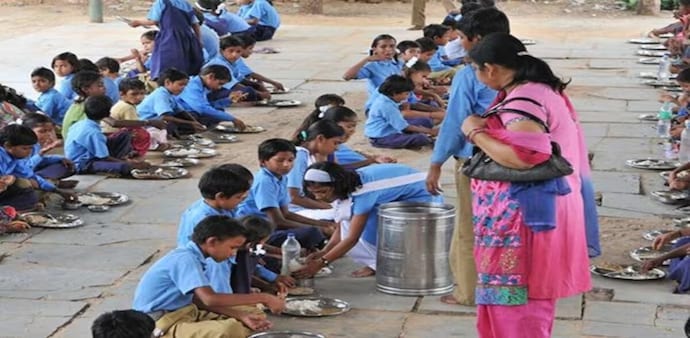
The previous decentralised model relied on local self-help groups's cooking inside schools with a material budget of ₹6.78 per primary student. Under the new pilot project, operations will move to highly automated, central kitchens managed by ISKCON, silencing school stoves completely.
- Jun 25, 2026,
- Updated Jun 25, 2026 2:47 PM IST
During his maiden budget speech on June 22, 2026, West Bengal Finance Minister Swapan Dasgupta announced that the newly installed BJP government is overhauling the PM POSHAN (midday meal) scheme.
Under the new arrangement, the preparation and distribution of cooked meals for over 1,800 primary and upper-primary schools under the Kolkata Municipal Corporation (KMC) area will be handed over to the International Society for Krishna Consciousness (ISKCON) through its charitable arm, the Annamitra Foundation.
While Chief Minister Suvendu Adhikari defended the transition as a premium "nutritional and hygiene-focused reform," the structural shift has ignited a major political and cultural outcry across the state.
Cost & Logistics overhaul
The structural pivot reengineers how midday meals are prepared and financed in the capital city. The previous decentralised model relied on local self-help groups's cooking inside schools with a material budget of ₹6.78 per primary student. Under the new pilot project, operations will move to highly automated, central kitchens managed by ISKCON, silencing school stoves completely.
To support the transition, the state government has enhanced the primary school material allocation to ₹10.00 per student. "The government will pay a small amount while the rest of the expenses would be taken care of by ISKCON's donors," explained Radharaman Das, vice-president and spokesperson of ISKCON Kolkata.
However, this centralised blueprint has introduced an immediate casualty that sits at the center of the mounting controversy: the absolute removal of eggs from the school menu to comply with ISKCON’s strict vegetarian beliefs.
Nutrition vs Cultural identity controversy
The immediate exclusion of eggs has triggered fierce pushback from the opposition, educators, and civil rights activists, who view the policy as a direct assault on Bengal's culinary tradition and public health standards.
In West Bengal, where fish, meat, and eggs are dietary staples, the school menu has historically relied on boiled eggs once or twice a week as an affordable, bioavailable source of protein to combat childhood malnutrition. Opponents also point out that ISKCON's strict sattvik guidelines mean the elimination of onion, garlic, and masoor dal (red lentils) — all deeply embedded in everyday Bengali cooking.
Trinamool Congress (TMC) Rajya Sabha leader Derek O'Brien launched a scathing critique on social media, accusing the government of dietary overreach.
"After the fish eating tamasha during the election campaign, the Gujarat Gymkhana finally reveals itself. New BJP govt at work in Bengal. Throw eggs at rivals. But DEPRIVE CHILDREN of nutrition by taking eggs off from midday meals. Imposing vegetarianism. Bengal rejects this," O'Brien posted on X.
Educators have raised separate concerns regarding student turnout, noting that the inclusion of eggs has traditionally served as an incentive that boosts school attendance among children from economically weaker backgrounds. Furthermore, local teachers point out that the central kitchen model threatens the financial independence of local women previously employed as school cooks.
Govt & ISKCON defend menu
Both the state administration and ISKCON authorities have rejected claims that a plant-based menu compromises a child’s development. School Education Minister Dipak Burman argued that vegetarian diets are completely capable of meeting rigorous nutritional requirements.
Chief Minister Suvendu Adhikari sought to ease apprehensions regarding the involvement of a religious organization in a state welfare programme.
"We are giving the responsibility of cooking mid-day meals to ISKCON," Adhikari told reporters following the assembly session. "They will provide the food. Taste it for yourself — the quality is excellent. And if you do not wish to chant 'Hare Krishna', nobody is asking you to."
ISKCON officials emphasised that they already serve over 12 lakh students daily across 21 cities in eight states, ensuring zero leakage and high hygiene standards. Responding to allegations of cultural erasure, Radharaman Das countered the notion that Bengali identity is inherently non-vegetarian.
"It is simply incorrect to suggest that vegetarian food is anti-Bengali," Das stated. "Sri Chaitanya Mahaprabhu, who founded the Gaudiya Vaishnavite tradition, was a Bengali. The dietary practices of Gaudiya Vaishnavites have always been vegetarian. We have empanelled dietitians to curate our menus. We will ensure that whatever nutrients a child gets from eggs will be matched or exceeded by the superior quality protein and vitamins in our meals."
During his maiden budget speech on June 22, 2026, West Bengal Finance Minister Swapan Dasgupta announced that the newly installed BJP government is overhauling the PM POSHAN (midday meal) scheme.
Under the new arrangement, the preparation and distribution of cooked meals for over 1,800 primary and upper-primary schools under the Kolkata Municipal Corporation (KMC) area will be handed over to the International Society for Krishna Consciousness (ISKCON) through its charitable arm, the Annamitra Foundation.
While Chief Minister Suvendu Adhikari defended the transition as a premium "nutritional and hygiene-focused reform," the structural shift has ignited a major political and cultural outcry across the state.
Cost & Logistics overhaul
The structural pivot reengineers how midday meals are prepared and financed in the capital city. The previous decentralised model relied on local self-help groups's cooking inside schools with a material budget of ₹6.78 per primary student. Under the new pilot project, operations will move to highly automated, central kitchens managed by ISKCON, silencing school stoves completely.
To support the transition, the state government has enhanced the primary school material allocation to ₹10.00 per student. "The government will pay a small amount while the rest of the expenses would be taken care of by ISKCON's donors," explained Radharaman Das, vice-president and spokesperson of ISKCON Kolkata.
However, this centralised blueprint has introduced an immediate casualty that sits at the center of the mounting controversy: the absolute removal of eggs from the school menu to comply with ISKCON’s strict vegetarian beliefs.
Nutrition vs Cultural identity controversy
The immediate exclusion of eggs has triggered fierce pushback from the opposition, educators, and civil rights activists, who view the policy as a direct assault on Bengal's culinary tradition and public health standards.
In West Bengal, where fish, meat, and eggs are dietary staples, the school menu has historically relied on boiled eggs once or twice a week as an affordable, bioavailable source of protein to combat childhood malnutrition. Opponents also point out that ISKCON's strict sattvik guidelines mean the elimination of onion, garlic, and masoor dal (red lentils) — all deeply embedded in everyday Bengali cooking.
Trinamool Congress (TMC) Rajya Sabha leader Derek O'Brien launched a scathing critique on social media, accusing the government of dietary overreach.
"After the fish eating tamasha during the election campaign, the Gujarat Gymkhana finally reveals itself. New BJP govt at work in Bengal. Throw eggs at rivals. But DEPRIVE CHILDREN of nutrition by taking eggs off from midday meals. Imposing vegetarianism. Bengal rejects this," O'Brien posted on X.
Educators have raised separate concerns regarding student turnout, noting that the inclusion of eggs has traditionally served as an incentive that boosts school attendance among children from economically weaker backgrounds. Furthermore, local teachers point out that the central kitchen model threatens the financial independence of local women previously employed as school cooks.
Govt & ISKCON defend menu
Both the state administration and ISKCON authorities have rejected claims that a plant-based menu compromises a child’s development. School Education Minister Dipak Burman argued that vegetarian diets are completely capable of meeting rigorous nutritional requirements.
Chief Minister Suvendu Adhikari sought to ease apprehensions regarding the involvement of a religious organization in a state welfare programme.
"We are giving the responsibility of cooking mid-day meals to ISKCON," Adhikari told reporters following the assembly session. "They will provide the food. Taste it for yourself — the quality is excellent. And if you do not wish to chant 'Hare Krishna', nobody is asking you to."
ISKCON officials emphasised that they already serve over 12 lakh students daily across 21 cities in eight states, ensuring zero leakage and high hygiene standards. Responding to allegations of cultural erasure, Radharaman Das countered the notion that Bengali identity is inherently non-vegetarian.
"It is simply incorrect to suggest that vegetarian food is anti-Bengali," Das stated. "Sri Chaitanya Mahaprabhu, who founded the Gaudiya Vaishnavite tradition, was a Bengali. The dietary practices of Gaudiya Vaishnavites have always been vegetarian. We have empanelled dietitians to curate our menus. We will ensure that whatever nutrients a child gets from eggs will be matched or exceeded by the superior quality protein and vitamins in our meals."