
Villages cleared, river diversion underway: China’s mega dam near Arunachal picks pace, says report
Planned as five cascade power stations at an estimated cost of 1.2 trillion yuan (about $168 billion), it will involve tunnels spanning around 40 km to harness a river drop of more than 2,000 metres over a stretch of approximately 50 km.
- Nov 24, 2026,
- Updated Nov 24, 2026 10:04 AM IST
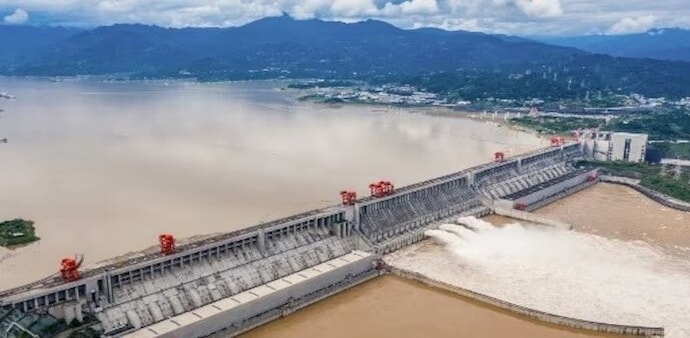
China’s 60 GW Medog hydropower project on the Yarlung Tsangpo river, which enters India as the Siang, is advancing rapidly near the Arunachal Pradesh border, with entire villages cleared, river diversion works under way and major industrial infrastructure emerging at the site, according to a report.
According to a report in Times of India that cited satellite imagery assessment by EarthSense Labs, there have been extensive construction activity at multiple locations, including a large dam near Mainling town, a possible lower dam near Pai town, a tunnel through Namcha Barwa Mountain and a tunnel outlet downstream of Medog County, close to the Indian border.
The project is located around 40-50 km north of Arunachal Pradesh, near the McMahon Line. Planned as five cascade power stations at an estimated cost of 1.2 trillion yuan (about $168 billion), it will involve tunnels spanning around 40 km to harness a river drop of more than 2,000 metres over a stretch of approximately 50 km.
MUST READ | China's mega dam, India's Siang project: Why are Arunachal locals protesting against it?
EarthSense said satellite imagery from July 2025 showed villages and farmland at the proposed Mainling dam site. By December that year, the settlements and fields had been cleared and earthwork had begun. Images from August 2026 showed river diversion works, new roads, makeshift housing and office buildings. It added that work at the tunnel outlet had begun even before the project's ground-breaking ceremony.
The developments have implications for India's proposed 11,200 MW Siang Upper Multipurpose Project (SUMP), planned further downstream across Siang, Upper Siang and East Siang districts. Its proposed reservoir is expected to hold around 9.2 billion cubic metres of water.
Arunachal Pradesh Chief Minister Pema Khandu has said the reservoir would give India greater control over downstream flows, help respond to sudden changes in upstream discharge and maintain water availability during lean seasons. He has also flagged the absence of a binding water-sharing treaty and transparent data-sharing arrangement with China.
However, opposition to SUMP among Adi communities has intensified over concerns about displacement, land and livelihoods.