
'We risk undermining macro stability': ISB professor flags RBI's ₹100 lakh crore balance sheet
Prasanna Tantri said the central problem behind inflation was not external factors such as crude oil, but "excessive monetary expansion."
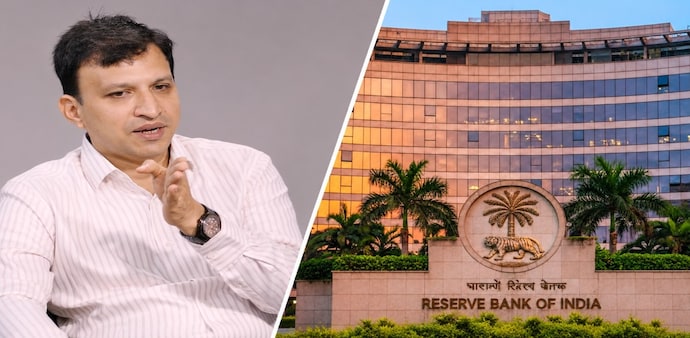
- Oct 7, 2026,
- Updated Oct 7, 2026 4:56 PM IST
The Reserve Bank of India's (RBI) decision to raise interest rates came "9–12 months late" and the central bank needs to move swiftly to rein in excessive monetary expansion, according to Prasanna Tantri, associate professor of finance at the Indian School of Business (ISB).
"RBI has finally raised rates and signalled calibrated tightening. Welcome, but in my view, 9–12 months late," Tantri wrote on Wednesday, hours after the RBI raised its benchmark repo rate by 25 basis points to 5.50%.
The six-member Monetary Policy Committee voted unanimously for the hike, the first in nearly four years. The RBI also shifted its stance to "calibrated tightening", signalling that further rate hikes could follow.
Tantri said the central problem behind inflation was not external factors such as crude oil, but "excessive monetary expansion."
'This is, in substance, quantitative easing'
While the RBI has attributed inflation to external factors, Tantri said his assessment was different.
"By my estimates, RBI's balance sheet has expanded from ₹70-odd lakh crore towards ₹100 lakh crore over the past year, with monetary easing contributing ₹20–30 lakh crore of additional broad money," he wrote.
Broad money now stands at roughly ₹330 lakh crore, exceeding 90% of last financial year's GDP, according to the professor. "This is, in substance, quantitative easing in an economy growing around 7%."
Tantri questioned the rationale for such an expansion in an economy that is still growing strongly. "Such extraordinary measures are typically deployed against recession or deflation. What justifies them here?" he asked.
He also flagged the impact of FCNR, saying subsequent credit expansion could add another ₹30–40 lakh crore to broad money, by his estimate.
Warning on household debt
The ISB professor said the experience of Europe and Japan should caution against assuming that prolonged monetary easing would be easy to reverse. "If inflation becomes entrenched, interest rates may eventually have to rise much further," he wrote.
His bigger concern was where the additional money could end up. "Much of this additional money will finance consumption loans, increasing household indebtedness, financial fragility and inflationary pressure," Tantri said.
"We risk undermining the macroeconomic stability built at considerable cost over the past decade. But it is not too late."
'Act swiftly and decisively'
The ISB professor said the first priority should be to bring the RBI's balance sheet back to 25% of GDP or less and curb monetary expansion. "This may entail a short-term growth sacrifice, but preserving stability is worth that cost," he stated.
The RBI raised the repo rate to 5.50% on Wednesday, its first increase since Governor Sanjay Malhotra took office in December 2024. Malhotra said rate cuts were off the table in the near term and that future policy action could be either a hike or a pause.
"Rate cuts are off the table in the near term and policy action ahead can only be a rate hike or a pause, depending on the evolving conditions and the outlook," Malhotra said.
The governor also cautioned that the timing and extent of any further tightening would depend on inflation and growth, particularly underlying price pressures and whether supply shocks become embedded in the broader economy.
Tantri said the RBI's willingness to let the rupee adjust was encouraging. "RBI's willingness to let the rupee adjust gives me hope. It must now act swiftly and decisively to correct the policy mistakes of the past year."
The Reserve Bank of India's (RBI) decision to raise interest rates came "9–12 months late" and the central bank needs to move swiftly to rein in excessive monetary expansion, according to Prasanna Tantri, associate professor of finance at the Indian School of Business (ISB).
"RBI has finally raised rates and signalled calibrated tightening. Welcome, but in my view, 9–12 months late," Tantri wrote on Wednesday, hours after the RBI raised its benchmark repo rate by 25 basis points to 5.50%.
The six-member Monetary Policy Committee voted unanimously for the hike, the first in nearly four years. The RBI also shifted its stance to "calibrated tightening", signalling that further rate hikes could follow.
Tantri said the central problem behind inflation was not external factors such as crude oil, but "excessive monetary expansion."
'This is, in substance, quantitative easing'
While the RBI has attributed inflation to external factors, Tantri said his assessment was different.
"By my estimates, RBI's balance sheet has expanded from ₹70-odd lakh crore towards ₹100 lakh crore over the past year, with monetary easing contributing ₹20–30 lakh crore of additional broad money," he wrote.
Broad money now stands at roughly ₹330 lakh crore, exceeding 90% of last financial year's GDP, according to the professor. "This is, in substance, quantitative easing in an economy growing around 7%."
Tantri questioned the rationale for such an expansion in an economy that is still growing strongly. "Such extraordinary measures are typically deployed against recession or deflation. What justifies them here?" he asked.
He also flagged the impact of FCNR, saying subsequent credit expansion could add another ₹30–40 lakh crore to broad money, by his estimate.
Warning on household debt
The ISB professor said the experience of Europe and Japan should caution against assuming that prolonged monetary easing would be easy to reverse. "If inflation becomes entrenched, interest rates may eventually have to rise much further," he wrote.
His bigger concern was where the additional money could end up. "Much of this additional money will finance consumption loans, increasing household indebtedness, financial fragility and inflationary pressure," Tantri said.
"We risk undermining the macroeconomic stability built at considerable cost over the past decade. But it is not too late."
'Act swiftly and decisively'
The ISB professor said the first priority should be to bring the RBI's balance sheet back to 25% of GDP or less and curb monetary expansion. "This may entail a short-term growth sacrifice, but preserving stability is worth that cost," he stated.
The RBI raised the repo rate to 5.50% on Wednesday, its first increase since Governor Sanjay Malhotra took office in December 2024. Malhotra said rate cuts were off the table in the near term and that future policy action could be either a hike or a pause.
"Rate cuts are off the table in the near term and policy action ahead can only be a rate hike or a pause, depending on the evolving conditions and the outlook," Malhotra said.
The governor also cautioned that the timing and extent of any further tightening would depend on inflation and growth, particularly underlying price pressures and whether supply shocks become embedded in the broader economy.
Tantri said the RBI's willingness to let the rupee adjust was encouraging. "RBI's willingness to let the rupee adjust gives me hope. It must now act swiftly and decisively to correct the policy mistakes of the past year."