
‘When will luxury brands stop colonising our crafts?’: Harsh Goenka questions Fendi’s ₹8.3 lakh ‘Navratri’ bag
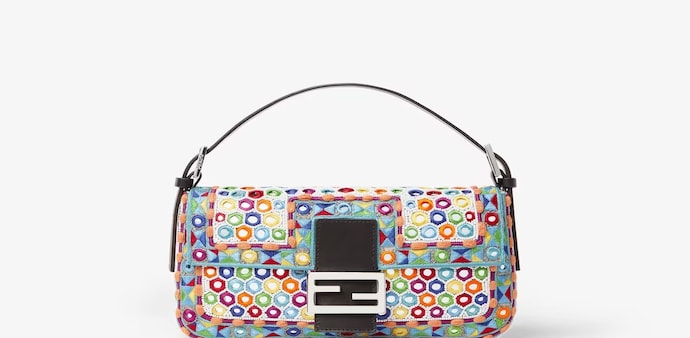
Fendi lists the product on its official website as the “Baguette® 26424”, a “Multicolour Re Edition bag with embroidery and mirrors”.
- Sep 16, 2026,
- Updated Sep 16, 2026 8:08 PM IST
Industrialist and RPG Group chairman Harsh Goenka on Tuesday questioned luxury fashion brand Fendi over its ₹8.3 lakh ‘Navratri’ bag.
“After the Prada Kolhapuri chappal scandal, here comes the Fendi "Navratri" bag,” Goenka wrote on X.
“Charging ₹8.3 Lakhs for a design that looks exactly like a ₹500 bag available in the streets of Gujarat. And zero credit to Indian artisans. When will luxury brands stop colonising our crafts?” he added.
Goenka also shared a picture of the Fendi product with his post.
Don't Miss: Amitabh Bachchan plans ₹15 crore dharamshala in Ayodhya to honour father Harivansh Rai Bachchan
His comments were followed by a reaction from Biocon founder Kiran Mazumdar-Shaw, who also criticised Fendi over its ‘Navratri’ bag.
“This is a case of cultural appropriation & not in good taste,” Mazumdar-Shaw wrote on X.
“Repackaging India’s traditional craft as luxury, without credit to the artisans who created and preserved it, undermines our authentic talent and heritage,” she added.
She further noted, “Indian craftsmanship deserves recognition, not imitation.”
What is the Fendi bag?
Fendi lists the product on its official website as the “Baguette® 26424”, a “Multicolour Re Edition bag with embroidery and mirrors”.
According to the brand, the bag is part of its Fall/Winter 2026-27 collection and is based on the original version, number 26424. Fendi says the Baguette bag was first introduced in 1997 and has since become a brand icon.
The bag is entirely embroidered by hand and features 39,500 beads and 475 mirrors. Fendi says it requires more than 138 hours of craftsmanship.
The bag comes with a dark brown calfskin handle and shoulder strap, both of which are adjustable and removable. It also features Fendi’s signature FF buckle in a palladium finish, a front flap with a magnetic clasp and an interior lined with Lario linen.
Must Read: '96% transactions will not be affected,' says former Infosys CFO Mohandas Pai on UPI MDR
The product also has an internal zipped pocket, along with a Re Edition stamp in leather and palladium-finish metal details.
Fendi lists the bag as made in Italy. Its composition includes 100% silk, glass embroidery, calf leather and linen on the inside. The bag measures 14 cm in height, 4 cm in depth and 26 cm in width, and weighs 0.46 kg.
Fendi is not the only luxury fashion brand to face questions over the use of Indian craftsmanship. Prada came under scrutiny over sandals resembling traditional Kolhapuri chappals, while Dior faced criticism over a high-priced coat featuring Lucknowi mukaish embroidery.
Ralph Lauren was criticised over embroidery resembling traditional Indian zardozi, with critics questioning the lack of acknowledgement of the craft and its artisans.
Industrialist and RPG Group chairman Harsh Goenka on Tuesday questioned luxury fashion brand Fendi over its ₹8.3 lakh ‘Navratri’ bag.
“After the Prada Kolhapuri chappal scandal, here comes the Fendi "Navratri" bag,” Goenka wrote on X.
“Charging ₹8.3 Lakhs for a design that looks exactly like a ₹500 bag available in the streets of Gujarat. And zero credit to Indian artisans. When will luxury brands stop colonising our crafts?” he added.
Goenka also shared a picture of the Fendi product with his post.
Don't Miss: Amitabh Bachchan plans ₹15 crore dharamshala in Ayodhya to honour father Harivansh Rai Bachchan
His comments were followed by a reaction from Biocon founder Kiran Mazumdar-Shaw, who also criticised Fendi over its ‘Navratri’ bag.
“This is a case of cultural appropriation & not in good taste,” Mazumdar-Shaw wrote on X.
“Repackaging India’s traditional craft as luxury, without credit to the artisans who created and preserved it, undermines our authentic talent and heritage,” she added.
She further noted, “Indian craftsmanship deserves recognition, not imitation.”
What is the Fendi bag?
Fendi lists the product on its official website as the “Baguette® 26424”, a “Multicolour Re Edition bag with embroidery and mirrors”.
According to the brand, the bag is part of its Fall/Winter 2026-27 collection and is based on the original version, number 26424. Fendi says the Baguette bag was first introduced in 1997 and has since become a brand icon.
The bag is entirely embroidered by hand and features 39,500 beads and 475 mirrors. Fendi says it requires more than 138 hours of craftsmanship.
The bag comes with a dark brown calfskin handle and shoulder strap, both of which are adjustable and removable. It also features Fendi’s signature FF buckle in a palladium finish, a front flap with a magnetic clasp and an interior lined with Lario linen.
Must Read: '96% transactions will not be affected,' says former Infosys CFO Mohandas Pai on UPI MDR
The product also has an internal zipped pocket, along with a Re Edition stamp in leather and palladium-finish metal details.
Fendi lists the bag as made in Italy. Its composition includes 100% silk, glass embroidery, calf leather and linen on the inside. The bag measures 14 cm in height, 4 cm in depth and 26 cm in width, and weighs 0.46 kg.
Fendi is not the only luxury fashion brand to face questions over the use of Indian craftsmanship. Prada came under scrutiny over sandals resembling traditional Kolhapuri chappals, while Dior faced criticism over a high-priced coat featuring Lucknowi mukaish embroidery.
Ralph Lauren was criticised over embroidery resembling traditional Indian zardozi, with critics questioning the lack of acknowledgement of the craft and its artisans.