
'You don't need college to learn': Elon Musk says degrees don't prove ability; Sanjeev Sanyal agrees
'If you're trying to do something exceptional, you must have evidence of exceptional ability. I don't consider going to college evidence of exceptional ability,' says Musk
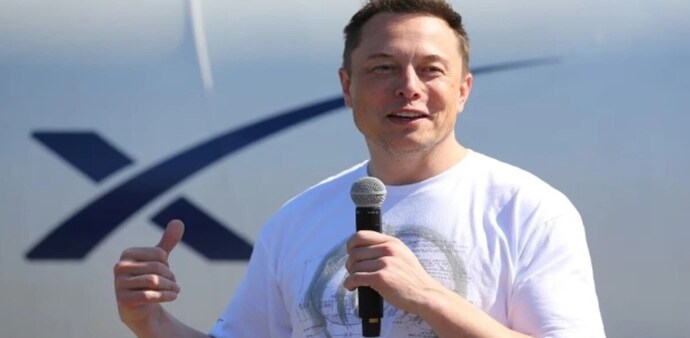
- Jul 5, 2026,
- Updated Jul 5, 2026 8:23 AM IST
Tesla and SpaceX CEO Elon Musk has reignited the debate over the value of college education, arguing that degrees are no longer necessary for learning as knowledge is now freely available online.
"You don't need college to learn stuff. Everything is available basically for free. You can learn anything you want for free," Musk said.
While acknowledging that colleges serve a purpose, Musk argued that it is less about education and more about demonstrating discipline.
"There is a value that colleges have, which is seeing whether somebody can work hard at something, including a bunch of annoying homework assignments, and still do their homework assignments. Colleges are basically for fun and to prove you can do your chores. But they're not for learning," he said.
Musk stressed that employers should instead look for proof of exceptional ability.
"But there is a requirement of evidence of exceptional ability. If you're trying to do something exceptional, you must have evidence of exceptional ability. I don't consider going to college evidence of exceptional ability," he said.
To make his point, Musk cited several technology leaders who never completed college. "(Bill) Gates is a pretty smart guy, he dropped out. (Steve) Jobs is pretty smart; he dropped out. Larry Ellison, smart guy, dropped out."
Don't Miss | 'MBA era is over': CEA Nageswaran urges youth to learn skills AI cannot replace
Sanjeev Sanyal backs Musk
Economist and Prime Minister's Economic Advisory Council member Sanjeev Sanyal appeared to endorse Musk's argument, saying he had arrived at a "similar view" on the role of colleges.
"I have come around to a similar view. With all knowledge freely available on tap - college is not needed for lecture-based learning," Sanyal said.
He argued that ambitious young people should begin working early while pursuing degrees alongside their jobs, with only a few disciplines continuing to require full-time, in-person education.
"Ambitious 18-year-olds should get to work and do the degree on the side (a few fields may still need in-person full-time, but they will be exceptions)," he said.
Sanyal added that faculty should focus less on classroom lectures and more on research, better testing methods, and updating curricula.
"Faculty should focus on research and creating better testing systems. And curating an up-to-date curriculum. Except for practical projects, there is little space for 'lectures'," he said.
CEA urges youth to prioritise trade skills over degrees
The debate comes weeks after Chief Economic Advisor V Anantha Nageswaran urged young Indians to focus on vocational and professional skills that technology cannot easily replace, saying the era when degrees such as computer science or an MBA automatically guaranteed an edge was coming to an end.
Speaking to ANI's Smita Prakash last month, Nageswaran said India needed to change its perception of skilled trades, pointing to countries such as Switzerland, Germany, Japan, South Korea and China, where vocational professions command greater respect.
"If you are a welder, a plumber, an electrician, and a carpenter etc. India doesn't consider it a diploma; we call it a diploma. We kind of made it unacceptable, unrespectable, and unfashionable. That needs to change," he said.
"These are the areas where, in fact, the technological advance cannot take away your employability. So you should equip yourself with trade skills."
He added that while globalisation had once favoured degrees in software, computer science and management, the future would increasingly belong to practical and interpersonal skills.
"The globalising world gave a certain advantage for your software, computer science, or MBA education, but that era is over. It's about trade skills. It's about soft skills which AI cannot easily replace, where human presence is required," Nageswaran said.
Tesla and SpaceX CEO Elon Musk has reignited the debate over the value of college education, arguing that degrees are no longer necessary for learning as knowledge is now freely available online.
"You don't need college to learn stuff. Everything is available basically for free. You can learn anything you want for free," Musk said.
While acknowledging that colleges serve a purpose, Musk argued that it is less about education and more about demonstrating discipline.
"There is a value that colleges have, which is seeing whether somebody can work hard at something, including a bunch of annoying homework assignments, and still do their homework assignments. Colleges are basically for fun and to prove you can do your chores. But they're not for learning," he said.
Musk stressed that employers should instead look for proof of exceptional ability.
"But there is a requirement of evidence of exceptional ability. If you're trying to do something exceptional, you must have evidence of exceptional ability. I don't consider going to college evidence of exceptional ability," he said.
To make his point, Musk cited several technology leaders who never completed college. "(Bill) Gates is a pretty smart guy, he dropped out. (Steve) Jobs is pretty smart; he dropped out. Larry Ellison, smart guy, dropped out."
Don't Miss | 'MBA era is over': CEA Nageswaran urges youth to learn skills AI cannot replace
Sanjeev Sanyal backs Musk
Economist and Prime Minister's Economic Advisory Council member Sanjeev Sanyal appeared to endorse Musk's argument, saying he had arrived at a "similar view" on the role of colleges.
"I have come around to a similar view. With all knowledge freely available on tap - college is not needed for lecture-based learning," Sanyal said.
He argued that ambitious young people should begin working early while pursuing degrees alongside their jobs, with only a few disciplines continuing to require full-time, in-person education.
"Ambitious 18-year-olds should get to work and do the degree on the side (a few fields may still need in-person full-time, but they will be exceptions)," he said.
Sanyal added that faculty should focus less on classroom lectures and more on research, better testing methods, and updating curricula.
"Faculty should focus on research and creating better testing systems. And curating an up-to-date curriculum. Except for practical projects, there is little space for 'lectures'," he said.
CEA urges youth to prioritise trade skills over degrees
The debate comes weeks after Chief Economic Advisor V Anantha Nageswaran urged young Indians to focus on vocational and professional skills that technology cannot easily replace, saying the era when degrees such as computer science or an MBA automatically guaranteed an edge was coming to an end.
Speaking to ANI's Smita Prakash last month, Nageswaran said India needed to change its perception of skilled trades, pointing to countries such as Switzerland, Germany, Japan, South Korea and China, where vocational professions command greater respect.
"If you are a welder, a plumber, an electrician, and a carpenter etc. India doesn't consider it a diploma; we call it a diploma. We kind of made it unacceptable, unrespectable, and unfashionable. That needs to change," he said.
"These are the areas where, in fact, the technological advance cannot take away your employability. So you should equip yourself with trade skills."
He added that while globalisation had once favoured degrees in software, computer science and management, the future would increasingly belong to practical and interpersonal skills.
"The globalising world gave a certain advantage for your software, computer science, or MBA education, but that era is over. It's about trade skills. It's about soft skills which AI cannot easily replace, where human presence is required," Nageswaran said.