
'You miss the real motivations by seeing RSS only through politics': Author Malini Bhattacharjee
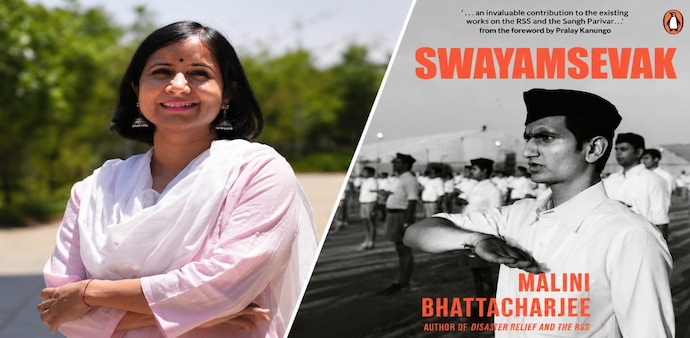
In her new book Swayamsevak, political scientist Malini Bhattacharjee shifts the lens from top leadership to the ordinary cadres who sustain the Rashtriya Swayamsevak Sangh at the grassroots
- Aug 7, 2026,
- Updated Aug 7, 2026 2:40 PM IST
For decades, debates around the Rashtriya Swayamsevak Sangh (RSS) have largely revolved around its top leadership and politics. In her new book - Swayamsevak, Malini Bhattacharjee, political scientist and Associate Professor at the School of Development, Azim Premji University, shifts the focus to the Sangh's ordinary swayamsevaks.
She traces the life stories of nine swayamsevaks and one sevika to understand what motivates them to dedicate decades of their lives to the Sangh.
In an exclusive interview with Business Today, she says the RSS cannot be understood without understanding the people who sustain it on the ground.
Edited Excerpts
Your book is about ordinary swayamsevaks rather than top leaders. What was the thinking behind this choice?
There is so much being written on the RSS all the time, but the gaze is often on the top leadership, like what Mohan Bhagwat or what Dattatreya Hosabale have said on a particular issue. Even if you look at the historical writings on the Sangh, there's a lot of emphasis on the early leadership. Guru Golwalkar's leadership is written about extensively. When I was doing my PhD, I came to realise that those who hold the movement together and are doing the work on the ground are often the people we know nothing about. The age of these swayamsevaks ranges from 18 to 55 to 60. Most of them had been inducted into the Sangh's work through the networks of their villages or small towns. They are actually the people at the last mile, whether it's disaster relief work or conducting blood donation camps or sanitation drives. And it almost seems like they're invisible. They're invisible to people who think they understand the RSS. For most of these people I have met even earlier, their needs seem to be very little - particularly the pracharaks. They don't even draw a regular salary. What I was curious about was what really motivates these people to sacrifice material comfort. Most of them don't even get into direct politics. There's no allure of power or money; most of the pracharaks choose to remain unmarried, which in itself is a very big step to take. That sort of piqued my curiosity.
Did the RSS you encountered differ from the RSS you had imagined before starting this research?
It's not like I had some very unrealistic imagination, because I have been writing on and researching the RSS since 2005. It's not like anything came as much of a surprise in terms of what I had imagined and what I really encountered. But one thing that I was struck by was how uncannily similar their vocabulary is. I wanted to pick ten Swayamsevaks from different parts of India, different languages, different regions, possibly different caste groups, though caste identity was something that they were not willing to share. When I went about requesting one of their senior leaders to share these names, they said: 'We are not comfortable asking who belongs to which caste and we don't discuss caste in the organisation'. I wanted to make it as representative as possible. But barring a few exceptions, largely the vocabulary that my respondents used is very similar. You could be somebody like Ashok Bhagatji from Jharkhand, Shantaram Siddi from Karnataka, Ramesh Patange from Mumbai. Very diverse backgrounds. Of these 10 respondents, most of them don't know each other. What is striking, however, is how remarkably similar their vocabulary is when they speak. That training comes from the Sangh. The reverence to Bharat Mata, the sense of duty, and the strategy of how you induct more friends into the movement- it's almost the same.
Don't Miss: 'Even Indira Gandhi didn't ask': RSS' Ram Madhav responds to Priyank Kharge
Many people equate the RSS with politics. What are people missing when they view the organisation only through politics?
My training is in politics. That's the lens I have been taught to use. If you ask me, it is a fairly political organisation, even though the Sangh itself may not like to call itself political. I've maintained this stance fairly openly in whatever I have written about the RSS so far. And one also has to get out of the mindset that just because it is political, it necessarily means there is something wrong, or that they have a diabolical sort of agenda. Every social actor has a political dimension. I don't necessarily see it negatively. But for many scholars who write about the RSS, the narrative usually goes as follows: 'this is an organisation that you think is only concerned with cultural or non-political activities. But here is the truth: they're actually very political.' It's a conspiratorial, very suspicious kind of undertone that one finds in these writings.
When you're only looking at the RSS in terms of a conspiratorial agenda, you miss the very real motivations that people are working with. To think that there is an agenda that is driven from the top, where there is a Sarsanghchalak who is dictating this political agenda, and it's flowing right from there to every single swayamsevak on the ground, that's somewhat misleading. Because, ultimately, people will become a part of a movement if they feel there is something in it for them.
As the book reveals, these people are not here because they see themselves as political actors. They derive meaning from their work and their lives through their engagement with the RSS. Unless you understand what is going on inside their heads - why they decide to dedicate not two years, not five years, but 20, 30, 40, or 50 years of their lives to the cause - you'll never be able to make sense of why they are popular. All of these swayamsevaks and the one sevika I have interviewed are very intelligent and independent-thinking people. You miss the larger picture when you're only looking at the political angle.
The RSS often gets criticised for not allowing women. But your book has a chapter on Pankajavalli. After speaking to so many people, how do you look at this criticism?
A lot of the criticism has come from the Left-liberal camp. The prevailing argument is that the Sangh's understanding of gender is deeply conservative and falls far short of being emancipatory. Most of them say that the Sangh seldom tries to encourage women to challenge the existing stereotypes about what the ideal role of women in society. (The criticism is that) they (RSS) basically try to preserve the Brahminical or upper-caste imagination of how women should conduct themselves as good mothers, good wives, be dedicated to the service of the nation, etc. The reality is a little more subtle.
There are so many outfits for women that have been inspired by the Sangh's philosophy. There is Rashtra Sevika Samiti, Durga Vahini, and several regional outfits across the country. What I found very refreshing when I met Pankajavalli, and of course, I've just interviewed one woman for this book, but in my earlier interactions with other women who are part of the Samiti, for instance, is that these are not women who don't have a mind of their own. These are not women who are necessarily not exposed to feminism. These are highly educated women.
In Bangalore, I have met women who are very sympathetic to the RSS cause. They're involved in a lot of Seva interventions. They are engineers, lawyers, teachers, and some of them are homemakers, but extremely independent-minded. I would strongly argue that I don't see these women as being any less emancipated just because they believe in the Hindutva ideology. Quite the contrary, for example, Pankajavalliji chose to remain unmarried, which, if you think of it from a typical middle-class or an upper-caste imagination, would not be acceptable. She comes from a Brahmin family. Her mother was very closely associated with the RSS. I asked her categorically, were your parents alright with your decision not to marry? And she said, 'Well, they never had a comment about it. They said, 'It is your life - and you should decide what you want to do.' Then I even probed further: Do you at some point not feel like things would have been different, life would have been easier if you had a family of your own? She nonchalantly said, "nahi, abhi toh aadat ho gayi kaam karte karte".
Pankajavalli has done extremely brave work in a place like Jammu, rescuing children whose parents were killed by militants. And I did not find any evidence that demonstrated that the Sangh was trying to pull her back or say "ki aap mahila hai toh aap yeh nahi kar sakti."
Reading the book, I realised the RSS is much bigger than what we usually see. It has shakhas abroad and is doing a lot of work in tribal areas. Why do you think most people don't know about its presence and work in tribal areas?
Much of it is to do with the fact that it's a very discreet organisation. They don't like to talk about themselves. There is also a lot of fear of being misquoted, misjudged. And one can understand- because this is an organisation that has been banned three times. Generally, the mainstream media or non-BJP governments have been fairly hostile to them, which is why they are usually very discreet. So, even wanting to get an interview with any of them is very, very difficult because they don't like to publicise their work much. That's also part of their training to not market yourself too much.
Among the ten life stories, is there any one story that changed your understanding of the organisation and that moved you?
All the stories have moved me. Because RSS or no RSS, they're just such interesting lives. They could have been part of any organisation and their lives would still be so interesting. They're very interesting human beings, very headstrong. All of them are very clear about what they wanted to do with their life. That kind of clarity you usually don't encounter in people.
Whenever I asked: What has made you stick to this movement for so long? The response always would be that because I got to do what I wanted to do, which was a bit of a surprise, because even based on my earlier understanding, I imagined that it was a top-down organisation, orders come from above, and orders have to be followed. That is not true. My imagination was that the structure must be fairly rigid. But that stereotype broke down for me, because they're not people who will passively take orders. None of them came across as docile or meek people to me; they were super clear about what they wanted to do.
I will quote what Mohan Bhagwat once said: 'If you want to understand the Sangh, come inside the Sangh.' I understood the meaning of that quotation after I finished interviewing these people. You might want to love them, hate them. But one question that's important for us to reflect upon as people who are interested in the organisation is what keeps them going even after 100 years. This narrative that has been told to all of us by perhaps well-meaning people that this movement has only thrived based on hatred, I think, is a misnomer. Because on the basis of hate alone, you can't go on for 100 years. You can't build an organisation through hate alone. The key takeaway would be to really go a little deeper and try and find out who these people are and be curious. It's far more complicated than we imagine it to be.
(The content and opinions expressed are those of the author and are not necessarily endorsed by or reflect the views of Azim Premji University)
For decades, debates around the Rashtriya Swayamsevak Sangh (RSS) have largely revolved around its top leadership and politics. In her new book - Swayamsevak, Malini Bhattacharjee, political scientist and Associate Professor at the School of Development, Azim Premji University, shifts the focus to the Sangh's ordinary swayamsevaks.
She traces the life stories of nine swayamsevaks and one sevika to understand what motivates them to dedicate decades of their lives to the Sangh.
In an exclusive interview with Business Today, she says the RSS cannot be understood without understanding the people who sustain it on the ground.
Edited Excerpts
Your book is about ordinary swayamsevaks rather than top leaders. What was the thinking behind this choice?
There is so much being written on the RSS all the time, but the gaze is often on the top leadership, like what Mohan Bhagwat or what Dattatreya Hosabale have said on a particular issue. Even if you look at the historical writings on the Sangh, there's a lot of emphasis on the early leadership. Guru Golwalkar's leadership is written about extensively. When I was doing my PhD, I came to realise that those who hold the movement together and are doing the work on the ground are often the people we know nothing about. The age of these swayamsevaks ranges from 18 to 55 to 60. Most of them had been inducted into the Sangh's work through the networks of their villages or small towns. They are actually the people at the last mile, whether it's disaster relief work or conducting blood donation camps or sanitation drives. And it almost seems like they're invisible. They're invisible to people who think they understand the RSS. For most of these people I have met even earlier, their needs seem to be very little - particularly the pracharaks. They don't even draw a regular salary. What I was curious about was what really motivates these people to sacrifice material comfort. Most of them don't even get into direct politics. There's no allure of power or money; most of the pracharaks choose to remain unmarried, which in itself is a very big step to take. That sort of piqued my curiosity.
Did the RSS you encountered differ from the RSS you had imagined before starting this research?
It's not like I had some very unrealistic imagination, because I have been writing on and researching the RSS since 2005. It's not like anything came as much of a surprise in terms of what I had imagined and what I really encountered. But one thing that I was struck by was how uncannily similar their vocabulary is. I wanted to pick ten Swayamsevaks from different parts of India, different languages, different regions, possibly different caste groups, though caste identity was something that they were not willing to share. When I went about requesting one of their senior leaders to share these names, they said: 'We are not comfortable asking who belongs to which caste and we don't discuss caste in the organisation'. I wanted to make it as representative as possible. But barring a few exceptions, largely the vocabulary that my respondents used is very similar. You could be somebody like Ashok Bhagatji from Jharkhand, Shantaram Siddi from Karnataka, Ramesh Patange from Mumbai. Very diverse backgrounds. Of these 10 respondents, most of them don't know each other. What is striking, however, is how remarkably similar their vocabulary is when they speak. That training comes from the Sangh. The reverence to Bharat Mata, the sense of duty, and the strategy of how you induct more friends into the movement- it's almost the same.
Don't Miss: 'Even Indira Gandhi didn't ask': RSS' Ram Madhav responds to Priyank Kharge
Many people equate the RSS with politics. What are people missing when they view the organisation only through politics?
My training is in politics. That's the lens I have been taught to use. If you ask me, it is a fairly political organisation, even though the Sangh itself may not like to call itself political. I've maintained this stance fairly openly in whatever I have written about the RSS so far. And one also has to get out of the mindset that just because it is political, it necessarily means there is something wrong, or that they have a diabolical sort of agenda. Every social actor has a political dimension. I don't necessarily see it negatively. But for many scholars who write about the RSS, the narrative usually goes as follows: 'this is an organisation that you think is only concerned with cultural or non-political activities. But here is the truth: they're actually very political.' It's a conspiratorial, very suspicious kind of undertone that one finds in these writings.
When you're only looking at the RSS in terms of a conspiratorial agenda, you miss the very real motivations that people are working with. To think that there is an agenda that is driven from the top, where there is a Sarsanghchalak who is dictating this political agenda, and it's flowing right from there to every single swayamsevak on the ground, that's somewhat misleading. Because, ultimately, people will become a part of a movement if they feel there is something in it for them.
As the book reveals, these people are not here because they see themselves as political actors. They derive meaning from their work and their lives through their engagement with the RSS. Unless you understand what is going on inside their heads - why they decide to dedicate not two years, not five years, but 20, 30, 40, or 50 years of their lives to the cause - you'll never be able to make sense of why they are popular. All of these swayamsevaks and the one sevika I have interviewed are very intelligent and independent-thinking people. You miss the larger picture when you're only looking at the political angle.
The RSS often gets criticised for not allowing women. But your book has a chapter on Pankajavalli. After speaking to so many people, how do you look at this criticism?
A lot of the criticism has come from the Left-liberal camp. The prevailing argument is that the Sangh's understanding of gender is deeply conservative and falls far short of being emancipatory. Most of them say that the Sangh seldom tries to encourage women to challenge the existing stereotypes about what the ideal role of women in society. (The criticism is that) they (RSS) basically try to preserve the Brahminical or upper-caste imagination of how women should conduct themselves as good mothers, good wives, be dedicated to the service of the nation, etc. The reality is a little more subtle.
There are so many outfits for women that have been inspired by the Sangh's philosophy. There is Rashtra Sevika Samiti, Durga Vahini, and several regional outfits across the country. What I found very refreshing when I met Pankajavalli, and of course, I've just interviewed one woman for this book, but in my earlier interactions with other women who are part of the Samiti, for instance, is that these are not women who don't have a mind of their own. These are not women who are necessarily not exposed to feminism. These are highly educated women.
In Bangalore, I have met women who are very sympathetic to the RSS cause. They're involved in a lot of Seva interventions. They are engineers, lawyers, teachers, and some of them are homemakers, but extremely independent-minded. I would strongly argue that I don't see these women as being any less emancipated just because they believe in the Hindutva ideology. Quite the contrary, for example, Pankajavalliji chose to remain unmarried, which, if you think of it from a typical middle-class or an upper-caste imagination, would not be acceptable. She comes from a Brahmin family. Her mother was very closely associated with the RSS. I asked her categorically, were your parents alright with your decision not to marry? And she said, 'Well, they never had a comment about it. They said, 'It is your life - and you should decide what you want to do.' Then I even probed further: Do you at some point not feel like things would have been different, life would have been easier if you had a family of your own? She nonchalantly said, "nahi, abhi toh aadat ho gayi kaam karte karte".
Pankajavalli has done extremely brave work in a place like Jammu, rescuing children whose parents were killed by militants. And I did not find any evidence that demonstrated that the Sangh was trying to pull her back or say "ki aap mahila hai toh aap yeh nahi kar sakti."
Reading the book, I realised the RSS is much bigger than what we usually see. It has shakhas abroad and is doing a lot of work in tribal areas. Why do you think most people don't know about its presence and work in tribal areas?
Much of it is to do with the fact that it's a very discreet organisation. They don't like to talk about themselves. There is also a lot of fear of being misquoted, misjudged. And one can understand- because this is an organisation that has been banned three times. Generally, the mainstream media or non-BJP governments have been fairly hostile to them, which is why they are usually very discreet. So, even wanting to get an interview with any of them is very, very difficult because they don't like to publicise their work much. That's also part of their training to not market yourself too much.
Among the ten life stories, is there any one story that changed your understanding of the organisation and that moved you?
All the stories have moved me. Because RSS or no RSS, they're just such interesting lives. They could have been part of any organisation and their lives would still be so interesting. They're very interesting human beings, very headstrong. All of them are very clear about what they wanted to do with their life. That kind of clarity you usually don't encounter in people.
Whenever I asked: What has made you stick to this movement for so long? The response always would be that because I got to do what I wanted to do, which was a bit of a surprise, because even based on my earlier understanding, I imagined that it was a top-down organisation, orders come from above, and orders have to be followed. That is not true. My imagination was that the structure must be fairly rigid. But that stereotype broke down for me, because they're not people who will passively take orders. None of them came across as docile or meek people to me; they were super clear about what they wanted to do.
I will quote what Mohan Bhagwat once said: 'If you want to understand the Sangh, come inside the Sangh.' I understood the meaning of that quotation after I finished interviewing these people. You might want to love them, hate them. But one question that's important for us to reflect upon as people who are interested in the organisation is what keeps them going even after 100 years. This narrative that has been told to all of us by perhaps well-meaning people that this movement has only thrived based on hatred, I think, is a misnomer. Because on the basis of hate alone, you can't go on for 100 years. You can't build an organisation through hate alone. The key takeaway would be to really go a little deeper and try and find out who these people are and be curious. It's far more complicated than we imagine it to be.
(The content and opinions expressed are those of the author and are not necessarily endorsed by or reflect the views of Azim Premji University)