
'IDBI was once bigger than ICICI': Kotak's Nilesh Shah explains why he backs bank's privatisation
On Wednesday, the Centre approved the sale of a 60.72% stake in IDBI Bank to Fairfax Financial Holdings for Rs 52,878 crore, marking the country's biggest strategic disinvestment since Air India
- Oct 15, 2026,
- Updated Oct 15, 2026 5:35 PM IST
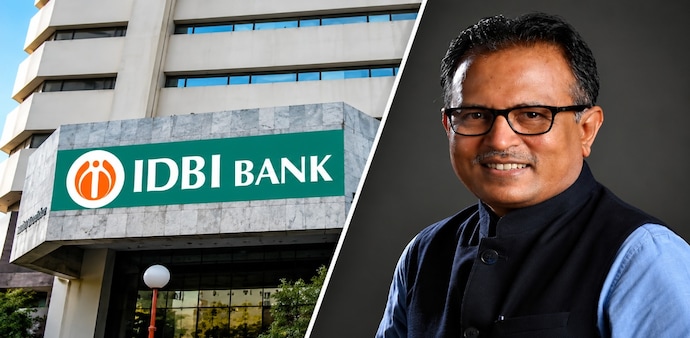
Nilesh Shah, Managing Director of Kotak Mahindra Asset Management Company, on Thursday backed the Centre's decision to sell a controlling stake in IDBI Bank. He drew a comparison with ICICI Bank to argue that strategic disinvestment can create substantial long-term value.
Shah pointed out that IDBI was once a larger development financial institution than ICICI in the 1990s.
"IDBI was a premier DFI, larger than ICICI in the 90s. ICICI went private and is valued at Rs 9.88 lac crore. IDBI stayed public, needed repeated capital infusions, and is valued at Rs 90,000 crore," Shah wrote on X.
On Wednesday, the Centre approved the sale of a 60.72% stake in IDBI Bank to Fairfax Financial Holdings for Rs 52,878 crore, marking the country's biggest strategic disinvestment since Air India.
The decision was cleared by the Cabinet Committee on Economic Affairs (CCEA), chaired by Prime Minister Narendra Modi, bringing a process that had stretched over five years closer to completion.
Shah argued that the criticism of strategic disinvestment often overlooks the value that can be created after a government-owned company is transferred to private management.
"One opposition against divestment is that family jewels are being sold," the veteran investor wrote. "The experience of strategic divestment suggests that family jewels are being created for the next generation."
Hindustan Zinc example
To support his argument, the Kotam AMC MD cited the strategic sale of Hindustan Zinc Limited (HZL) to the Vedanta Group more than two decades ago.
According to Shah, the government sold approximately 45% of the then loss-making public sector company, along with management control, for around Rs 769 crore while retaining a minority stake of about 29%.
He said the government's remaining stake had generated far more in dividends alone than the original sale proceeds and was now worth over Rs 62,000 crore.
Shah also highlighted the company's operational expansion following privatisation. He said Hindustan Zinc had become the world's largest integrated zinc producer, with production increasing more than fourfold and silver output rising 15 times.
He added that the company had helped replace zinc imports, earned foreign exchange through exports, paid thousands of crores in taxes and royalties, created jobs and improved productivity.
"Strategic sale + minority holding = Long-term value creation for the nation," Shah wrote.
What happens next for IDBI Bank?
Under the approved transaction, the government and Life Insurance Corporation of India (LIC) will sell a combined 60.72% stake in IDBI Bank to Fairfax, transferring management control to the Canadian investment firm once the transaction is completed and the necessary regulatory approvals are secured.
Information and Broadcasting Minister Ashwini Vaishnaw said the government and LIC would together retain a 34% stake in the restructured bank.
"Once completed, this will be the largest FDI in the financial sector of our economy so far," the government said in a statement.
Shah expressed hope that IDBI Bank would follow the example of Hindustan Zinc and deliver stronger performance under private ownership. "With the strategic sale of IDBI Bank now approved, hope it becomes as shining example as HZL," he wrote. "All the best to IDBI Bank strategic divestment."
Nilesh Shah, Managing Director of Kotak Mahindra Asset Management Company, on Thursday backed the Centre's decision to sell a controlling stake in IDBI Bank. He drew a comparison with ICICI Bank to argue that strategic disinvestment can create substantial long-term value.
Shah pointed out that IDBI was once a larger development financial institution than ICICI in the 1990s.
"IDBI was a premier DFI, larger than ICICI in the 90s. ICICI went private and is valued at Rs 9.88 lac crore. IDBI stayed public, needed repeated capital infusions, and is valued at Rs 90,000 crore," Shah wrote on X.
On Wednesday, the Centre approved the sale of a 60.72% stake in IDBI Bank to Fairfax Financial Holdings for Rs 52,878 crore, marking the country's biggest strategic disinvestment since Air India.
The decision was cleared by the Cabinet Committee on Economic Affairs (CCEA), chaired by Prime Minister Narendra Modi, bringing a process that had stretched over five years closer to completion.
Shah argued that the criticism of strategic disinvestment often overlooks the value that can be created after a government-owned company is transferred to private management.
"One opposition against divestment is that family jewels are being sold," the veteran investor wrote. "The experience of strategic divestment suggests that family jewels are being created for the next generation."
Hindustan Zinc example
To support his argument, the Kotam AMC MD cited the strategic sale of Hindustan Zinc Limited (HZL) to the Vedanta Group more than two decades ago.
According to Shah, the government sold approximately 45% of the then loss-making public sector company, along with management control, for around Rs 769 crore while retaining a minority stake of about 29%.
He said the government's remaining stake had generated far more in dividends alone than the original sale proceeds and was now worth over Rs 62,000 crore.
Shah also highlighted the company's operational expansion following privatisation. He said Hindustan Zinc had become the world's largest integrated zinc producer, with production increasing more than fourfold and silver output rising 15 times.
He added that the company had helped replace zinc imports, earned foreign exchange through exports, paid thousands of crores in taxes and royalties, created jobs and improved productivity.
"Strategic sale + minority holding = Long-term value creation for the nation," Shah wrote.
What happens next for IDBI Bank?
Under the approved transaction, the government and Life Insurance Corporation of India (LIC) will sell a combined 60.72% stake in IDBI Bank to Fairfax, transferring management control to the Canadian investment firm once the transaction is completed and the necessary regulatory approvals are secured.
Information and Broadcasting Minister Ashwini Vaishnaw said the government and LIC would together retain a 34% stake in the restructured bank.
"Once completed, this will be the largest FDI in the financial sector of our economy so far," the government said in a statement.
Shah expressed hope that IDBI Bank would follow the example of Hindustan Zinc and deliver stronger performance under private ownership. "With the strategic sale of IDBI Bank now approved, hope it becomes as shining example as HZL," he wrote. "All the best to IDBI Bank strategic divestment."