
Can Gujarat become a leader in renewable hydrogen production?
Gujarat has the highest renewable hydrogen production ambition out of all Indian states, although it is for 2035, unlike other states, which have implemented a 2030 target
- Sep 25, 2026,
- Updated Sep 25, 2026 2:05 PM IST
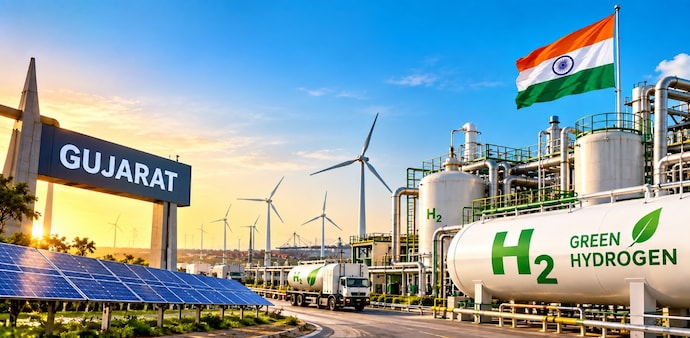
Gujarat’s 2035 renewable hydrogen production target of 3 million mt/year puts it on par with several countries in terms of renewable hydrogen production ambitions, and the state policy offers support across the hydrogen value chain, particularly focused on first-mover projects in both supply and demand.
According to S&P Global energy assessment, Gujarat has the highest renewable hydrogen production ambition out of all Indian states, although it is for 2035, unlike other states, which have implemented a 2030 target.
READ THIS: Why are oil marketing companies facing Rs 530 crore losses daily?
“Gujarat’s state policy is more recent than legislation from other states, so this target is likely more realistic than others, but is still highly ambitious. There is more support as well for demand uptake and infrastructure, with pre-existing natural gas networks providing a potential pathway for hydrogen transmission and aiding demand growth,” it said.
Favourable policy
Approximately 40% of India’s refinery capacity is in Gujarat and about 30% of the country’s ammonia capacity is based in Gujarat. Recent Solar Energy Corporation of India Ltd. (SECI) tenders indicate a strong interest in promoting domestic renewable ammonia production, primarily to reduce imports and dependence on imported gas used to produce fossil ammonia.
Gujarat has the highest electricity generation capacity among all Indian states. This allows electrolysers to utilise the existing electricity infrastructure and transmission lines. The state also boasts nearly 50 gigawatts of combined solar and wind energy capacity.
ALSO READ: India ranks 4th among countries worst hit by heat-related deaths due to Super El Nino. Here's how
At least 40% of India’s maritime trade enters through ports located in Gujarat. This existing infrastructure facilitates large-scale equipment deliveries and bulk exports. Ammonia freight from India's west coast to Europe is $30-$40/mt, cheaper than from east coast projects.
Domestic production incentives would also be required from the Gujarat state government, as exports from here would also need to compete with products from the Middle East, which are $30 $40/mt cheaper in Europe. State grants, as well as federal support from the Indian government, will therefore be required to remain competitive.
Gujarat’s 2035 renewable hydrogen production target of 3 million mt/year puts it on par with several countries in terms of renewable hydrogen production ambitions, and the state policy offers support across the hydrogen value chain, particularly focused on first-mover projects in both supply and demand.
According to S&P Global energy assessment, Gujarat has the highest renewable hydrogen production ambition out of all Indian states, although it is for 2035, unlike other states, which have implemented a 2030 target.
READ THIS: Why are oil marketing companies facing Rs 530 crore losses daily?
“Gujarat’s state policy is more recent than legislation from other states, so this target is likely more realistic than others, but is still highly ambitious. There is more support as well for demand uptake and infrastructure, with pre-existing natural gas networks providing a potential pathway for hydrogen transmission and aiding demand growth,” it said.
Favourable policy
Approximately 40% of India’s refinery capacity is in Gujarat and about 30% of the country’s ammonia capacity is based in Gujarat. Recent Solar Energy Corporation of India Ltd. (SECI) tenders indicate a strong interest in promoting domestic renewable ammonia production, primarily to reduce imports and dependence on imported gas used to produce fossil ammonia.
Gujarat has the highest electricity generation capacity among all Indian states. This allows electrolysers to utilise the existing electricity infrastructure and transmission lines. The state also boasts nearly 50 gigawatts of combined solar and wind energy capacity.
ALSO READ: India ranks 4th among countries worst hit by heat-related deaths due to Super El Nino. Here's how
At least 40% of India’s maritime trade enters through ports located in Gujarat. This existing infrastructure facilitates large-scale equipment deliveries and bulk exports. Ammonia freight from India's west coast to Europe is $30-$40/mt, cheaper than from east coast projects.
Domestic production incentives would also be required from the Gujarat state government, as exports from here would also need to compete with products from the Middle East, which are $30 $40/mt cheaper in Europe. State grants, as well as federal support from the Indian government, will therefore be required to remain competitive.